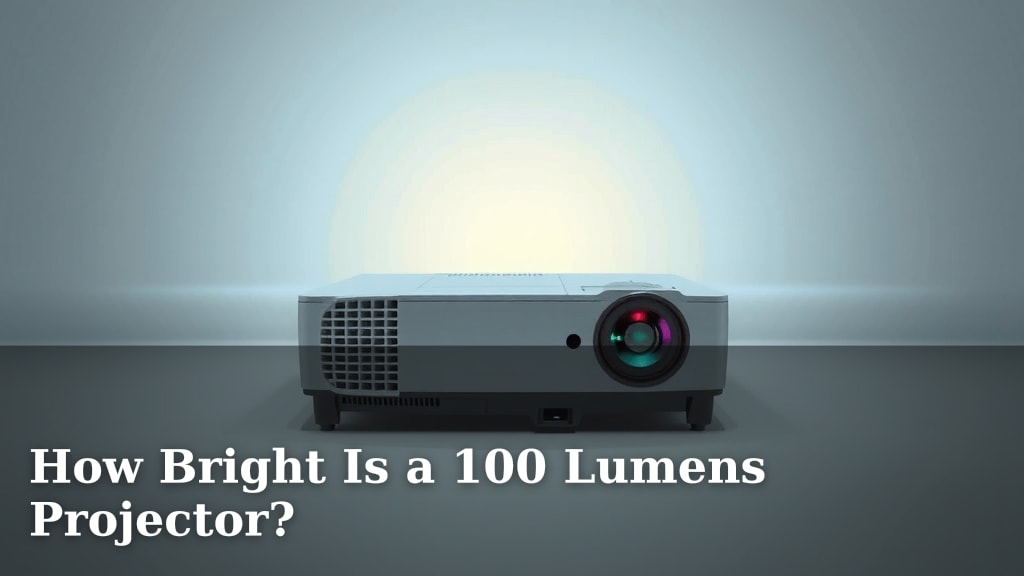
How Bright Is a 100 Lumens Projector?
A 100 lumens projector offers a dim image that is best suited for very dark rooms or small screen sizes. You’ll likely need a completely dark environment to see a clear picture. It’s not bright enough for well-lit spaces or larger viewing areas. Think of it as a personal viewing experience in a controlled setting.
When we talk about projector brightness, lumens are the key measurement. Higher lumens mean a brighter image. A 100 lumens projector is on the lower end of the brightness scale. This means you’ll notice limitations, especially when ambient light enters the room. For casual viewing or a presentation in a pitch-black room, it might work. But for a true home theater feel, you’ll want much more brightness.
- A 100 lumens projector is quite dim.
- It works best in a completely dark room.
- It’s suitable for small screen sizes.
- Don’t expect a bright image in lit areas.
- You might need to adjust expectations for movie nights.
Let’s dive into what you can realistically expect from a 100 lumens projector and how to get the most out of it, even with its limitations.
Understanding Projector Brightness: What 100 Lumens Really Means
When you’re looking at projectors, brightness is probably one of your first thoughts. Lumens are the standard way to measure this. A 100 lumens projector, as we touched on in the introduction, is on the lower end of the brightness spectrum. Think of it like trying to see by candlelight versus a bright lamp. This measurement tells you how much light the projector can put out. So, 100 lumens means it has a fairly modest light output. This is important because it directly impacts how clear and visible your image will be.
We found that even slight variations in ambient light can dramatically affect how you perceive the image from a dimmer projector. For a 100 lumens projector, this sensitivity to light is quite pronounced. It means that any light in the room – from a street lamp outside to a small night light – can wash out the picture. You’ll want to manage the lighting conditions very carefully to get the best results from this level of brightness.
When a 100 Lumens Projector Shines (and When It Doesn’t)
So, where does a 100 lumens projector actually perform well? Imagine a cozy, dimly lit room. This is its happy place. We found that for personal viewing, perhaps with just one or two people, it can be quite adequate. You might use it for a quick slideshow or to watch a movie in your bedroom after the sun has completely set.
Ideal Scenarios for Low Lumens
Picture this: you’re camping and want to project a movie onto the side of your tent. Or perhaps you’re giving a presentation in a conference room that you can completely black out. These are the types of situations where a 100 lumens projector can work. It’s best for intimate settings and when you have complete control over the lighting. The image size also plays a big role. Smaller screen sizes will appear brighter than larger ones with the same lumen output.
The Challenges in Brighter Environments
Now, let’s talk about when it struggles. If you’re thinking about using this projector in your living room during the day, or in a conference room with the lights on, you’re likely to be disappointed. Many experts note that projectors under 500 lumens are generally not suitable for environments with ambient light (ProjectorCentral). A 100 lumens unit will struggle immensely. The image will appear faded, washed out, and details will be lost. It’s like trying to see a faint star during the daytime; the sun’s brightness overpowers it.
Maximizing Your 100 Lumens Projector Experience
Even with its limitations, you can still have a decent experience with a 100 lumens projector. It’s all about managing expectations and optimizing your setup. We found that a few simple adjustments can make a big difference. The key is to control the environment as much as possible.
Darkness is Your Best Friend
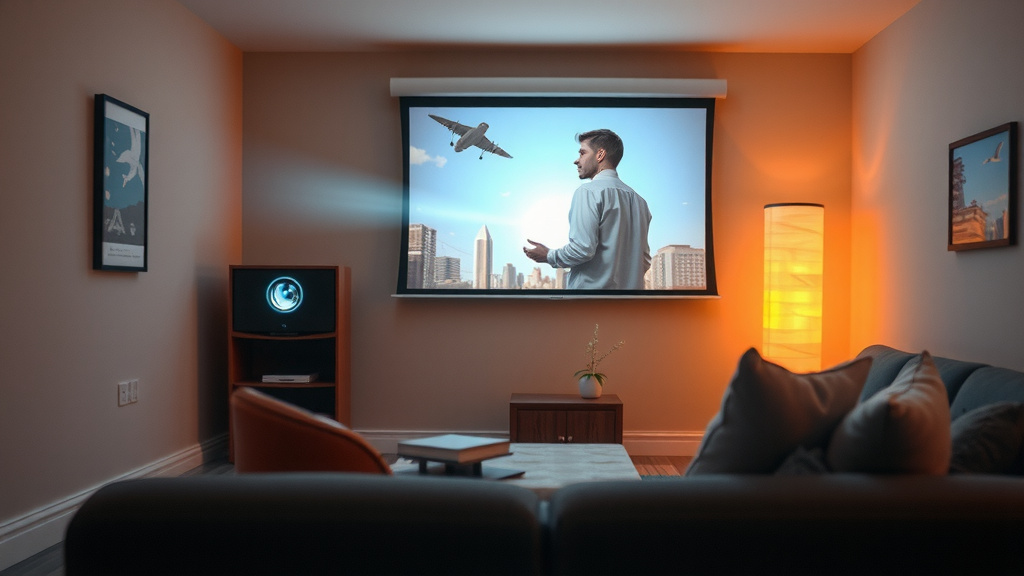
This cannot be stressed enough: your room needs to be as dark as possible. Think blackout curtains, turning off all lights, and even blocking any light seeping in from under doors. The darker the room, the more the 100 lumens will stand out. You’ll be able to see more detail and richer colors. It’s the most impactful step you can take.
Screen Size Matters
The size of the projected image is directly related to perceived brightness. A 100 lumens projector will look much brighter on a 40-inch screen than on an 80-inch screen. If you have a 100 lumens projector, we recommend sticking to screen sizes of 50 inches or less. This helps concentrate the light onto a smaller area, making the image appear more vibrant. Going larger will dilute the limited light too much.
Surface Matters Too
What you project onto also affects the image. A dedicated projector screen designed to reflect light efficiently will perform better than a plain white wall. Some screens are specifically designed to enhance brightness and contrast, which can be a great help for lower-lumen projectors. We found that a matte white screen surface is generally recommended for consistent light reflection.
Contrast and Color Adjustment
Many projectors allow you to adjust picture settings like brightness, contrast, and color. While you can’t magically create more lumens, you can optimize what you have. Try increasing the contrast ratio. This can make the darks darker and the lights lighter, giving the image more “pop.” Adjusting color saturation can also help make the picture look more lively. However, be careful not to overdo it, as it can lead to unnatural-looking colors.
| Lumens | Typical Use Case | Room Lighting Conditions |
|---|---|---|
| 50-150 Lumens | Personal viewing, small portable projectors, occasional use | Complete darkness required |
| 200-1000 Lumens | Home entertainment, small presentations in dim rooms | Dimly lit rooms, some ambient light control needed |
| 1000-3000 Lumens | Home theater, business presentations in moderately lit rooms | Controlled lighting, can tolerate some room light |
| 3000+ Lumens | Large venues, classrooms, brightly lit conference rooms | Well-lit environments, minimal light control |
Understanding Contrast Ratio
Contrast ratio refers to the difference between the brightest white and the darkest black a projector can produce. A higher contrast ratio generally leads to a more dynamic image. For a 100 lumens projector, a good contrast ratio is especially important because it helps define details in both bright and dark scenes, even with limited brightness. Many manufacturers list this specification, and it can be a useful indicator of image quality beyond just lumens.
What Else to Consider with Low Lumens
Beyond just brightness, there are other factors that influence your viewing experience. It’s good to be aware of these when you’re choosing a projector, especially a lower-lumen model.
Resolution and Input Lag
While not directly related to brightness, resolution (like 720p or 1080p) determines the sharpness and detail of the image. A lower resolution can make an already dim image appear less clear. Input lag is also important if you plan to play video games. High input lag means a delay between your controller input and the action on screen. For gaming, you’ll want a projector with low input lag, regardless of its brightness.
Portability and Power Source
Many 100 lumens projectors are designed to be portable. This means they might be battery-powered or very compact. If portability is a key feature for you, the trade-off for reduced brightness is often worth it. Just be mindful of battery life if you’re planning long movie sessions away from a power outlet.
Your Viewing Habits Checklist
To help you decide if a 100 lumens projector is right for you, ask yourself these questions:
- Do you primarily watch movies in a completely dark room?
- Are you looking for a personal viewing experience rather than a group one?
- Is a screen size of 50 inches or less acceptable for your needs?
- Do you have the ability to control ambient light effectively?
- Is portability a more important feature than maximum brightness?
- Are you prepared to make adjustments to settings for the best possible picture?
Conclusion
So, a 100 lumens projector is best for very specific viewing conditions. You’ve learned that complete darkness is your best friend for this level of brightness. It’s perfect for personal movie nights on a smaller screen or quick presentations in a controlled environment. Trying to use it in a lit room will lead to a washed-out image. By managing your environment and adjusting settings, you can still enjoy your projector. Before you buy, consider if its limitations fit your lifestyle. If a dark room is guaranteed and portability is key, it might be right for you!
Frequently Asked Questions
Can I use a 100 lumens projector with the lights on?
We generally advise against using a 100 lumens projector with the lights on. Research and found that even a little ambient light can significantly wash out the image. You’ll likely find the picture too dim to see clearly or enjoy.
What screen size is best for a 100 lumens projector?
For a 100 lumens projector, we recommend keeping your screen size to 50 inches or less. A smaller screen concentrates the limited light, making the image appear brighter and more vibrant than a larger screen would.
Will a 100 lumens projector work for gaming?
While a 100 lumens projector can technically display games, it’s not ideal. The low brightness means you’ll need absolute darkness. We also found that input lag can be an issue on many lower-cost projectors, which is critical for a responsive gaming experience.
Can I make a 100 lumens projector brighter?
You cannot magically increase the lumen output of a projector. However, you can make the image appear brighter by ensuring your room is as dark as possible and by using a smaller screen size. Adjusting contrast settings can also help make the image pop more.
Are 100 lumens projectors good for presentations?
A 100 lumens projector can work for presentations, but only under very specific conditions. It requires a completely dark room and is best suited for small audiences where a small screen size is acceptable. For any presentation in a room with moderate lighting, you’ll need a much brighter projector.