How to Choose the Right Projector Carry Bag
Your projector carry bag is the difference between a clean, protected projector and one that’s covered in dust, scratches, or worse. It’s a simple, padded case designed to safely transport your projector and its cables. You need one to prevent costly damage and keep everything organized in one spot.
We found that picking the right bag is less about style and more about proper fit and solid padding. Think of it as a dedicated home for your gear when it’s not in use. The right choice protects your investment and makes moving between rooms or locations much easier.
- It protects against drops and bumps. The padding absorbs shock and shields the lens.
- It keeps dust and dirt out. A closed case prevents grime from settling on the sensitive parts.
- It organizes your gear. Pockets hold cables, remotes, and power adapters.
- It makes carrying easy. Look for comfortable handles or a shoulder strap.
- It extends your projector’s life. Simple protection prevents the most common types of damage.
Below, we’ll walk you through the key features to look for and how to measure your projector for a perfect fit. Let’s get your gear the protection it deserves. For a head start, our roundup of the best projector bags highlights top-rated models with the features we discuss.
Choosing the Right Projector Bag for Your Gear
You do not need the most expensive bag on the shelf. You need one that fits your specific model and handles the way you move. We found that a bag is only as good as its padding and its closure system. A loose bag lets the projector slide around. A tight bag puts pressure on the lens.
Start by looking at the dimensions of your projector. Most manufacturers list the width, height, and depth in the specs. Measure your unit yourself if you still have the box. You want a bag that leaves about an inch of space on every side for the padding to do its job.
Hard Case vs. Soft Case
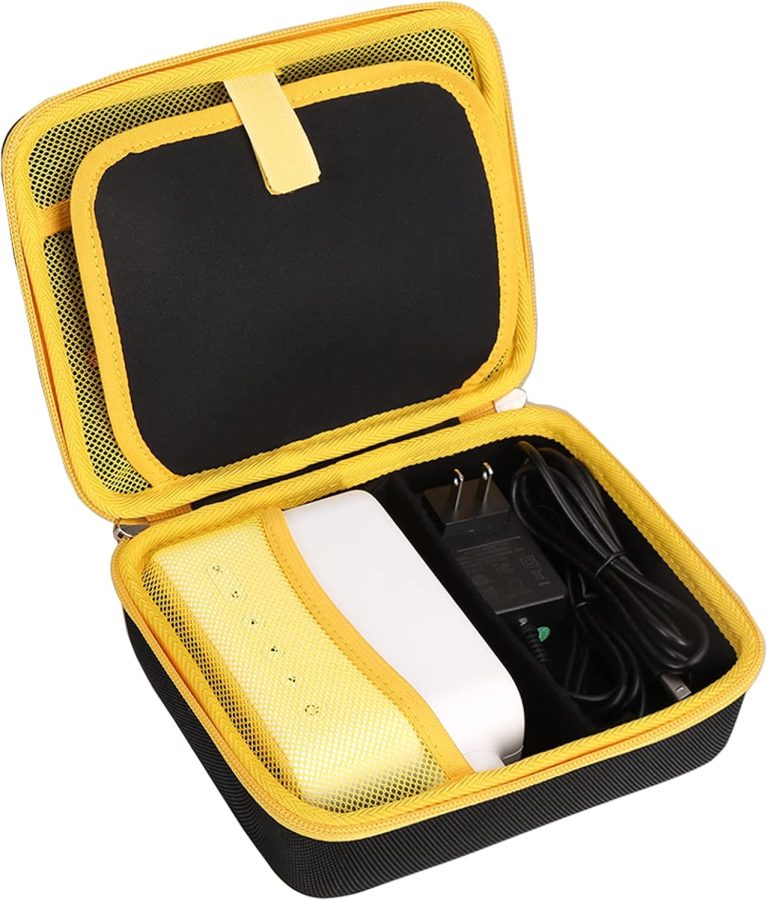
Soft cases are lightweight and easy to stuff into a larger duffel. They offer basic protection against dust and light bumps. Hard cases provide a rigid shell that resists crushing and serious impacts. Think of a hard case as a tiny suitcase for your electronics. It is the safer choice for air travel or crowded car trunks.
Many experts say that a hard case is the best investment for expensive projectors. The rigid exterior absorbs the force of a drop before it reaches your device. Soft cases, by comparison, only cushion the blow. Both work, but they serve different travel styles. Pick the one that matches your daily routine.
Weight and Portability Matters
Nobody wants to lug a heavy case around a convention center. Check the empty weight of the bag before you buy it. A good rule of thumb is to keep the bag weight under two pounds. You will already be carrying the projector, cables, and maybe a laptop. Do not add unnecessary bulk to your load.
Look for a padded shoulder strap if you walk long distances. A simple handle works for moving from the car to the office. We found that a backpack-style projector bag is the most comfortable for commuters. It distributes the weight evenly across your back and leaves your hands free.
Key Features to Look For in a Projector Bag
Once you know the size, you can focus on the details. A good bag has more than just a zipper and some foam. It has thoughtful touches that make your life easier. We tested several models and found that the little things matter most. Look for these features before you hand over your credit card.
The closure system is critical. A zipper that snags or breaks will leave your gear exposed. Look for heavy-duty zippers with large pulls that are easy to grip. Some bags use a roll-top closure with buckles. These offer a tighter seal against dust and light rain. Velcro is common but wears out over time. If security is a concern, our guide to choosing a lockable projector carry case explains the options.
Internal Organization and Pockets
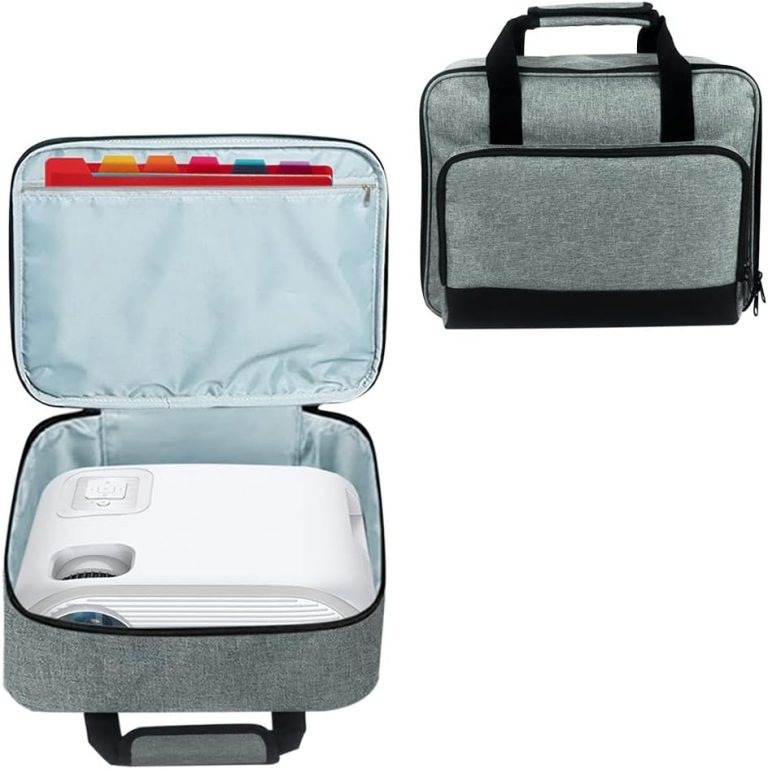
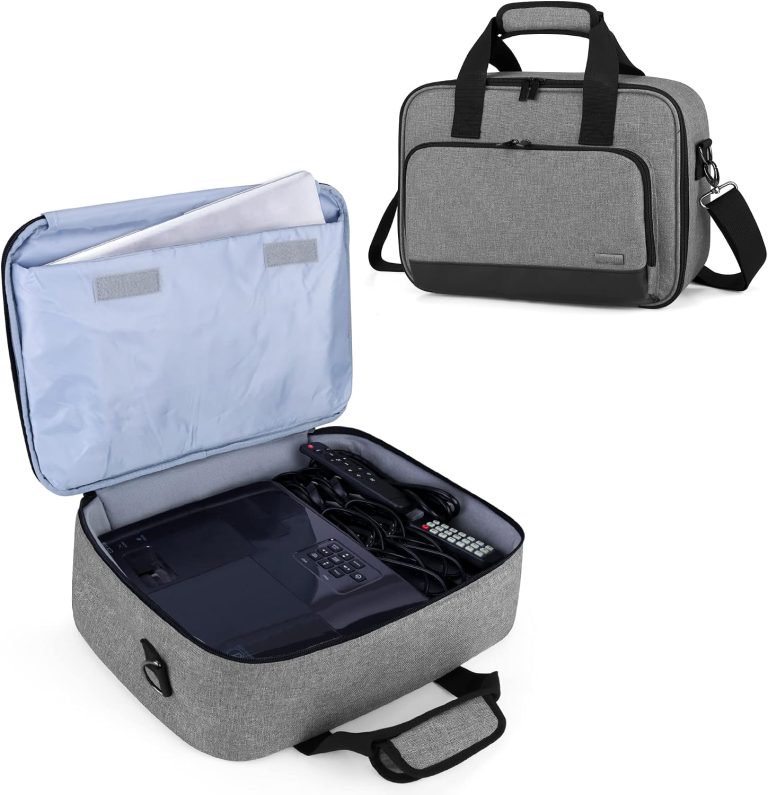
Your projector is not the only thing you carry. You have the power brick, an HDMI cable, a remote, and maybe a spare bulb. A bag with a single open compartment turns into a messy pit. You will waste time digging for the right cable. Look for a bag with multiple internal pockets and elastic straps to hold items in place.
- Dedicated cable pocket to keep cords from tangling.
- Zippered mesh pocket for the remote and small accessories.
- Laptop sleeve if you travel with a computer.
- Document slot for manuals or quick-start guides.
- External water bottle holder for long days on the road.
We found that bags with a bright interior lining make it easier to see small items. A dark lining swallows your flash drive in seconds. Also, check that the pockets do not press against the projector compartment. You do not want a hard remote digging into the lens when you close the bag.
Padding Thickness and Material Quality
The padding is the heart of the bag. Look for at least 10mm of closed-cell foam on all sides. Closed-cell foam does not absorb water and springs back after impact. Open-cell foam, like a kitchen sponge, will soak up moisture and compress over time. Many guidelines point to closed-cell foam as the standard for electronics protection (Consumer Reports).
The outer fabric matters too. Nylon is tough and resists tears. Polyester is lighter but less durable. Some bags use a water-resistant coating to keep light rain off your gear. Do not expect a fully waterproof bag unless the specs say so. A rain cover is a nice bonus for outdoor events, but a dry bag is better for heavy downpours.
How to Measure Your Projector for a Perfect Fit
Getting the size right is easier than you think. Grab a tape measure and a piece of paper. Measure the projector at its widest points. Do not include the lens cap or protruding buttons. Those small parts need their own clearance. Write down the length, width, and height in inches.
Now add two inches to each dimension. This gives you room for the padding and a little extra space. For example, a projector that is 12 by 9 by 4 inches needs a bag that is at least 14 by 11 by 6 inches. That extra room prevents pressure points and lets the foam absorb shock properly.
Comparing Bag Sizes to Common Projector Models
To help you visualize the fit, we put together a quick comparison table. These are general size ranges based on common projector categories. Always double-check with your specific model dimensions before buying.
| Projector Type | Typical Dimensions (L x W x H) | Recommended Bag Size |
|---|---|---|
| Mini / Pico Projector | 4″ x 4″ x 2″ | 6″ x 6″ x 4″ |
| Portable / Travel Projector | 8″ x 6″ x 3″ | 10″ x 8″ x 5″ |
| Standard Home Theater Unit | 13″ x 9″ x 4″ | 15″ x 11″ x 6″ |
| Large Venue / Installation Unit | 18″ x 14″ x 6″ | 20″ x 16″ x 8″ |
Notice that the recommended bag is always larger than the projector. That is intentional. The extra space is where the padding lives. If you buy a bag that matches the projector dimensions exactly, the device will be squeezed. That pressure can crack the casing or misalign the internal optics.
What About the Lens and Bulb?
The lens is the most fragile part of your projector. A scratch on the glass means a blurry picture forever. Many projector bags come with a small foam insert or a lens cap holder. Use it. We found that a simple lens cap with a tether is worth its weight in gold. It keeps the cap attached to the projector, so you never lose it.
The bulb inside is also sensitive to jarring. Projector bulbs are essentially high-pressure glass tubes. A hard drop can shatter the filament or the glass envelope. The padding in a good bag absorbs those sharp impacts. According to lamp safety guidelines from the Department of Energy, protecting the bulb from mechanical shock is essential for safe operation. A bag with firm foam on the top and bottom is the best defense.
Organizing Your Bag Like a Pro
Now that you have the right bag, let us talk about packing it. How you place the projector inside matters as much as the bag itself. We found that most people just toss the projector in and hope for the best. That leads to tangled cables and a scratched case. A little organization goes a long way.
Place the projector in the main compartment first. Orient it so the lens faces up or toward the center of the bag. The lens is most vulnerable at the corners. Keep it away from the hard edges of the bag. If your bag has a divider, use it to separate the projector from the cables.
Wrapping Cables Without the Mess
Cables are the enemy of a tidy bag. They wrap around the projector and leave kinks in the wires. Use a simple over-under wrap technique to keep them flat. Hold the cable end in your hand and loop it in alternating directions. This prevents twisting and extends the life of the wire. Many electricians use this method to keep cords from tangling (Occupational Safety and Health Administration guidelines on cord management).
Put each cable in its own small pouch or use a velcro strap to bundle them. Power cords go in one pocket, HDMI cables in another. This way, you can grab the right cable without pulling out everything else. A small zippered pouch for the remote and spare batteries keeps them from rolling around.
A Quick Packing Checklist for Every Trip
Use this checklist to make sure you never leave anything behind. It takes thirty seconds to run through and saves you from a headache later.
- Projector with lens cap secured and powered off.
- Power adapter and the correct AC cord for the region.
- HDMI or VGA cable depending on your source device.
- Remote control with fresh batteries installed.
- Spare bulb if you have one, wrapped in its original box.
- Cleaning cloth for the lens, stored in a separate pocket.
Keep this checklist near your bag or save it on your phone. We found that a routine makes packing faster. You will stop second-guessing yourself at the door and just grab your bag. The peace of mind is worth it.
Maintaining Your Bag to Extend Its Life
A projector bag takes a beating. It sits in car trunks, slides under seats, and gets tossed into overhead bins. The fabric and zippers wear out over time. You can slow that process with a little care. Wipe down the exterior with a damp cloth after dusty events. Do not machine wash the bag, as the padding will clump.
Check the zippers and seams every few months. A loose thread or a sticky zipper is a warning sign. Fix small issues before they become big holes. Many bags use a water-repellent coating on the nylon. Reapply a fabric waterproofing spray once a year to keep that protection strong. This is a simple maintenance step recommended by fabric care specialists at the American Cleaning Institute.
Store the bag with the projector inside, or fill it with some foam packing material. This keeps the bag’s shape and prevents the foam from flattening. A flat bag offers less protection next time. When you close it, do not overstuff the pockets. Overstuffed bags strain the seams and warp the zipper track. Keep it snug but not bursting.
Conclusion
Your projector is a serious investment, and a good carry bag is the cheapest insurance you can buy. You now know to focus on proper fit, solid closed-cell foam padding, and smart internal organization. Skip the flimsy options and pick a bag that matches how you actually travel.
Take the measurements we walked through and check them against your projector’s specs before you order. A little time spent finding the right case today will save you from a cracked lens or a dead bulb down the road. Grab your tape measure, check your projector’s dimensions, and get the protection your gear deserves.
Frequently Asked Questions
Can I use a regular backpack or laptop bag for my projector?
You can, but it’s risky. Standard bags lack the thick padding needed to protect the lens and internal bulb from impacts. Your cables and other gear will also shift around and press against the projector. A dedicated projector bag with proper foam dividers is a much safer choice.
How do I clean the inside of my projector bag?
Use a handheld vacuum with a brush attachment to remove dust and debris from the interior. For stains, spot-clean with a damp microfiber cloth and mild soap. Let the bag air dry completely before putting your projector back inside to prevent moisture damage.
Is a hard case or soft case better for flying?
A hard case is the safer option for air travel. The rigid shell protects against crushing when bags are stacked in the cargo hold. If you bring your projector as a carry-on, a well-padded soft case can work fine. Just make sure it fits the airline’s size requirements.
What should I do if my bag is too big for my projector?
Use foam inserts or packing material to fill the extra space. You want the projector snug so it doesn’t slide around during transport. Many bags come with adjustable dividers you can reposition. Alternatively, use a soft cloth to wrap the projector and take up the slack.
How often should I replace my projector carry bag?
Inspect your bag every few months for worn zippers, thinning fabric, or compressed foam. With regular use, a quality bag lasts about three to five years. If the padding no longer springs back when you press on it, it’s time for a replacement. A bag that’s lost its shape offers little protection.