How Bright Is a 200 Lumens Projector?
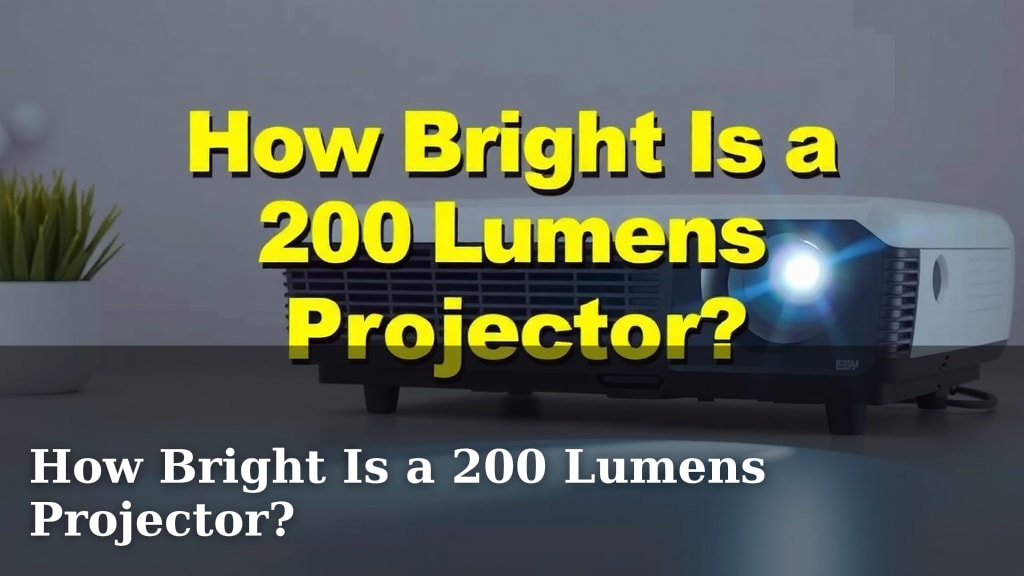
A 200 lumens projector can be surprisingly bright for certain situations, especially in a darkened room. You’ll get a clear, watchable image, but it’s best suited for smaller screen sizes and casual viewing. Don’t expect it to shine in a brightly lit space, though.
While 200 lumens isn’t considered high brightness for projectors, it’s enough for a cozy movie night or a presentation when you have control over the ambient light. Think of it as a good option for portability or specific, dimmer environments rather than a primary home theater projector meant for daylight viewing.
- 200 lumens is decent for dark rooms.
- Best for small screens and casual use.
- Not ideal for brightly lit environments.
- Good for portability and specific setups.
So, how bright is a 200 lumens projector really? We’ve looked into it and are ready to break down what that number actually means for your viewing experience.
Understanding the Brightness of 200 Lumens
So, you’re curious about a 200 lumens projector. What does that number actually mean for your movie nights or presentations? Well, think of lumens as the measurement of brightness. More lumens means a brighter picture. For a 200 lumens projector, this brightness level is best suited for specific environments. You’ll get a decent image, but it comes with some important considerations.
Many people wonder if 200 lumens is “enough.” The answer really depends on how and where you plan to use it. It’s not a one-size-fits-all situation. We’ve found that understanding this number helps you manage your expectations and choose the right projector for your needs.
Lumens Explained: How Bright Is “Bright”?
When we talk about projector brightness, the standard unit is lumens. This is a measure of the total amount of visible light emitted by a source. In the context of projectors, it tells you how much light the projector projects onto your screen.
What Lumens Mean for Your Viewing Experience
The higher the lumen count, the brighter the projected image will be. This is crucial because ambient light in your room competes with the projector’s light. If there’s too much ambient light, it washes out the picture, making it look dim and dull. A projector with more lumens can overcome more ambient light, resulting in a clearer, more vibrant image.
The Role of Ambient Light
This is where 200 lumens really shines – or doesn’t, depending on the conditions. In a completely dark room, 200 lumens can produce a perfectly watchable image, especially for smaller screen sizes. However, if you have even a little bit of light – say, from a lamp or natural light creeping in – the perceived brightness of your projected image drops significantly.
Research often suggests that for casual viewing in a moderately lit room, you might need 1000-2000 lumens or more. For a dedicated home theater where you can achieve total darkness, numbers as low as 500 lumens can be adequate for smaller screens. So, 200 lumens puts it in the “dark room only” category.
200 Lumens: Ideal Use Cases and Limitations
Given its brightness level, a 200 lumens projector isn’t your go-to for a bright living room or a conference room during the day. Instead, it excels in scenarios where you have control over the lighting and where portability might be a factor.
Perfect Scenarios for 200 Lumens
Where can you make the most of 200 lumens? Think of these situations:
- Backyard movie nights: As long as you start after dusk and the area is as dark as possible.
- Camping trips: Many portable projectors in this range are great for setting up a temporary screen outdoors at night.
- Bedroom or dorm room: If you can fully darken the room, it’s great for personal entertainment.
- Kids’ sleepovers: Set up in a basement or a room with blackout curtains for a fun, dimmed experience.
- Small presentations in a controlled environment: For a few colleagues in a windowless meeting room, it can work.
When 200 Lumens Falls Short
Conversely, you’ll likely be disappointed if you try to use a 200 lumens projector in these settings:
- Brightly lit living rooms: Daylight or even indoor lamps will make the image faint.
- Daytime presentations: Unless you have a room with absolutely no natural light and can control artificial lights, it won’t be visible.
- Large screen sizes: As the image gets bigger, the light spreads out, making it appear dimmer. 200 lumens is best for screens up to perhaps 60-80 inches, and even then, in darkness.
- Situations demanding high detail: For graphics or text where clarity is paramount, you might find 200 lumens limiting in anything but perfect darkness.
Screen Size and Distance: Optimizing Your 200 Lumens Setup
The size of the image you project and how far away the projector is from the screen play a huge role. With a 200 lumens projector, you need to be strategic here to get the best possible picture.
The Smaller, The Better
We found that smaller screen sizes are your friend with lower lumen projectors. A general guideline is to keep your image size to a maximum of about 60-80 inches diagonally. If you try to stretch it to 100 inches or more, the light simply becomes too diffuse. The image will look washed out and lose its impact.
Closer is Clearer
Similarly, keeping the projector relatively close to the screen helps maintain brightness. The further the projector is placed, the more the light has to travel, and it can appear dimmer. Experimenting with distance is key. You want to find that sweet spot where the image is large enough for you but still maintains good visibility.
Projector Settings Matter
Many projectors offer different picture modes and brightness settings. While 200 lumens is the stated output, sometimes selecting a “Cinema” or “Eco” mode can reduce brightness slightly but might improve color accuracy and contrast. Conversely, a “Bright” or “Standard” mode might push the lumens closer to their maximum, but could also affect color quality.
Comparing Lumens: Where Does 200 Lumens Stand?
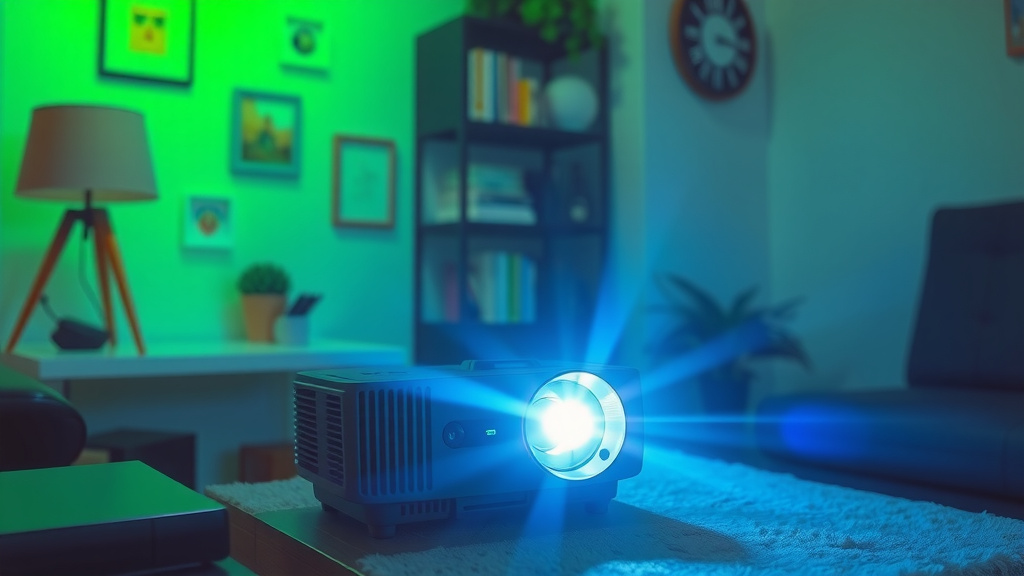
To put 200 lumens into perspective, let’s look at how it stacks up against other common projector brightness levels. This comparison helps you understand its place in the market.
| Lumens | Typical Use Cases | Best Environment |
|---|---|---|
| 50-100 | Small personal devices, pico projectors | Very dark room, small screen |
| 150-300 | Portable projectors, occasional use | Dark room, small to medium screen |
| 500-1000 | Home entertainment, portable business | Dim room, medium screen |
| 1000-2000 | Home theater, small conference rooms | Moderately lit room, medium screen |
| 2000+ | Large venues, bright rooms, home theater | Well-lit rooms, large screens |
As you can see from the table, 200 lumens is on the lower end of the spectrum. It’s primarily for situations where you can really control the light. Anything above 1000 lumens starts becoming more versatile for varied lighting conditions.
Tips for Getting the Most Out of Your 200 Lumens Projector
You’ve got a 200 lumens projector, and you want the best possible experience. Here are a few practical tips we’ve gathered to help you maximize its potential:
- Blackout curtains are your best friend: Seriously, make your room as dark as possible.
- Choose a light-colored, matte screen: A screen designed for lower light conditions can help reflect the light more effectively.
- Keep the screen size manageable: Stick to smaller screen dimensions for a brighter-looking image.
- Position the projector carefully: Avoid placing it too far from the screen.
- Experiment with projector modes: Find the best balance of brightness and picture quality for your specific setup.
- Consider the content: Animated movies or cartoons might look better than detailed, live-action films.
Conclusion
So, how bright is a 200 lumens projector? We’ve found that it’s a brightness level best suited for specific viewing conditions. For you, this means a 200 lumens projector can deliver a good experience, but only when you can control the ambient light. Think of it as a tool for cozy movie nights in a dark room or portable entertainment on camping trips. If you’re looking for a projector that can handle daytime viewing or brightly lit spaces, you’ll definitely need to consider models with higher lumen counts. To make the most of your 200 lumens projector, prioritize darkness and smaller screen sizes for the best picture.
Frequently Asked Questions
Will a 200 lumens projector work in a slightly dim room?
A 200 lumens projector will struggle in a room that’s only slightly dim. We’ve found that even a little ambient light can wash out the image significantly. For the best results, you need a room that is as close to completely dark as possible.
Can I use a 200 lumens projector for gaming?
While you can technically game with a 200 lumens projector, it’s not ideal for an immersive experience. The low brightness can make fast-paced action look washed out, and you’ll need a perfectly dark room. For gaming, we often recommend projectors with higher lumen counts for better visibility.
How large of a screen can I realistically use with 200 lumens?
We recommend keeping your screen size to around 60-80 inches diagonally at most. Anything larger will spread the limited light too thin, making the image appear dim and dull. For a brighter-looking picture, smaller is definitely better with 200 lumens.
Are 200 lumens projectors good for presentations?
A 200 lumens projector can work for presentations, but only in very specific situations. It’s best suited for small groups in a windowless room where you can completely control the lighting. For larger audiences or rooms with any natural light, you’ll need a brighter projector.
What’s the difference between lumens and ANSI lumens for projectors?
While the article focused on lumens, “ANSI lumens” is a more standardized measurement of brightness. We’ve found that ANSI lumens are generally more reliable for comparing projector brightness between different brands. Always look for the ANSI lumen rating when comparing projectors to get the most accurate idea of their brightness.