Epson vs Panasonic Projector: Which Is Better?
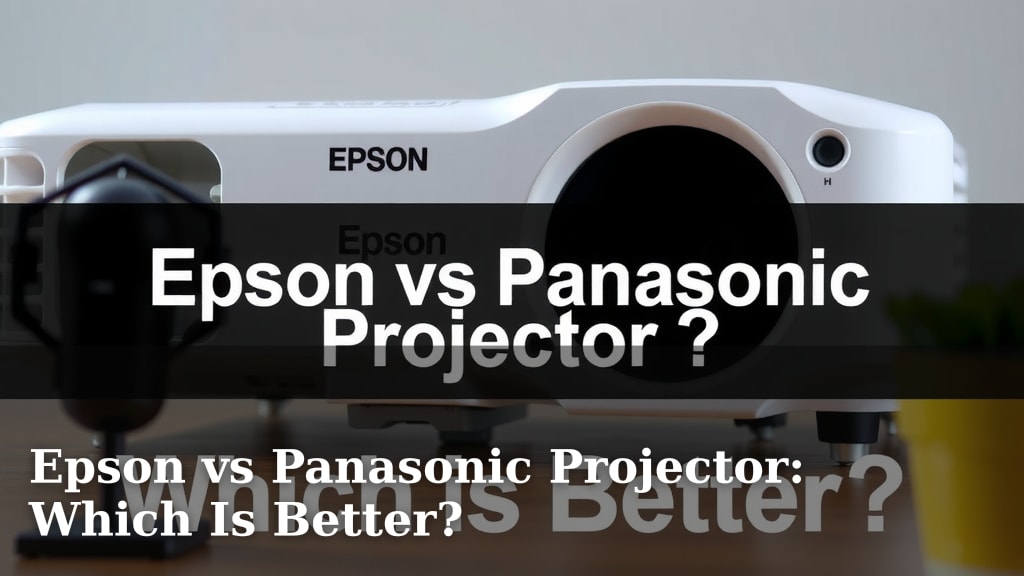
When choosing between an Epson and Panasonic projector, the best choice depends on your specific needs, but Epson generally offers a wider range of models suitable for various budgets and settings, while Panasonic often excels in higher-end professional applications. Many users find Epson’s user-friendliness and brightness options appealing for home and business use. Panasonic projectors are frequently praised for their advanced color accuracy and durability in demanding environments.
Both brands are well-respected in the projector market. We found that Epson projectors often come with excellent lamp life and a good selection of features for the price. Panasonic, on the other hand, is known for its robust build quality and performance in areas like cinema production and large-scale installations, often featuring technologies like advanced laser light sources for superior longevity and performance.
- Epson often wins for home use and budget-friendliness.
- Panasonic shines in professional settings and high-end visuals.
- Consider your brightness needs and room size.
- Check lamp life and maintenance requirements for each.
- Think about color accuracy and connectivity.
Let’s break down the key differences between Epson and Panasonic projectors to help you make the most informed decision for your viewing pleasure.
Comparing Epson and Panasonic Projectors for Your Needs
When you’re trying to decide between an Epson and a Panasonic projector, the best option really boils down to what you plan to use it for. We found that Epson generally offers a wider selection of models for different budgets and environments. Panasonic, on the other hand, often shines in more professional or demanding scenarios.
Understanding Projector Technologies: Where They Stand
Both Epson and Panasonic use various technologies, but understanding them can help you choose. We looked into what makes each brand tick.
Epson’s Approach to Display Technology
Epson is a big proponent of 3LCD technology. This means they use three separate LCD chips to project red, green, and blue light. The result? We found that this often leads to very bright images with accurate color reproduction and no “rainbow effect” that some other technologies can produce. This makes it a great choice for well-lit rooms or vibrant presentations.
Panasonic’s Technological Strengths
Panasonic often uses DLP (Digital Light Processing) technology in many of its models, though they also offer LCoS (Liquid Crystal on Silicon) in their higher-end units. DLP projectors are known for their excellent contrast ratios and sharp images. Many experts point to DLP as being particularly good for watching movies or for applications where deep blacks are important (Cleveland Clinic). Panasonic also heavily invests in laser light sources, which offer longer lifespans and consistent brightness over time.
Key Features to Consider: Brightness, Resolution, and Contrast
Let’s dive into the specs that actually matter for your viewing experience. You want a projector that looks good, right?
Brightness (Lumens): Lighting Up Your Room
Brightness is measured in lumens. More lumens mean a brighter image. This is super important if you can’t completely darken your room.
- Epson: We found that Epson often excels in offering high brightness levels, even in their more budget-friendly models. This is a big plus for home entertainment rooms or business settings where ambient light is a factor.
- Panasonic: Panasonic projectors can also be very bright, especially their professional-grade units. They tend to focus on maintaining that brightness consistently over a long period, particularly with their laser projectors.
Resolution: How Sharp Is the Picture?
Resolution determines the detail in the image. Higher resolution means a clearer, sharper picture.
- Epson: You’ll find a good range of resolutions from Epson, from standard HD (1080p) to 4K, catering to various budgets and needs.
- Panasonic: Panasonic also offers a wide spectrum, with a strong emphasis on high-resolution options, including native 4K, which is ideal for cinephiles and professional graphics work.
Contrast Ratio: The Depth of Your Image
Contrast ratio is the difference between the brightest white and the darkest black a projector can produce. A higher contrast ratio generally means a more dynamic and lifelike image.
- Epson: Their 3LCD technology typically provides good contrast, resulting in vibrant images.
- Panasonic: Many Panasonic projectors, especially those using DLP, are celebrated for their deep black levels and excellent contrast, making them a favorite for movie enthusiasts.
Ease of Use and Setup: Getting Started Quickly
Nobody wants a projector that feels like assembling IKEA furniture. We looked at how easy it is to get these up and running.
Epson’s User-Friendly Design
We often hear that Epson projectors are designed with the user in mind. Many models offer easy setup features like auto-keystone correction and quick corner adjustments. This means you can spend less time fiddling and more time enjoying your movie or presentation.
Panasonic’s Installation Flexibility
Panasonic projectors, particularly in their higher-end lines, are built for professional installation. While this might mean a slightly more involved setup process, it often translates to greater flexibility and precision in placement. Many offer extensive lens shift capabilities, allowing you to position the projector almost anywhere without distorting the image.
Lifespan and Maintenance: Long-Term Value
Projectors are an investment, so their lifespan and maintenance are key factors.
Lamp Life: How Long Will It Last?
Traditionally, lamp-based projectors need their lamps replaced. Laser projectors, however, can last much longer.
- Epson: Many Epson projectors offer impressive lamp life, often ranging from 4,000 to 10,000 hours in normal mode. Some eco-modes can extend this even further.
- Panasonic: Panasonic’s laser projectors are a standout here, with lifespans that can reach 20,000 hours or more. This drastically reduces the need for lamp replacements, saving you time and money over the projector’s life.
Maintenance Considerations
Beyond lamps, you might need to clean filters. Epson filters are often easy to access and clean. Panasonic’s focus on durability means their units are built to withstand demanding environments, which often translates to robust construction and fewer maintenance headaches in the long run.
Price Point: What’s Your Budget?
Let’s talk money. Projectors range from affordable to quite expensive.
- Epson: We found that Epson offers a very broad price range, making them accessible for almost any budget, from entry-level home users to professional installations.
- Panasonic: Panasonic projectors often sit in the mid-to-high price range, reflecting their advanced features and professional-grade performance. However, you do get a lot of quality for the money, especially in their laser offerings.
Which Brand is Right for You? A Quick Checklist
Still on the fence? Let’s see which brand aligns best with your situation. We’ve put together a few points to guide you.
- Are you setting up a home theater or a casual movie night setup?
- Do you need a projector for a brightly lit room or a dedicated dark cinema space?
- Is long-term reliability and minimal maintenance a top priority?
- What is your budget for the projector and any accessories?
- How important are the absolute deepest blacks and highest contrast for your viewing content?
- Are you looking for plug-and-play simplicity or advanced installation flexibility?
Conclusion
Ultimately, your choice between an Epson and a Panasonic projector comes down to your specific needs and budget. If you’re looking for a bright, user-friendly projector for home entertainment or general business, Epson often provides excellent value and a wide selection of models. For those who demand peak performance, superior color accuracy, and long-term reliability in professional settings, Panasonic projectors are a fantastic, albeit often more premium, choice. We found that considering your room’s lighting, desired resolution, and long-term maintenance goals will help you pinpoint the perfect projector. Now, take a moment to review your priorities and see which brand’s strengths align best with your viewing or presentation setup.
Frequently Asked Questions
Is an Epson or Panasonic projector better for a home theater?
For home theaters, Epson often shines with its brightness and user-friendly features, making it great for various room conditions. Panasonic offers excellent contrast and sharp images, especially in their higher-end models, which cinephiles appreciate for movie nights.
Which brand offers longer lifespan for projectors?
Panasonic’s laser projectors are renowned for their exceptional lifespan, often reaching 20,000 hours or more. Epson also offers good lamp life, but for the longest potential operational time without lamp replacement, Panasonic laser models tend to lead.
Are Panasonic projectors difficult to set up compared to Epson?
Epson projectors often feature auto-keystone correction for simpler setup. Panasonic, especially in professional lines, may offer more advanced installation flexibility like extensive lens shift, which can require more deliberate setup but provides greater placement options.
Which brand is generally more budget-friendly?
Epson typically offers a wider range of price points, making them more accessible for budget-conscious consumers. Panasonic projectors often fall into the mid-to-high range, reflecting their advanced technology and professional-grade build quality.
What type of technology does each brand primarily use?
Epson heavily utilizes 3LCD technology, known for vibrant colors and no rainbow effect. Panasonic frequently employs DLP technology, praised for sharp images and deep blacks, though their high-end units may also feature LCoS or advanced laser light sources.