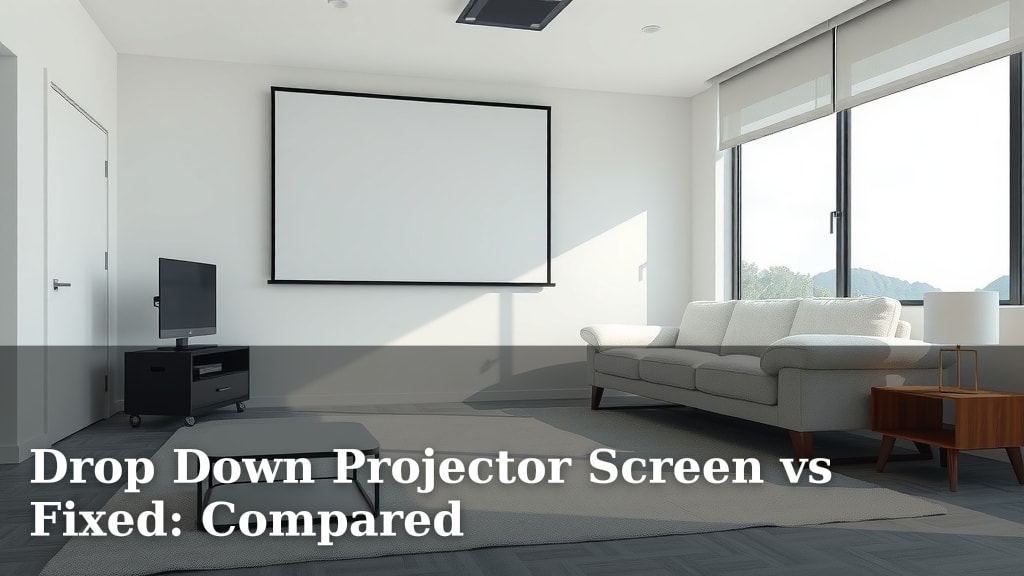
Drop Down Projector Screen vs Fixed: Compared
Choosing between a drop down projector screen and a fixed frame projector screen depends on your room and viewing habits. Drop down screens offer flexibility, retracting when not in use, while fixed frames provide a permanently taut surface for the best picture quality. Neither is definitively “better”; the right choice is about your specific needs.
Your home theater setup is personal. A drop down screen is great for multi-use rooms where you don’t want a screen always visible. A fixed frame screen is ideal if your room is dedicated to movie watching and you prioritize a perfectly flat viewing surface. We’ve researched the pros and cons of each to help you decide.
- Drop down screens retract, saving space.
- Fixed frames offer superior flatness for image quality.
- Consider room usage and permanent vs. temporary needs.
- Drop downs are easier to install for many.
- Fixed frames often have better tension for the screen material.
Let’s dive into the details of each type to help you make the perfect pick for your home cinema dreams.
Drop Down Versus Fixed Frame Projector Screens: Which is Right for Your Room?
You’ve decided on a projector, and now you’re looking at screens. It’s a big decision! The two main contenders are drop down screens and fixed frame screens. Each has its own charm and set of benefits. We’ve dug into the details to help you figure out which one will make your home theater dreams a reality.
Think of it like choosing between a retractable awning for your patio and a permanent pergola. One gives you flexibility, the other offers a steadfast structure. Your choice depends on how you plan to use the space and what you value most for your viewing experience.
Understanding the Drop Down Projector Screen
A drop down screen, often called a retractable or pull-down screen, is exactly what it sounds like. It lives inside a housing, usually mounted on your ceiling or wall. When you want to watch something, you pull it down. When you’re done, it retracts back into its case.
The Case for a Retractable Screen: Flexibility is Key
The biggest win for a drop down screen is its discreet nature. If your room isn’t solely dedicated to movie nights, this is a huge plus. You can hide the screen away when it’s not in use. This keeps your room looking tidy and functional for other activities, like game nights or even a home office space.
We found that homeowners often choose this type for living rooms or multi-purpose rooms. You don’t want a giant screen permanently on display when you’re just having dinner, right? It’s like having a magic curtain that appears for movies and disappears afterward.
Installation and Ease of Use
Generally, installing a drop down screen is fairly straightforward. Many mount directly to the ceiling joists or wall studs. The mechanism for lowering and raising the screen can be manual (a simple pull cord) or electric. Electric models offer remote control convenience, which is a nice touch for a modern setup.
You’ll want to make sure you have the right mounting hardware for your wall or ceiling type. Most manufacturers provide clear instructions, but a little DIY confidence is helpful. For electric models, you’ll also need a power source nearby.
Potential Drawbacks to Consider
While convenient, drop down screens aren’t always perfectly flat. As the screen material is pulled down and then retracted, there can be a slight ripple or wave to the surface, especially over time. This is because the material isn’t under constant tension. Think of a window shade – it can get a little wavy.
This slight imperfection, sometimes called “crawling” or “wrinkling,” can affect the uniformity of the projected image. It’s usually minor, but for the absolute purist seeking edge-to-edge perfection, it might be a point of concern. Also, the motor in electric models can eventually wear out, though this is uncommon with reputable brands.
Exploring the Fixed Frame Projector Screen
A fixed frame screen is, as the name suggests, permanently mounted to your wall. It’s a taut fabric surface stretched over a sturdy frame. There’s no rolling, no retracting – just a screen ready to go whenever you hit play.
The Pinnacle of Picture Quality: Superior Flatness
This is where fixed frame screens truly shine. Because the screen material is stretched taut and held in place by a frame, it offers a perfectly flat viewing surface. This means no waves, no ripples, and no distortions. Your projector’s image will be displayed with incredible uniformity and sharpness across the entire screen.
Many enthusiasts and professionals prefer fixed frame screens for this very reason. It’s the closest you can get to a true cinema experience at home. The image clarity is often noticeably better than with a retractable screen, especially if your projector is high-end.
Installation: A More Permanent Fixture
Installing a fixed frame screen involves mounting the frame to your wall. This can be a bit more involved than hanging a drop down screen. You’ll likely need to locate wall studs for secure mounting, and it’s usually a two-person job.
Once the frame is up, the screen material is attached, often using small grommets or tabs that hook onto the frame. Some systems use a tensioning system to ensure the fabric is perfectly flat. While more of a commitment, it results in a professional, clean look, much like a framed piece of art.
When a Fixed Frame Makes Sense
If you have a dedicated home theater room, a fixed frame screen is often the ideal choice. It’s designed to be a permanent fixture, so if you don’t need the flexibility to hide your screen, why bother with the mechanics of a retractable one?
We found that rooms optimized for watching movies, with controlled lighting and dedicated seating, benefit most from the superior image quality a fixed frame provides. It’s like having your own private cinema, ready at a moment’s notice, without any fuss once it’s installed.
The Trade-Off: Less Flexibility
The obvious downside is that a fixed frame screen is always visible. If your viewing room also serves other purposes, this might be a significant drawback. You can’t simply tuck it away when guests come over for a party and you want to create a more open space.
It’s a commitment to your home theater setup. If you anticipate moving homes frequently or reconfiguring your room often, a fixed frame might not be the best fit. It’s more of a long-term solution for a well-established viewing space.
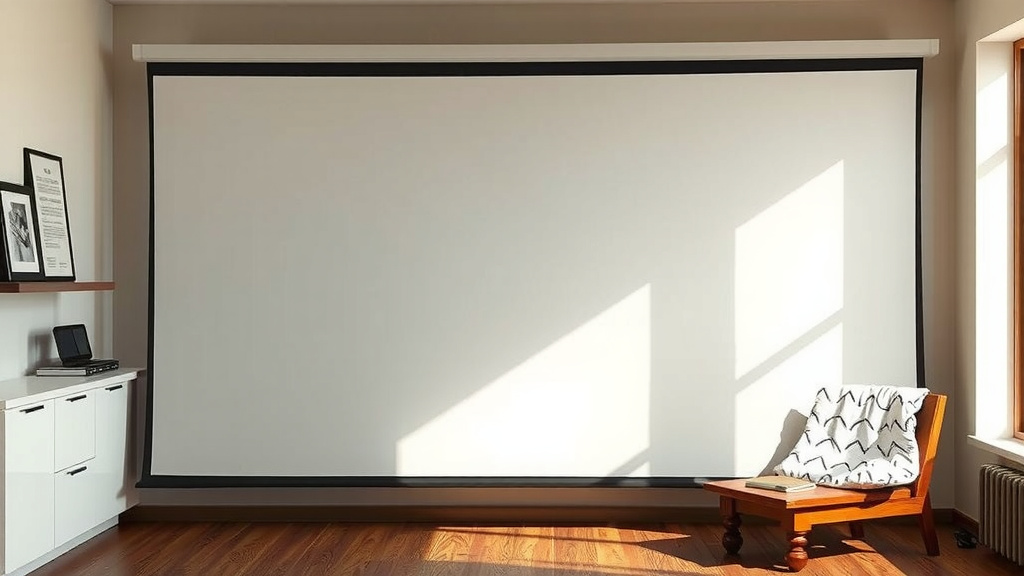
Quick Comparison: Key Differences at a Glance
To make things even clearer, let’s break down the main points side-by-side. Think of this as your quick cheat sheet to help you weigh your options.
| Feature | Drop Down Screen | Fixed Frame Screen |
|---|---|---|
| Screen Flatness | Good, but can develop minor waves/ripples over time. | Excellent; always taut and perfectly flat. |
| Visibility When Not in Use | Retracts into housing, hidden. | Always visible, permanently mounted. |
| Room Flexibility | High; ideal for multi-use rooms. | Low; best for dedicated viewing spaces. |
| Installation | Generally easier, especially manual models. | More involved, often requires two people. |
| Image Quality Potential | Very good, but can be affected by screen flatness. | Superior, due to perfect flatness and tension. |
| Aesthetics | Discreet when retracted. | Looks like a permanent fixture or framed art. |
Your Decision Checklist: Are You Ready?
Before you make your final choice, run through this quick checklist. It will help solidify which screen type aligns best with your lifestyle and viewing space.
- Do you have a dedicated home theater room, or is your space multi-functional?
- Is screen visibility when not in use a concern for you?
- How important is the absolute best possible image flatness to your viewing experience?
- Are you comfortable with a more permanent installation, or do you prefer flexibility?
- What is your budget for installation and the screen itself? (While not detailed here, this is also a factor!)
- How much DIY experience do you have, or are you planning to hire someone for installation?
Conclusion
You’ve seen the differences between drop down and fixed frame projector screens. A drop down screen offers fantastic flexibility for rooms with multiple uses. It tucks away neatly, keeping your space tidy. On the other hand, a fixed frame screen provides the ultimate in image perfection, delivering a consistently flat surface for cinematic viewing. Your choice hinges on whether you prioritize space-saving convenience or the absolute best picture quality. We recommend thinking about how you use your room daily. Then, decide which screen type best supports that lifestyle. You’re now ready to make a confident decision for your home cinema!
Frequently Asked Questions
Can a drop down screen ever be perfectly flat?
While drop down screens are designed to be flat when extended, they can develop slight waves or ripples over time. This is because the screen material isn’t under constant tension like a fixed frame. For most viewers, these imperfections are minor and won’t detract significantly from the experience.
Is a fixed frame screen difficult to install on my own?
Installing a fixed frame screen can be more involved than a drop down. We found that it often requires a second person for support and secure mounting. Locating wall studs is essential for a stable installation. However, many users find the effort worthwhile for the professional finish.
Which type of screen is better for reducing ambient light issues?
Neither screen type directly addresses ambient light. However, a fixed frame screen‘s perfect flatness can sometimes make it slightly more forgiving with subtle light reflections. For significant ambient light issues, you’ll want to focus on light control in your room and consider screen material properties.
Will an electric drop down screen eventually stop working?
Electric drop down screens have a motor that can eventually wear out, though this is uncommon with reputable brands and normal usage. Most manufacturers offer warranties, and replacement motors can often be sourced if needed. Manual pull-down screens eliminate this potential concern entirely.
Can I use a fixed frame screen in a room that I also use for other activities?
While technically possible, we found that fixed frame screens are best suited for dedicated viewing spaces. Since they are permanently mounted and always visible, they can be obtrusive in multi-purpose rooms. If you need flexibility, a drop down screen is generally a better fit for such scenarios.