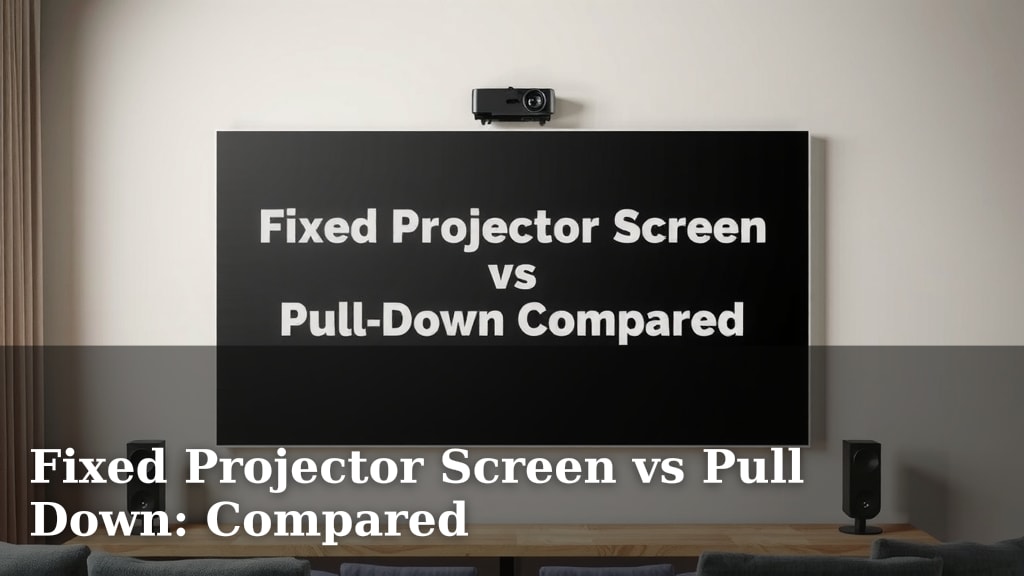
Fixed Projector Screen vs Pull Down: Compared
Choosing between a fixed projector screen and a pull-down screen depends on your room and how you’ll use it. Fixed screens offer a perfectly taut, flat surface for the best picture quality. Pull-down screens provide flexibility, retracting when not in use, making them ideal for multi-purpose rooms. We found that the choice really boils down to prioritizing picture perfection versus space-saving convenience.
A fixed projector screen is permanently mounted and always ready to go. This means no wrinkles or waves on your viewing surface. A pull-down screen, on the other hand, hides away in a housing. It’s a great option if you don’t want your screen to be a permanent fixture. Many experts agree that the tension of a screen greatly impacts the final image.
- Fixed screens provide the flatest surface for superior image quality.
- Pull-down screens offer versatility and hide away neatly.
- Consider your room’s primary use: dedicated home theater or multi-use space.
- Think about how important a perfectly flat screen is to your viewing experience.
Let’s break down the pros and cons of each so you can make the best choice for your home theater setup.
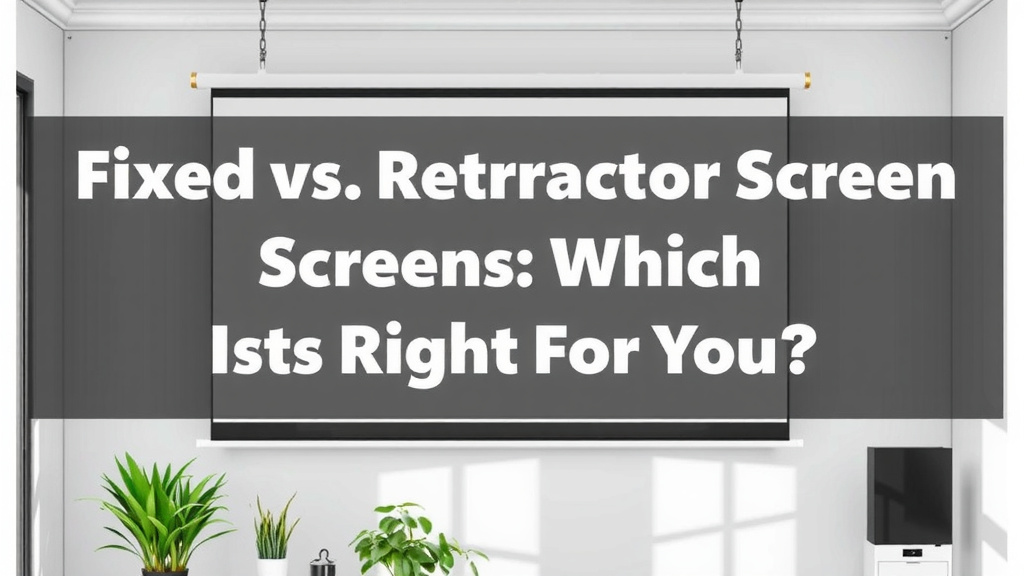
“`htmlFixed vs. Retractable Projector Screens: Which Is Right for You?
So, you’re thinking about a projector screen. That’s awesome! It’s a big step up from a bare wall. But now you’re faced with a choice: fixed or pull-down? We get it. It’s not always obvious. Both have their place. We’re here to help you figure out which type will make your movie nights, gaming sessions, or presentations shine brightest.
Let’s dive into what makes each screen type tick. We’ll look at how they perform and where they fit best in your home. Think of it like choosing between a perfectly tailored suit and a comfy, everyday jacket. Both serve a purpose, but they’re suited for different occasions. We found that understanding the core differences makes the decision much clearer.
The Case for Fixed Projector Screens
Fixed projector screens are like the dedicated athletes of the screen world. They are mounted permanently on your wall. They don’t move. Ever. This might sound rigid, but it’s actually their biggest strength. Because they are always stretched taut, they provide a perfectly flat and smooth surface. This is super important for image quality.
Why Flatness Matters So Much
You might be wondering, “What’s the big deal about a little flatness?” Well, even minor waves or wrinkles on a screen can distort the projected image. This means your picture can look wavy or blurry in spots. It’s like trying to read a book with crumpled pages. Fixed screens eliminate this problem entirely. They offer the most pristine viewing surface possible.
Research consistently shows that screen tension is key to a great image (ProjectorCentral). A fixed frame ensures maximum tension. This results in sharper details and more vibrant colors. You get closer to the cinematic experience you’re aiming for. It’s the closest you’ll get to a true theater feel at home.
Installation and Aesthetics
Installing a fixed screen does require a bit more commitment. You’ll need to mount the frame securely to your wall. Once it’s up, it’s there to stay. This means it will be a permanent fixture in your room. Some people love this. It gives the room a dedicated home theater vibe. Others might find it too permanent for a multi-use space.
The frame itself can also be a design element. Many fixed screens come with a sleek, beveled frame. Some can even be painted to match your room decor. They look professional and are designed to be seen, not hidden away. Think of it as a framed piece of art, but one that displays incredible visuals.
When a Fixed Screen Shines
- You have a dedicated home theater room.
- You want the absolute best possible image quality.
- You don’t mind a permanent installation.
- You appreciate a clean, professional look.
The Appeal of Pull-Down Projector Screens
Pull-down screens, also known as manual or retractable screens, offer a different kind of advantage: flexibility. These screens are housed in a casing, usually mounted on the wall or ceiling. You pull the screen down when you want to use it. When you’re done, you simply retract it back into its housing.
This is a huge win for rooms that serve multiple purposes. Imagine your living room doubling as a movie theater. Or your office becoming a presentation space. A pull-down screen allows you to have both. It’s the master of disguise. When it’s up, you barely know it’s there. This is especially helpful if you have kids or pets who might bump into a permanently lowered screen.
The Trade-off: Tension and Flatness
Here’s where the compromise comes in. Because pull-down screens are designed to retract, achieving the same level of perfect flatness as a fixed screen can be challenging. The mechanism that allows it to roll up can introduce slight waves or curvature. We found that this is more common in lower-cost models.
However, many higher-end pull-down screens incorporate tensioning systems. These systems use cables or side-mounts to help keep the screen taut. This greatly improves flatness. It’s not always as perfect as a fixed screen, but it can be very, very good. Many experts suggest looking for “tab-tensioned” models for the best results (Sound & Vision Magazine).
Ease of Use and Space-Saving
The biggest draw for a pull-down screen is its convenience. Need to watch a movie? Pull it down. Done? Roll it up. It’s incredibly simple. This is a major plus if your room needs to switch gears quickly. You don’t have to worry about protecting a permanently lowered screen.
The space-saving aspect is undeniable. When retracted, the screen is out of the way. This is perfect for smaller rooms or multipurpose spaces. It doesn’t dominate the room like a large, permanent frame might. You get your wall space back when you’re not using the screen. This maintains the room’s primary function.
Who Benefits from a Pull-Down Screen?
- You have a multi-purpose room (living room, bedroom, office).
- You need a screen that can be easily hidden away.
- You value convenience and quick setup.
- You want to maintain the room’s aesthetic when not in use.
Key Differences at a Glance
To help solidify your decision, let’s put the core differences side-by-side. This comparison table highlights the main points we’ve discussed.
| Feature | Fixed Projector Screen | Pull-Down Projector Screen |
|---|---|---|
| Surface Flatness | Excellent (permanently taut) | Good to Very Good (can have slight waves, better with tension systems) |
| Installation | Permanent, requires wall mounting | Wall or ceiling mount, retractable |
| Space Saving | Takes up permanent wall space | Retracts, frees up wall space |
| Ease of Use | Always ready | Simple pull-down/retract mechanism |
| Best For | Dedicated home theaters, ultimate picture quality | Multi-purpose rooms, convenience, space-conscious users |
| Aesthetics | Can be a decorative frame, permanent feature | Discreet when retracted, minimal presence |
Making Your Final Choice: A Quick Checklist
Still on the fence? Ask yourself these questions. Answering them honestly will point you towards the screen that’s just right for your setup.
- Is my room primarily a home theater, or does it serve multiple functions?
- How important is a perfectly flat screen to my viewing experience?
- Am I comfortable with a permanent installation, or do I need flexibility?
- What is my budget for the screen and installation?
- Do I want the screen to be a visible feature, or should it disappear when not in use?
- What size screen do I need, and will either type accommodate it well?
Choosing the right projector screen is a key step towards achieving that amazing home cinema or presentation space you’ve dreamed of. By understanding these distinctions, you’re well on your way to making a decision you won’t regret.
“`Conclusion
You’ve now seen the strengths of both fixed and pull-down projector screens. A fixed screen offers unmatched picture perfection for a dedicated home theater space. If you need flexibility and want your screen to disappear, a pull-down screen is likely your best bet. We found that your room’s primary use and your personal preference for image quality versus convenience are the deciding factors. Make your choice based on what will best enhance your viewing or presentation experience!
Frequently Asked Questions
Do pull-down screens really get as flat as fixed screens?
Pull-down screens can get very flat, especially higher-end models with tensioning systems. While they might not achieve the absolute perfect flatness of a permanently taut fixed screen, they often come very close. Research indicates that “tab-tensioned” pull-down screens offer the best flatness for retractable options.
Is a fixed screen installation difficult?
Installing a fixed screen requires more commitment as it’s a permanent fixture. You’ll need to securely mount the frame to your wall. While it can be a DIY project, some prefer professional installation to ensure it’s perfectly aligned and secure.
Can a pull-down screen be used in a bright room?
Screen material plays a bigger role than the type of screen mount in bright rooms. Both fixed and pull-down screens are available with specialized ambient light-rejecting (ALR) materials. These materials help improve contrast and image pop in well-lit environments.
Which type of screen is better for gaming?
For gaming, a fixed projector screen is generally preferred. The perfectly flat surface ensures zero image distortion, which is critical for fast-paced gaming where precise visuals matter. This maximizes the sharpness and clarity you get from your console or PC.
What happens if a pull-down screen gets a wrinkle?
Minor wrinkles on a pull-down screen can sometimes be smoothed out over time with repeated use or by ensuring proper tension. However, significant wrinkles can be difficult to remove entirely and may affect image quality. It’s why choosing a quality tab-tensioned model is often recommended.