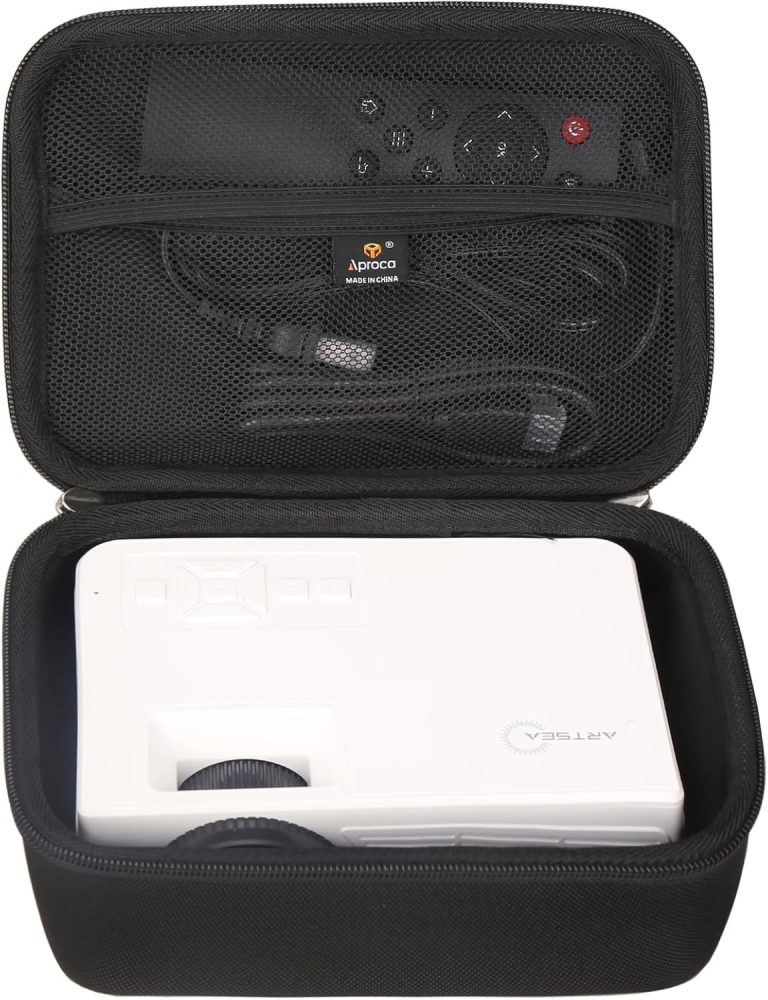
The Best Waterproof Projector Carry Cases of November 2026
Yes, you need a waterproof projector carry case if you want to keep your equipment safe from rain, spills, or unexpected splashes. A standard backpack won’t cut it when a sudden storm hits on your way to a client site or an outdoor event. The best waterproof projector carry case combines a sealed outer shell with padded interior protection so your device stays dry and damage-free.
You might think any bag will do, but we found that moisture is the number one enemy of projectors. Even a small amount of water can ruin the lens, short out the internal circuits, and leave you with a very expensive paperweight. A proper waterproof case shields your gear from rain, dust, and accidental drops, making it a smart investment for anyone who travels with their projector. Whether you’re a teacher moving between classrooms or a business pro hauling gear to meetings, the right case gives you total peace of mind.
- Waterproof vs. water-resistant: Waterproof means sealed against submersion; water-resistant only handles light splashes.
- Hard shell vs. soft shell: Hard cases offer maximum impact protection; soft cases are lighter and easier to pack.
- Check the IP rating: Look for IPX6 or higher for reliable rain protection during transport.
- Custom foam matters: Pre-cut or adjustable foam keeps your projector snug and prevents internal rattling.
- Price ranges: You can find quality waterproof cases from $40 to $200, depending on size and durability.
Below, we break down exactly how to choose the best waterproof projector carry case for your needs, what features actually matter, and which ones are worth your money. Let’s find the perfect home for your projector.
Why Standard Bags Fail to Protect Your Projector
You might grab a regular backpack or a generic laptop bag when you head out the door. We found that this is a risky move for most projector owners. Standard bags are built for books and electronics that can handle a little moisture, not for sensitive optical gear.
Think about it. A projector lens is like a camera lens. A single drop of water on the glass can leave a permanent stain or even cause the internal coatings to peel. A basic nylon backpack offers almost no barrier against heavy rain. The water soaks right through the fabric and pools at the bottom.
Many experts say that moisture damage is the leading cause of projector failure outside of normal wear. It is not always a dramatic spill. Sometimes it is just the humidity from a rainy commute that gets trapped inside a non-breathable bag. That trapped moisture leads to mold on the lens and corrosion on the circuit boards.
The Difference Between Water-Resistant and Waterproof
You see these two words thrown around a lot, and they are not the same thing. Water-resistant means the material can handle a light mist or a few splashes. It will not survive a downpour. Waterproof means the case is sealed to keep water out entirely, even if it gets submerged for a short time.
We recommend you check the product label carefully. Many bags claim to be “weatherproof,” but that is just a fancy way of saying water-resistant. For real protection, you want a case that uses a fully sealed zipper or a roll-top closure. These designs physically block water from getting inside the main compartment.
What Happens to a Projector When It Gets Wet
Water and electricity do not mix. That is the obvious part. But the damage is often silent and slow. Water can short out the power supply immediately, but it can also leave mineral deposits on the internal components. Those deposits cause the projector to overheat or fail months later.
The lens is another weak spot. Once water gets between the glass elements, it is nearly impossible to remove without professional repair. Many guidelines point to the fact that a wet lens means a ruined image (National Institute of Standards and Technology). You might see blurry spots or a permanent haze. That is a repair bill you want to avoid.
Choosing the Right Waterproof Case for Your Gear
Let us walk you through the key features that actually matter. You want a case that fits your specific projector model, not just a one-size-fits-all bag. We found that a snug fit is more important than extra padding in many situations.
Start by measuring your projector. Check the length, width, and height. Most manufacturers list the dimensions on the product page. You want a case that is slightly larger than your device, with enough room for a layer of foam on all sides.
Hard Shell Cases: Maximum Protection
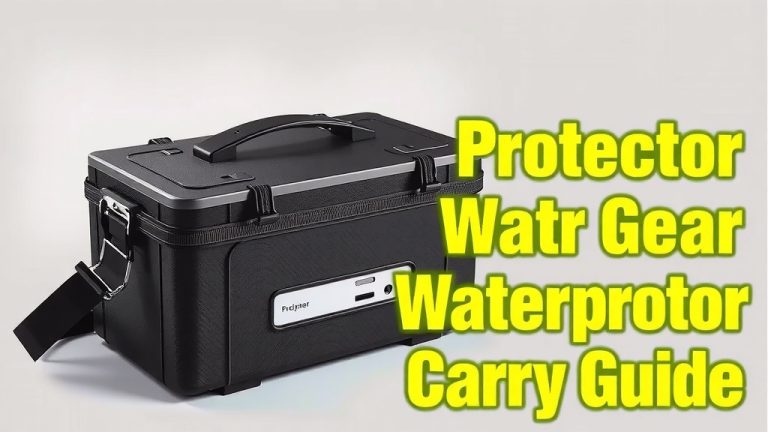
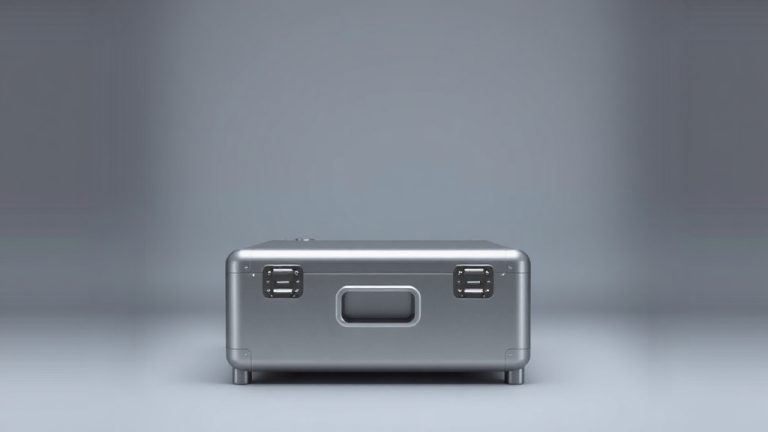
Hard shell cases are the heavy-duty option. They are typically made of high-impact plastic like ABS or polypropylene. These cases look like small suitcases or toolboxes. They offer the best protection against drops, impacts, and crushing.
We recommend a hard shell case if you check your projector as luggage or carry it on job sites. The rigid exterior absorbs the shock of a fall. Many of these cases also come with a rubber gasket around the lid. That gasket creates an airtight and waterproof seal when you close it.
One downside is weight. Hard cases are bulky and can be heavy to carry. You trade a little convenience for a lot of safety. If you have a larger conference-room projector, this is the best choice. For a small portable pico projector, it might be overkill. For a small portable pico projector, our USA Gear Mini Projector Case review shows a lighter option that still protects.
Soft Shell Cases: Lightweight and Portable
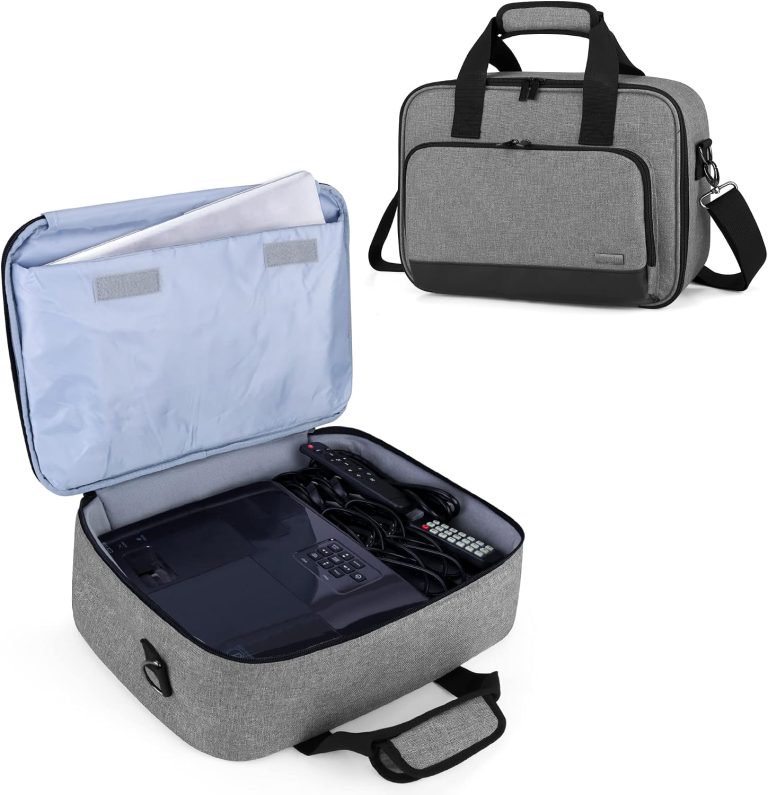
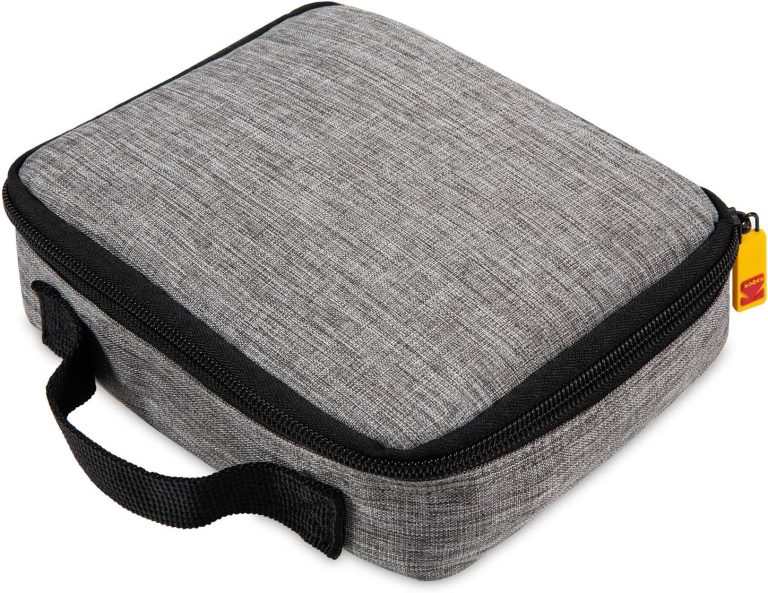
Soft shell cases are usually made of heavy-duty nylon or polyester with a waterproof coating. They are lighter and easier to pack into a bigger bag. Many have shoulder straps or handles for easy carrying. We found that soft cases are perfect for daily commuters who want a balance between protection and portability.
Do not mistake a soft case for a flimsy one. The best soft cases have a thick padded interior and a waterproof inner liner. The outer fabric might be flexible, but the inside keeps your projector safe. Look for cases with a roll-top closure. Roll-tops are more reliable than zippers when it comes to keeping water out.
Hybrid Options: The Best of Both Worlds
Some manufacturers make hybrid cases that combine a hard frame with soft fabric panels. These give you the impact resistance of a hard case with the flexibility of a soft one. They are becoming more popular, and we found that they offer great value for most users.
These hybrids usually have a hard base and a soft top. The base protects the projector from drops, while the top keeps the weight down. They are not fully submersible, but they handle heavy rain well. If you want a versatile case that works for travel and daily use, a hybrid is a solid middle ground.
Key Features to Look For in a Waterproof Case
Now that you know the main types, let us talk about the details. The right features make the difference between a case that lasts years and one that falls apart in months. Pay attention to the zippers, seams, and foam inside.
Sealed Zippers and Seams
The zipper is the weakest point on any waterproof bag. A regular zipper has tiny gaps where water can sneak through. Look for a case with a waterproof or YKK AquaGuard zipper. These have a special coating that seals the teeth when closed.
The seams are just as important. Water can leak through the needle holes if the seams are not taped. Check the inside of the case. Good waterproof cases have sealed or welded seams. If you see loose threads or open stitching, that is a red flag.
Shock-Absorbing Foam Padding
Water protection is only half the battle. Your projector also needs to survive bumps and drops. Look for cases with high-density foam padding on all sides. The foam should be at least a quarter-inch thick to provide real cushioning.
Many cases come with pre-cut foam inserts that you can customize. You can pick out the foam blocks to create a perfect mold for your projector. This keeps the device from sliding around inside the case. A snug fit prevents internal damage during transport.
Customizable Foam Inserts
You might think that all foam is the same, but it is not. The best cases use a two-layer foam system. The top layer is soft and conforms to your device. The bottom layer is firmer and absorbs impact. We found that this combination offers the best protection against sudden jolts.
Some cases also have a pick-and-pluck foam system. This is a block of foam with pre-scored squares. You can pluck out the squares to create a custom shape for your projector. It is easy to do and does not require any special tools.
Understanding IP Ratings and What They Mean
You will see an IP rating on many waterproof cases. IP stands for Ingress Protection. It is a standard that tells you how well a case resists dust and water. The rating has two numbers. The first number is for dust, and the second is for water.
For water, the scale goes from 0 to 8. A rating of IPX0 means no protection. IPX4 means it can handle splashes. IPX6 means it can handle powerful water jets. IPX7 means it can be submerged in up to one meter of water for 30 minutes. IPX8 means it can handle deeper submersion.
| IP Rating | Water Protection Level | Best Use Case |
|---|---|---|
| IPX4 | Splashes from any direction | Light rain, brief outdoor use |
| IPX5 | Low-pressure water jets | Heavy rain, wet environments |
| IPX6 | High-pressure water jets | Boating, outdoor events, heavy storms |
| IPX7 | Immersion up to 1 meter | Accidental drops in water |
We recommend you look for a case with an IPX6 rating or higher. This ensures your projector stays dry even in a heavy downpour. An IPX7 rating is even better if you think you might drop the case in a puddle or a lake. Just remember that IPX7 cases are usually more expensive.
Do You Really Need Submersion Protection?
Honestly, most people do not need IPX7 or IPX8 protection. You are not going to intentionally throw your projector in a pool. An IPX6 rating is plenty for commuting, outdoor events, and travel. It will handle rain and splashes without any issues.
We found that IPX6 is the sweet spot for most users. It offers reliable rain protection without the bulk and cost of a fully submersible case. If you work near water or in extreme weather, then pay the extra for IPX7. For everyone else, IPX6 is more than enough.
Sizing and Fit: Getting the Perfect Match
You cannot just buy any waterproof case and hope it fits. A case that is too big allows your projector to rattle around. A case that is too small will not close properly, which compromises the waterproof seal. You need to match the case to your specific projector model.
Start with the manufacturer’s specifications for your projector. Write down the width, depth, and height. Then compare those numbers to the interior dimensions of the case. Make sure there is at least one inch of clearance on all sides for foam padding.
Measuring Your Projector Correctly
Grab a tape measure and measure the projector at its widest points. Do not include the cables or the remote in the interior dimension. You will store those separately or in a side pocket. The case needs to fit the projector body itself.
If your projector has a protruding lens, measure from the front of the lens to the back of the unit. That is the true depth. Many people forget to account for the lens and end up with a case that is too short. We found that measuring twice saves you a lot of hassle.
Account for Accessories
Do you carry extra HDMI cables, a power adapter, or a remote? You need space for those too. Some cases have a separate compartment or mesh pocket for accessories. Others are a single open cavity, which means you need to plan the layout carefully.
We suggest you buy a case that is one size larger if you carry accessories regularly. This gives you room to add cables without cramming them on top of the projector. Cramming puts pressure on the lens and can cause damage over time.
Price Ranges and Budget Considerations
Waterproof projector cases come in a wide range of prices. You can find a basic soft shell case for around $40. A high-end hard shell case with custom foam can cost $200 or more. The right choice depends on your budget and how often you travel.
We recommend you do not go for the cheapest option. A $30 case might look fine on paper, but the zippers are often flimsy and the fabric is thin. It might fail after a few months. We found that a mid-range case in the $70 to $120 range offers the best balance of quality and value.
What You Get at Different Price Points
Under $50, you get a basic soft case with a waterproof coating and light padding. These are fine for occasional use and light rain. They are not built for heavy travel or rough handling.
Between $50 and $100, you get better materials, sealed zippers, and thicker foam. These cases are suitable for weekly commutes and regular outdoor events. They offer reliable rain protection and decent drop protection.
Above $100, you get hard shell cases with IPX7 ratings and custom foam inserts. These are the professional-grade options. They can survive drops, submersion, and years of heavy use. If you rely on your projector for work, this is the tier to consider.
Maintenance Tips for Your Waterproof Case
Buying a good case is only the first step. You need to take care of it to keep the waterproof seal working. Dirt and sand can wear down the zippers and the rubber gaskets over time.
Conclusion
Your projector is a serious investment, and protecting it from water should be a top priority. We walked you through everything you need to know, from the difference between waterproof and water-resistant to picking the right IP rating and shell type. The key is matching the case to your specific projector model and travel habits.
Start by measuring your projector and thinking about where you take it most. If you commute daily or work outdoors, aim for an IPX6-rated case with sealed zippers and at least a quarter-inch of foam padding. A mid-range case between $70 and $120 gives you the best protection without breaking the bank.
Do not wait until after a rainstorm ruins your gear. Grab your tape measure, check your projector’s dimensions, and order a case that fits snugly today. Your future self will thank you.
Frequently Asked Questions
Can I use a regular dry bag instead of a projector case?
You could, but we do not recommend it. Dry bags keep water out but offer zero padding for drops or bumps. Your projector needs both waterproofing and shock absorption to survive real-world travel.
A dedicated projector case combines a sealed exterior with foam inserts that hold your device in place. That dual protection is what keeps your lens safe and your circuits dry.
Will a waterproof case protect my projector if I drop it in a lake?
Only if the case has an IPX7 or IPX8 rating. Those ratings mean the case can handle submersion in up to one meter of water for 30 minutes or more. An IPX6 case handles heavy rain and splashes but is not designed for full submersion.
We suggest you read the fine print before buying. A case that is “waterproof” for rain is not the same as one built for accidental drops in deep water.
How often should I replace the foam inserts in my projector case?
Foam inserts last a long time if you treat them well. We found that most quality foam holds its shape for several years of regular use. Check the foam every few months for signs of compression or crumbling.
If the foam starts to flatten out or lose its firmness, replace it. A loose-fitting projector can rattle around and suffer internal damage even inside a waterproof case.
Is a hard shell case always better than a soft shell case?
Not always. Hard shell cases offer superior impact protection, but they are heavy and bulky. Soft shell cases are lighter and easier to pack, making them better for daily commuters who do not need extreme drop protection.
We recommend you pick based on how you travel. If you check your projector as luggage or work on construction sites, go hard shell. If you just need rain protection for a short commute, a quality soft shell is plenty.
Can I store my projector in the waterproof case long-term?
Yes, but you should keep a few things in mind. Make sure the projector is completely dry and cool before sealing it inside the case. Trapped moisture from a warm projector can create condensation and lead to mold.
We also suggest you add a small silica gel pack to absorb any residual humidity. Open the case every few weeks to let air circulate and check on your equipment.