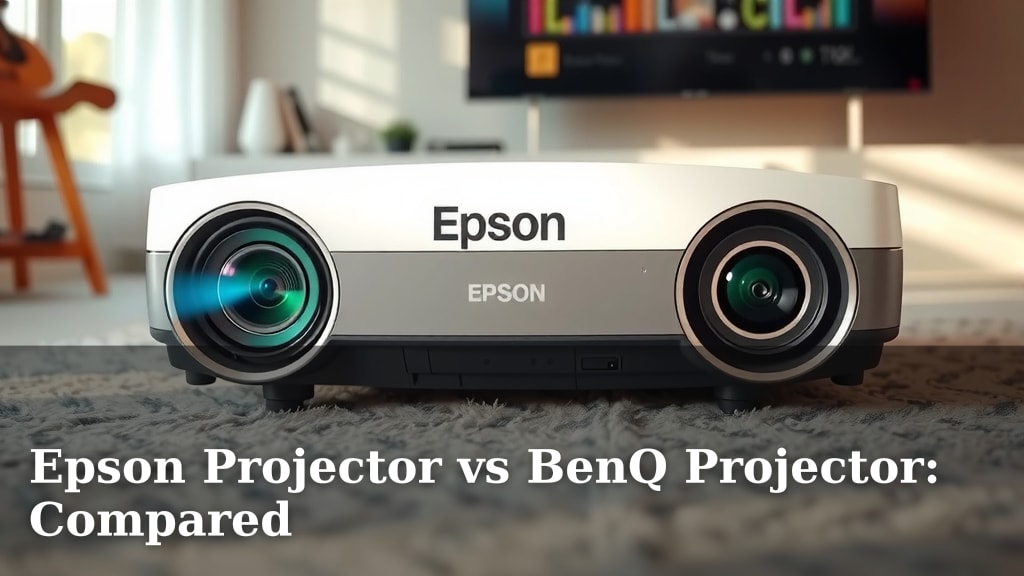
Epson Projector vs BenQ Projector: Compared
Choosing between an Epson projector and a BenQ projector depends on your specific needs. Both brands offer excellent options, but Epson often leads in brightness and color accuracy for home cinema, while BenQ excels in gaming features and portability.
When you’re trying to decide which projector will best suit your movie nights or presentations, considering factors like resolution, lamp life, and smart features is important. We’ve looked into what makes each brand stand out so you can make the best choice for your setup.
- Epson often has higher brightness and better color accuracy for movies.
- BenQ is great for gamers with low input lag and is often more portable.
- Consider resolution (1080p vs 4K) and lamp life for long-term costs.
- Smart features like built-in streaming apps can add convenience.
- Your budget will also play a big role in the features you get.
Let’s break down what each brand brings to the table to help you find your perfect projector match.
Epson vs. BenQ: Decoding Your Projector Choice
When you’re looking to bring big-screen magic into your home or create a more engaging presentation space, choosing the right projector brand is a big step. Both Epson and BenQ are powerhouses in the projector market. They offer a wide range of models to fit different needs and budgets. We’ve looked into what makes each brand shine, so you can feel confident in your decision.
Think of it like picking a favorite tool. You wouldn’t use a hammer for a screw, right? Similarly, the best projector for you depends on what you plan to do with it. Are you hosting epic movie nights? Need sharp visuals for business meetings? Or perhaps you’re a gamer looking for lag-free action? Let’s dive into how these two brands stack up.
Understanding Projector Technology Basics
Before we get into the nitty-gritty of Epson and BenQ, let’s quickly touch on some key features. These elements will help you compare models from either brand more effectively.
Resolution Matters for Clarity
Resolution is like the pixel count on your TV. More pixels mean a sharper, more detailed image. You’ll commonly see 1080p (Full HD) and 4K UHD (Ultra High Definition). For a truly cinematic experience, especially for larger screens, 4K is often preferred, but 1080p can still look fantastic.
Brightness and Contrast: Seeing the Details
Brightness, measured in ANSI lumens, tells you how well a projector can combat ambient light. Higher lumens mean a brighter image, which is essential if you can’t completely darken your room. Contrast ratio is also key; it’s the difference between the brightest white and the darkest black. A higher contrast ratio delivers deeper blacks and more vibrant colors.
Lamp Life and Maintenance
Projectors use lamps that eventually burn out. You’ll want to check the lamp life, usually rated in hours. Some projectors use traditional lamps, while others feature LED or laser light sources, which can last much longer and often require less maintenance.
Epson: The Home Cinema and Brightness Champion
Epson has carved out a strong reputation, especially for those who prioritize image quality for entertainment. They are often lauded for their vibrant color reproduction and excellent brightness levels.
Epson’s 3LCD Technology Advantage
A key differentiator for Epson is their widespread use of 3LCD technology. Unlike some projectors that use a single chip, 3LCD uses three separate chips for red, green, and blue light. We found this often results in brighter whites and more vivid colors. Many reviews suggest this setup minimizes the “rainbow effect” some viewers might notice with other technologies.
Color Accuracy and Vibrancy
If you’re a movie buff, color accuracy is huge. Epson projectors are frequently praised for delivering lifelike colors right out of the box. This means the hues you see on screen closely match what the filmmakers intended. This focus on color makes them a popular choice for dedicated home theaters.
Brightness for Real-World Viewing
Epson often offers models with impressive brightness (high ANSI lumens). This is a big win if your viewing room isn’t a perfectly controlled dark cave. We found that this higher brightness can make your movies and shows pop even with some ambient light present, giving you more flexibility in where you set up.
Epson’s Feature Set
Many Epson projectors come equipped with handy features. You can often find built-in speakers, lens shift for easier placement, and good zoom capabilities. Some higher-end models even include smart streaming apps.
BenQ: The Gaming and Versatility Specialist
BenQ has gained significant traction, particularly among gamers and those looking for projectors that are easy to set up and move. They balance performance with practical features.
BenQ for Gamers: Low Input Lag is Key
For gamers, input lag can be a deal-breaker. This is the delay between your controller input and what happens on screen. BenQ has heavily focused on reducing input lag in many of their models, especially those marketed for gaming. We found that this makes their projectors feel much more responsive during fast-paced games.
Game Modes and Enhanced Visuals
Beyond just lag, BenQ projectors often include specific “Game Modes”. These modes are designed to optimize contrast and color for different game genres, helping you spot details in dark scenes or make fast action clearer. Many sources indicate these modes can genuinely improve the gaming experience.
Portability and Easy Setup
BenQ often excels in creating projectors that are compact and user-friendly. Many models are lighter and smaller, making them easier to move from room to room or even take to a friend’s house. They also typically offer straightforward setup with features like automatic keystone correction to quickly square up the image.
Durability and Brightness Options
While some BenQ models might not reach the peak brightness of certain Epson counterparts, they still offer robust performance. They often use DLP technology, which is known for producing sharp, high-contrast images. Many users appreciate the solid build quality and the reliability they offer.
Direct Comparison: Key Differences Summarized
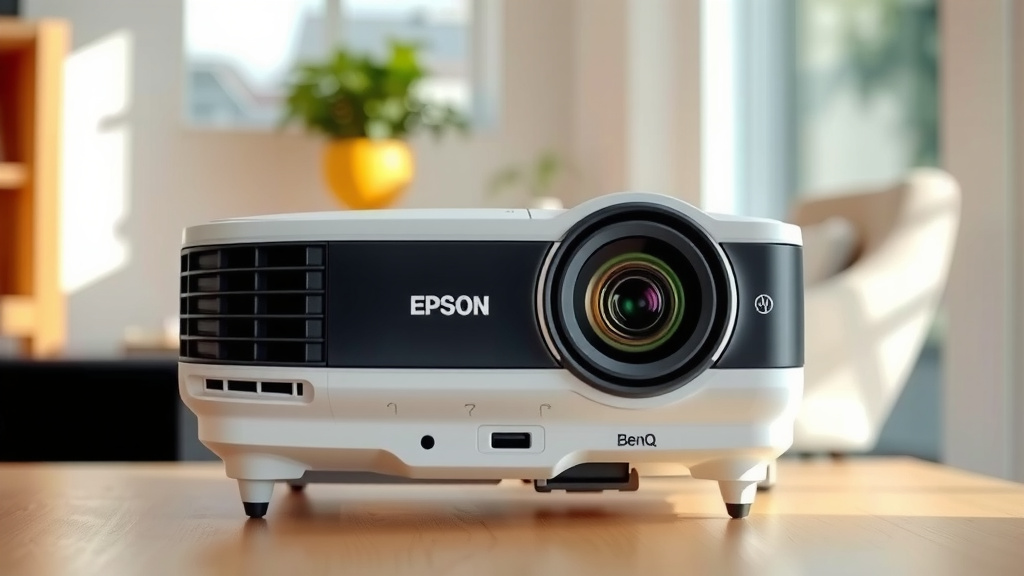
To help you visualize the differences, let’s look at how they generally compare across important categories. Keep in mind that specific models within each brand can vary widely.
| Feature | Epson (General Tendency) | BenQ (General Tendency) |
|---|---|---|
| Color Accuracy | Excellent, often vibrant for movies. | Very good, often optimized for gaming contrast. |
| Brightness | Often higher lumens, good for ambient light. | Good, but some models may be less bright than top Epson options. |
| Technology | Strong focus on 3LCD. | Often uses DLP technology. |
| Gaming Features | Can be good, but less of a primary focus for many models. | Excellent, with low input lag and game modes being a highlight. |
| Portability | Varies, some models are bulkier. | Often more compact and lighter. |
| Lamp Life | Standard lamp life on many models, some laser options. | Standard lamp life, with longer-lasting laser/LED options available. |
Making Your Final Choice: A Quick Checklist
Still on the fence? Run through this quick checklist to see which brand aligns better with your priorities. It’s about finding the best fit for your lifestyle.
- Do you watch a lot of movies in a darker room? (Epson might lead here.)
- Is gaming responsiveness a top priority for you? (BenQ often excels.)
- Do you need a projector that’s easy to move around often? (Consider BenQ.)
- Is ultimate color vibrancy essential for your home theater? (Epson is a strong contender.)
- Are you working with a lot of ambient light in your viewing space? (Look at brighter Epson models.)
- Do you prefer the sharp, deep blacks often associated with DLP technology? (BenQ is a good bet.)
Ultimately, both Epson and BenQ make fantastic projectors. By understanding where each brand tends to shine, you’re well on your way to selecting a model that will bring you hours of viewing enjoyment.
Conclusion
You’ve now got a clearer picture of what makes Epson and BenQ projectors stand out. If vibrant colors and brightness for movie nights are your top priority, especially in rooms with some light, Epson often takes the lead. For gamers seeking responsive action or if you need a projector that’s easy to move, BenQ is a fantastic choice. We found that both brands offer excellent technology, but your specific use case will truly guide you. Your next step is to look at specific models within these brands that match your budget and these key strengths to find the perfect projector for your space.
Frequently Asked Questions
Which brand is better for home theater projectors, Epson or BenQ?
For a dedicated home theater, Epson often shines due to its strong emphasis on color accuracy and brightness, delivering a cinematic experience. BenQ can also be excellent, especially if you want deep blacks and sharp contrast, which many of their DLP models provide.
Are BenQ projectors good for gaming compared to Epson?
Yes, BenQ projectors are generally considered better for gaming. We found many of their models feature lower input lag and dedicated game modes that optimize visuals for faster gameplay.
Which projector brand generally offers better brightness?
Epson typically offers models with higher ANSI lumen ratings, making them very capable in rooms with ambient light. BenQ also offers bright options, but Epson often has an edge in peak brightness for their mainstream lines.
Is one brand more portable than the other?
BenQ often has a reputation for creating more compact and lightweight projectors, making them easier to move around. While Epson offers portable options, many of their home cinema models can be larger and heavier.
What about lamp life and maintenance for Epson vs. BenQ?
Both brands offer projectors with standard lamp life ratings, typically in the thousands of hours. You’ll also find newer LED and laser models from both companies that offer significantly longer lifespans and less maintenance.