4:3 vs 16:9 Projector Screen: Which Aspect Ratio Should You Choose?
When you’re setting up a home theater or upgrading your presentation space, one of the most important decisions you’ll face is choosing the right projector screen aspect ratio. It might seem like a technical detail that doesn’t matter much, but trust me—this choice will directly impact your viewing experience for years to come. So let’s dive deep into understanding the difference between 4:3 and 16:9 screens and figure out which one deserves a spot in your space.
Understanding Aspect Ratios: The Basics
Before we compare these two popular formats, let’s talk about what aspect ratio actually means. Think of it as the relationship between the width and height of your screen—it’s like comparing a landscape painting to a portrait. An aspect ratio is expressed as a simple ratio, like 4:3 or 16:9, which tells you how many units wide the screen is for every unit of height.
The 4:3 ratio means that for every 4 units of width, you get 3 units of height. It’s a more square-shaped display. The 16:9 ratio, on the other hand, has 16 units of width for every 9 units of height, creating a much wider, more horizontal viewing area. Visualize this: if you’re comparing two screens with the same height, the 16:9 screen would be significantly wider than the 4:3 screen.
The History Behind These Two Standards
Where Did 4:3 Come From?
The 4:3 aspect ratio has a fascinating history that traces back decades. This format dominated the entertainment industry for most of the 20th century. Television broadcasts, old movies, and early computer monitors all used this standard. It became the default because it provided a balanced viewing experience that worked well for the technology of the time.
If you’ve ever watched a classic black-and-white film or a sitcom from the 1980s, you were probably watching 4:3 content. This format stuck around because it was familiar, reliable, and technically convenient for broadcasters and manufacturers.
The Rise of 16:9 and Modern Cinema
Fast forward to the late 1990s and early 2000s, and the entertainment world shifted gears. Filmmakers wanted wider screens to create more immersive cinematic experiences. They realized that a wider field of view made audiences feel more engaged with what they were watching. This led to the adoption of 16:9 as the new standard for high-definition television, Blu-ray movies, and streaming services.
Today, virtually all new content—whether it’s Netflix shows, YouTube videos, or theatrical releases—is produced in 16:9. This transition happened gradually, but it’s now the dominant format in the modern media landscape.
4:3 Projector Screens: The Traditional Choice
Who Should Consider 4:3?
If you’re wondering whether a 4:3 screen is still relevant, the answer is yes—but only in specific situations. This aspect ratio is ideal if you’re using your projector primarily for presentations, business meetings, or corporate training. Many professionals still rely on 4:3 because office software like PowerPoint presentations are often designed with this ratio in mind.
Additionally, if you have a collection of older films, documentaries, or archived content shot in the original 4:3 format, you might prefer this screen. Educational institutions and boardrooms frequently use 4:3 projectors because they’re budget-friendly and straightforward to work with.
Advantages of the 4:3 Aspect Ratio
- Better for vertical content: If you’re displaying documents or presentations with more vertical space, 4:3 maximizes that real estate without wasting screen area.
- More affordable: 4:3 screens are generally cheaper than their 16:9 counterparts because they’re older technology with simpler manufacturing processes.
- Excellent for professional presentations: Office documents and slideshows were historically created for 4:3 displays, so they fit perfectly without awkward black bars.
- Smaller footprint: For rooms with limited space, a 4:3 screen takes up less horizontal wall real estate.
- Suitable for legacy content: If you regularly watch older movies or television shows, you’ll avoid the dreaded black bars on the sides.
Disadvantages of the 4:3 Aspect Ratio
Here’s where things get tricky. In today’s media landscape, choosing 4:3 comes with some real drawbacks. Modern movies, especially action films and documentaries, are shot in widescreen formats. When you watch a 16:9 movie on a 4:3 screen, you’ll see black bars at the top and bottom of the screen. This means you’re not using your full screen area, which feels wasteful.
Streaming services like Netflix, Amazon Prime, and Disney+ deliver content in 16:9 by default. If you’re planning to use your projector primarily for entertainment, a 4:3 screen will feel cramped and outdated. You’ll constantly feel like you’re missing out on the full cinematic experience.
16:9 Projector Screens: The Modern Standard
Why 16:9 Dominates Today’s Market
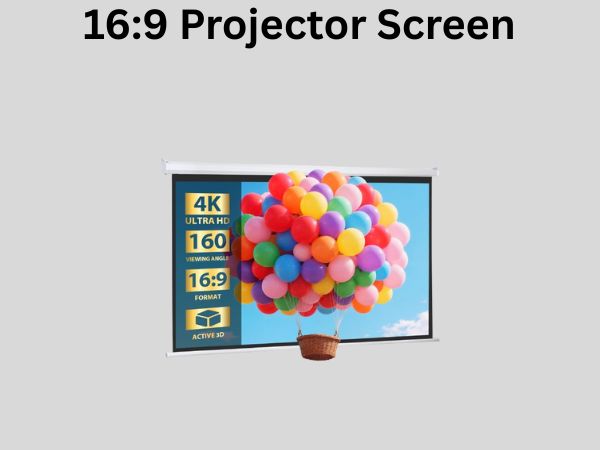
Walk into any home theater store, and you’ll notice that nearly every projector screen on display is 16:9. This isn’t coincidence—it’s because this aspect ratio has become the universal standard for entertainment. Television manufacturers, streaming platforms, and filmmakers have all converged on this format.
The 16:9 ratio feels more natural for how we consume visual media today. It matches the proportions of our smartphones, tablets, and computer monitors. It’s what audiences expect when they sit down to watch a movie or show.
Advantages of the 16:9 Aspect Ratio
- Perfect for modern entertainment: Every streaming service, movie, and TV show you watch is designed for 16:9, so nothing gets cut off or distorted.
- True cinematic experience: Widescreen content fills your entire field of vision, creating that immersive theater-like feeling.
- Superior for sports and gaming: If you’re planning to watch sports events or play video games on your projector, 16:9 is the clear winner.
- Wide selection available: Manufacturers produce countless 16:9 screens in various sizes and price points, giving you plenty of options.
- Future-proof investment: Since this is the established standard, your investment will remain relevant for many years to come.
- Better for larger rooms: The wider format works beautifully in spacious home theaters where you want maximum screen width.
Disadvantages of the 16:9 Aspect Ratio
It’s only fair to mention the drawbacks. If you frequently view older content—whether that’s classic films from the 1950s or business presentations created in 4:3 format—you’ll see black bars on the sides. This doesn’t damage anything, but it can feel aesthetically disappointing.
Additionally, 16:9 screens require more horizontal wall space. If your room is narrow or you have limited wall area, fitting a large 16:9 screen might be challenging. You might end up choosing a smaller size than you’d ideally prefer.
Comparing the Two: Side-by-Side Analysis
| Feature | 4:3 Aspect Ratio | 16:9 Aspect Ratio |
| Best for Movies | Limited (older content) | Excellent (modern films) |
| Best for Presentations | Excellent | Good (with adjustments) |
| Space Requirements | Compact | More horizontal space needed |
| Price | Generally cheaper | More expensive |
| Gaming Experience | Adequate | Superior |
| Future-Proofing | Limited | Excellent |
How to Choose Based on Your Use Case
For Home Theater Enthusiasts
If you’re building a dedicated home theater where watching movies is the primary activity, 16:9 is your answer. There’s really no competition here. Modern films are shot in widescreen, and you deserve to experience them the way directors intended. The immersive cinematic experience that 16:9 provides is unmatched, and you’ll appreciate this choice every time you sit down to watch.
For Business and Educational Settings
Corporate training rooms, classrooms, and boardrooms often benefit from 4:3 screens. Many business presentations and educational materials are designed for this ratio. However, modern organizations are increasingly shifting toward 16:9 presentations, so this advantage is diminishing. If flexibility is important, you might even consider a 16:9 screen—it handles presentations adequately, just with some empty space on the sides.
For Multi-Purpose Rooms
Are you planning to use your projector for movies, gaming, presentations, and sports? In this case, 16:9 is the versatile choice. While it’s not perfect for every application, it handles all of them well. You’ll get the best overall experience across different content types.
For Space-Constrained Areas
If your room is small or narrow, a 4:3 screen might be your only practical option. You can install a larger 4:3 screen in the same space where a 16:9 screen would be too wide. However, consider whether you can sacrifice some viewing experience for practicality.
What About Hybrid Solutions?
Some manufacturers offer screens that can work with both aspect ratios, or you might consider screens with masking capabilities. These systems use black borders that expand or contract to accommodate different content ratios. It’s a clever solution for people who need versatility, though it adds complexity and cost.
Another option is choosing a 16:9 screen and accepting that older content will have black bars. This is honestly the most practical approach for most modern viewers. The slight inefficiency with legacy content is a small price to pay for perfect compatibility with everything new you’ll watch.
Technical Considerations When Choosing Your Screen
Throw Distance and Room Size
Before you choose an aspect ratio, consider your room’s dimensions. Your projector has a specific throw ratio—the distance from the projector to the screen relative to the screen’s width. This determines where you can position your projector and how large your screen can be. Measure your space carefully before making a decision.
Projector Lens Capabilities
Your projector might have lens shift, zoom, and keystone correction features that affect how the image is projected. Some projectors handle aspect ratio conversion better than others. If you already own a projector, check its specifications before buying a screen.
Wall Conditions and Installation
Make sure your wall can support the screen you’re planning to install. Drywall, brick, and concrete require different mounting hardware. The wider footprint of 16:9 screens means you need secure mounting across a wider area.
The Bottom Line: Making Your Decision
So what’s the verdict? For most people in 2024 and beyond, 16:9 is the clear choice. Modern entertainment is designed for this format, and choosing it means your screen will remain relevant and useful for many years. You’ll get the full experience from streaming services, movies, and games.
However, 4:3 still has merit if you have specific professional needs or primarily work with legacy content. The key is understanding your actual usage patterns. Will you mostly watch movies and shows, or do you need business presentation capabilities? How much horizontal space do you have available? What’s your budget?
Answer these questions honestly, and the right choice will become obvious.
Conclusion
Choosing between a 4:3 and 16:9 projector screen might seem overwhelming, but it ultimately comes down to understanding how you’ll use your projector and what content you’ll display most often. The 4:3 aspect ratio represents a bygone era—it’s still functional and affordable, making it suitable for specific business and educational applications. However, the 16:9 format is the undisputed standard of modern entertainment, offering superior performance for movies, streaming content, gaming, and sports.
If you’re setting up a home theater, invest in 16:9. The wider screen will fill your field of vision with movies and shows designed specifically for this ratio, creating the immersive experience you’re looking for. If you’re outfitting a conference room or classroom with occasional movie viewing, you might find 4:3 adequate—but know that you’re making a compromise. The modern media landscape has spoken, and 16:9 is the clear winner for almost everyone. Consider your specific needs, measure your space, and make an informed decision. Whichever you choose, you’re about to significantly enhance your viewing or presentation experience.
Frequently Asked Questions
Can I use a 4:3 screen to watch 16:9 movies, or do I need the specific aspect ratio?
Technically, you can watch 16:9 content on a 4:3 screen, but you’ll see black bars at the top and bottom of the screen. The projected image will be smaller than your screen’s actual size, meaning you’re not utilizing the full display area. While this works, it defeats the purpose of having a projector screen and wastes valuable real estate.