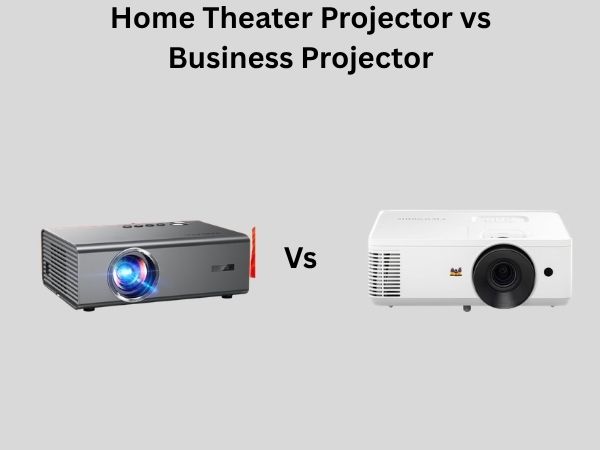
Home Theater Projector vs Business Projector: Key Differences You Need to Know
When you’re shopping for a projector, you might think any projector will do the job. But here’s the thing—choosing between a home theater projector and a business projector is kind of like picking between a sports car and a pickup truck. Sure, they both have wheels and an engine, but they’re built for completely different purposes. Let me walk you through the critical differences so you can make an informed decision that actually fits your needs.
Understanding the Projector Landscape
The projector market has exploded over the past decade, and manufacturers have gotten pretty savvy about creating specialized devices for specific use cases. A home theater projector is engineered with cinematic experiences in mind, while a business projector is designed to tackle presentations, spreadsheets, and office environments. These aren’t interchangeable tools, and understanding why will save you from making a costly mistake.
The Fundamental Purpose: Why They Exist
Home Theater Projectors: Entertainment First
Home theater projectors are all about creating an immersive viewing experience. Think of them as the digital equivalent of having a movie theater in your living room. These devices prioritize image quality, color accuracy, contrast ratios, and the ability to handle dark scenes beautifully. When you’re watching a thriller with shadowy cinematography or a stunning landscape documentary, a home theater projector makes every frame pop with vivid detail.
Business Projectors: Clarity and Practicality
Business projectors, on the other hand, are workhorses designed to deliver clear, readable content in bright office environments. They need to make that spreadsheet pop on the screen in a room flooded with daylight, and they need to do it reliably, day after day. These projectors are built for productivity, not for creating an emotional connection to the content being displayed.
Brightness Levels: Lumens Matter More Than You Think
Home Theater Projectors and Ambient Light
Home theater projectors typically produce between 1,000 and 3,000 lumens. Now, that might sound like a lot, but here’s why it makes sense for home use. In a darkened home theater room—and I mean genuinely dark with blackout curtains—you don’t need massive brightness. If you pump too many lumens into a dark space, you actually wash out the image quality and lose the rich contrast that makes movies so captivating. It’s like turning up the volume on a song past the point where you can hear the individual instruments. More isn’t always better.
Business Projectors and Brightness Demands
Business projectors, by contrast, often range from 3,000 to 6,000 lumens or even higher. Some specialized models exceed 10,000 lumens. Why? Because offices typically have windows, fluorescent lights, and other ambient lighting sources. A business projector needs to cut through that environmental brightness and display content that’s legible from the back of a boardroom. If you’re presenting financial data to thirty people in a well-lit conference room, you need serious brightness to make sure everyone can read that spreadsheet clearly.
Color Accuracy and Contrast: The Heart of Image Quality
Why Home Theater Projectors Excel in Color
Home theater projectors are engineered with color fidelity in mind. Manufacturers understand that people investing in a home system are likely movie enthusiasts who care deeply about how colors are rendered. These projectors boast wider color gamuts, better color calibration options, and superior contrast ratios. That means blacks are actually black, not gray, and the entire spectrum of colors looks natural and lifelike.
The contrast ratio is particularly important here. Imagine watching a sci-fi movie where a spaceship emerges from darkness—you want to see that moment unfold with stunning visual impact. Home theater projectors can deliver contrast ratios of 50,000:1 or higher, which creates that dramatic separation between light and dark areas that makes cinema so compelling.
Business Projectors and Practical Color Needs
Business projectors typically don’t prioritize the same level of color accuracy because, frankly, you don’t need photographic perfection to read a PowerPoint slide. The contrast ratio in a business projector is usually lower—maybe 5,000:1 to 15,000:1—because the focus is on readability rather than artistic expression. As long as that pie chart is visible and the text is legible, the business projector has done its job.
Connectivity and Compatibility Considerations
Home Theater Projector Connections
Home theater projectors are typically designed with entertainment sources in mind. You’ll find HDMI ports optimized for streaming devices, gaming consoles, Blu-ray players, and streaming services. Many modern home theater projectors include wireless connectivity options like Bluetooth and Wi-Fi, making it easy to connect your smartphone or tablet for impromptu entertainment. Some even have built-in streaming apps, though you’re usually better off using a dedicated device for that purpose.
Business Projector Connectivity
Business projectors need to work in professional environments where multiple device types and presentation technologies converge. You’ll typically find:
- USB ports for direct connection to laptops
- HDMI inputs for modern devices
- VGA and DVI ports for older corporate infrastructure
- Network connectivity for remote management
- Compatibility with wireless presentation systems like Miracast and AirPlay
A business projector needs to be a chameleon, ready to work with whatever device someone walks into the conference room with—whether it’s a ten-year-old laptop or the latest MacBook Pro.
Throw Distance and Installation Flexibility
Home Theater Projector Throw Distance
Home theater projectors come in two main categories regarding throw distance: standard throw and short throw. Standard throw projectors typically sit farther back in the room and project a larger image at greater distances. Short throw models can be placed closer to the screen, which is fantastic if you’re working with limited space. This flexibility in throw distance helps you design your home theater around your specific room dimensions.
Business Projector Installation Constraints
Business projectors usually have standard throw distances designed for typical office ceiling heights and conference room sizes. They’re built with the assumption that they’ll be mounted on a ceiling in a rectangular room. While they offer some flexibility, they’re generally less adaptable to unusual room layouts than home theater projectors. This is perfectly fine for business use, but it might feel limiting if you’re trying to repurpose the projector for different environments.
Noise Level: A Consideration You Shouldn’t Ignore
Home Theater Projectors and Quiet Operation
Imagine you’re watching an intense drama scene, and suddenly your projector sounds like a hairdryer kicking into high gear. That’s not the experience home theater enthusiasts are after. Quality home theater projectors are engineered to operate quietly—typically in the 20 to 35 decibel range. Some premium models are even quieter. This quiet operation is essential because you want the sound coming from your speakers and audio system, not from the projector itself.
Business Projectors and Acceptable Noise Levels
Business projectors operate at higher noise levels, often ranging from 35 to 50 decibels or more. Since business presentations happen during the day in well-lit rooms where people expect to hear keyboards clicking and colleagues talking, that ambient noise level from the projector becomes less noticeable. It’s not ideal, but it’s acceptable in a business context.
Lamp and Maintenance Considerations
Home Theater Projector Maintenance
Home theater projectors typically have lamp lifespans of 3,000 to 5,000 hours, though some newer LED and laser models offer much longer lifespans—sometimes exceeding 20,000 hours. Since these projectors might only get used a few hours per week for entertainment, the lamp lasts for years in real-world terms. The maintenance is relatively minimal, with periodic filter cleaning being the primary concern.
Business Projectors and Heavy-Duty Operation
Business projectors are designed for continuous operation. They might be running eight hours a day, five days a week in a busy office environment. These devices have shorter lamp lifespans measured in operation hours rather than years—typically 2,000 to 4,000 hours. However, they’re designed for easy maintenance and lamp replacement. Parts are standardized, replacement costs are kept reasonable, and the entire system expects regular maintenance as part of its operational life.
Price Point and Value Proposition
Home Theater Projectors: Premium Pricing for Quality
Home theater projectors generally cost more than business projectors of similar brightness levels. You’re paying for color accuracy, contrast ratio, quiet operation, and entertainment-focused features. A decent home theater projector might run you $1,500 to $5,000, with premium models exceeding that significantly. But here’s the thing—you’re investing in an experience that you’ll personally enjoy multiple times per week.
Business Projectors: Value-Focused Pricing
Business projectors tend to be more economical. A solid business projector might cost $800 to $2,500, delivering excellent brightness and reliability without the premium you’d pay for cinematic color accuracy. For a business, this represents excellent return on investment because it serves a functional purpose that directly impacts productivity.
Lens Quality and Optical Design
Home Theater Optics
Home theater projectors feature precision optics designed to minimize distortion and maximize image clarity across the entire screen. The lenses are often glass-based and carefully engineered to handle the nuances of cinematic content. Image shift capabilities allow for flexible mounting positions while maintaining image quality and alignment.
Business Projector Optics
Business projectors use durable, practical optics that prioritize brightness transmission over absolute optical perfection. The lenses are selected for robustness and cost-effectiveness while still delivering adequate image clarity for text and presentation graphics. This pragmatic approach makes business projectors more durable in high-traffic office environments.
Keystone Correction and Image Adjustment
Home Theater Flexibility
Home theater projectors offer sophisticated image adjustment features because installation might not always be perfectly square to the screen. Vertical and horizontal keystone correction allows you to adjust for ceiling-mounted or wall-mounted installations that aren’t perfectly aligned. This flexibility is crucial when you’re fitting a projector into an existing room design.
Business Projector Adjustments
Business projectors include keystone correction, but it’s typically more limited because these devices are usually installed in standardized ceiling mounts in rectangular rooms. The adjustment features exist as a practical solution rather than a design centerpiece.
Thermal Management and Longevity
Home Theater Heat Considerations
Home theater projectors are designed to run for several hours at a time in climate-controlled home environments. They have adequate cooling systems, but they’re not necessarily built to handle extreme ambient temperatures. The expectation is that your home theater room will have reasonable temperature stability.
Business Projector Durability
Business projectors are built to handle varying office environments—sometimes hot, sometimes cold, always with fluctuating ambient conditions. Their thermal management systems are robust and designed for extended operation in less-than-ideal conditions. This durability comes from engineering focused on reliability rather than aesthetics.
Advanced Features and Technology Innovations
Home Theater Technology
Home theater projectors often incorporate cutting-edge technologies like:
- Advanced color processing algorithms
- Motorized focus and zoom mechanisms
- Lens shift capabilities
- Built-in streaming applications
- 3D support and processing
- Advanced HDR tone mapping
These features exist because home theater enthusiasts demand the latest technology and are willing to pay for it.
Business Projector Features
Business projectors focus on practical innovations:
- Quick-start capabilities
- Remote management and control
- Wireless connectivity options
- Filter-free or low-maintenance cooling
- Solid brightness output that doesn’t diminish significantly with age
Warranty and Support Structure
Home Theater Support
Home theater projectors typically come with standard limited warranties—often three years for parts and labor. Support is handled through consumer channels, with manufacturers expecting owners to handle most maintenance themselves or contact professional installers.
Business Projector Support
Business projectors often include more comprehensive warranty options, with extended warranties readily available. Many manufacturers offer business-focused support channels with faster response times because downtime in a business environment has direct financial consequences. This professional support structure makes managing business projectors easier in corporate settings.
Making Your Decision: Which Projector Is Right for You?
So, which should you choose? It ultimately depends on your specific situation. If you’re creating a home entertainment space and you care about how movies look, a home theater projector is the right choice. You’ll appreciate the color accuracy, contrast ratio, and quiet operation. If you’re outfitting a business conference room or classroom, a business projector makes infinitely more sense. You need brightness, reliability, and compatibility over cinematic perfection.
Don’t make the mistake of using a business projector for home entertainment—the color accuracy will disappoint you. Equally, don’t use a home theater projector in a bright office environment where you need extreme brightness. Each is optimized for its intended purpose, and that optimization matters.
Conclusion
The differences between home theater projectors and business projectors run far deeper than simple brightness specifications. Home theater projectors are crafted for personal enjoyment, prioritizing color accuracy, contrast, and quiet operation to create an immersive cinematic experience. Business projectors, meanwhile, are engineered for professional environments where brightness, reliability, and practical functionality matter most. Understanding these fundamental differences ensures that you’ll invest your money wisely and end up with a projector that actually meets your needs rather than disappoints you. Take the time to honestly assess whether you’re buying for entertainment or business, and let that clarity guide your decision. The right choice will deliver value and satisfaction for years to come.
Frequently Asked Questions
Can I use a business projector for home theater purposes?
Technically, you can, but I wouldn’t recommend it. Business projectors lack the color accuracy and contrast ratio that make movies visually stunning. You’ll watch your films, but you’ll miss out on the nuanced color grading and dramatic contrast that filmmakers intended. It’s like watching a concert on a laptop speaker instead of through quality headphones—it works, but it’s not the experience you’re after.
What’s the main reason home theater projectors cost more?
The premium pricing comes from the advanced technology required for superior color accuracy, higher contrast ratios, and quieter operation. Manufacturers invest heavily in optical engineering, color processing algorithms, and precision manufacturing tolerances that business projectors simply don’t need. You’re paying for an experience, not just functionality.
How long will a projector lamp typically last?
Home theater projector lamps usually last between 3,000 and 5,000 hours, which translates to several years of casual use. Business projector lamps typically last 2,000