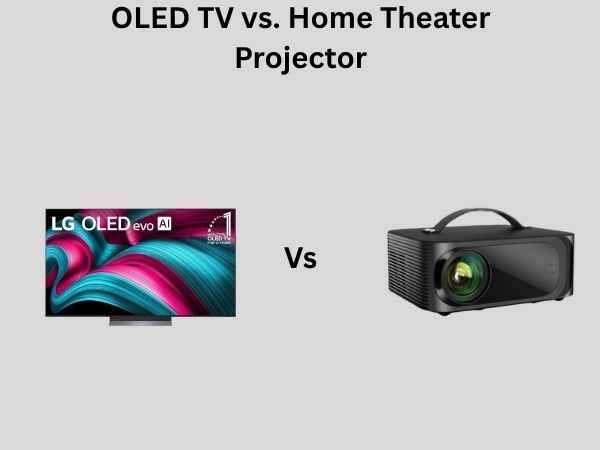
OLED TV vs. Home Theater Projector: Which Delivers Better Picture Quality?
When you’re sitting down to decide how to transform your living room into an entertainment powerhouse, you’re facing one of the biggest decisions in home theater today. Should you go with a stunning OLED television, or should you invest in a home theater projector system? It’s not a simple choice, and honestly, there’s no one-size-fits-all answer. Let me walk you through everything you need to know to make an informed decision that fits your lifestyle and budget.
Understanding the Technology Behind OLED TVs
Let me start by explaining what makes OLED technology so special. OLED stands for Organic Light-Emitting Diode, and here’s the thing that makes it revolutionary: each pixel produces its own light. This is fundamentally different from traditional LED televisions, where a backlight illuminates the entire screen from behind. Think of it like the difference between having individual light switches for each pixel versus having one big light switch for the whole room.
How OLED Pixels Work Independently
When you’re watching an OLED TV, every single pixel can be turned on or off independently. This means when you’re watching a dark scene in a movie, the TV can literally turn off the pixels displaying black areas. This gives you something that’s been elusive in television history: true black levels. No backlight bleed, no gray washed-out blacks. Just pure, unadulterated darkness.
The colors on OLED displays are absolutely stunning because they’re not being filtered through a backlight system. The reds are more vivid, the blues are more saturated, and everything appears more natural and lifelike. If you’ve ever seen a high-end OLED TV in person, you probably noticed how the colors just seem to pop off the screen.
Response Time and Motion Handling
Here’s another advantage that OLED fans absolutely love: response time. Because individual pixels can turn on and off instantly, OLED TVs handle motion exceptionally well. When you’re watching sports or playing fast-paced games, there’s virtually no motion blur or ghosting. The image stays crisp and clear even during rapid camera movements or quick action sequences.
How Home Theater Projectors Work
Now let’s shift gears and talk about projectors. A home theater projector is fundamentally different from a television. Instead of displaying an image on a screen inches away from your eyes, a projector beams light onto a large surface, usually a dedicated projection screen. It’s like the difference between reading a book and watching a movie at a theater.
Different Projector Technologies Explained
Not all projectors are created equal, and there are several different technologies out there. You’ve got DLP projectors, which use tiny mirrors to direct light. LCD projectors, which use liquid crystal displays. And then there’s LCoS technology, which stands for Liquid Crystal on Silicon. Each has its strengths and weaknesses, but they all share the same basic principle: they project an image onto a screen.
The beauty of a projector system is the sheer size of the image you can create. We’re talking about screens that can be 100 inches, 150 inches, or even larger. Imagine watching your favorite movies on a screen that rivals your local cinema. That’s the projector advantage.
Screen Material and Its Impact
Here’s something many people overlook: the projection screen itself is crucial. The material of your screen affects brightness, color accuracy, and viewing angles. A high-quality projection screen isn’t just a white wall. It’s a carefully engineered surface that enhances the image and ensures even light distribution across the entire viewing area.
Picture Quality Comparison: The Real Story
Let’s get into the nitty-gritty of picture quality, because this is where the decision really comes down to. It’s not that one is objectively better than the other. Rather, they excel in different ways.
Black Levels: OLED Takes the Crown
When it comes to black levels, there’s simply no competition. OLED technology produces blacks so deep and true that they’re essentially perfect. In a dark room watching a dark scene, you genuinely can’t tell where the image ends and the screen bezel begins. It’s almost supernatural.
Projectors, by contrast, produce black levels that are gray by comparison. Even the best projectors struggle to achieve true blacks because they’re still reflecting light off the screen surface. In a completely dark room, this becomes very noticeable. You might see the projected area as a dark gray rather than true black.
Peak Brightness and HDR Performance
Now here’s where projectors have a chance to shine, pun intended. Modern OLED TVs have gotten brighter over the years, but they still can’t match the peak brightness of many projectors. If you’re watching content in a bright room or if you want those ultra-bright HDR highlights to really pop, a projector might be the better choice.
That said, OLED TVs have made impressive strides with their brightness capabilities. High-end models can now deliver brightness levels that are quite impressive for a television. But they’re still usually behind quality projectors in terms of absolute peak brightness.
Brightness and Performance in Different Lighting Conditions
Watching in Dark Rooms
In a properly darkened room, OLED TVs absolutely dominate. The infinite contrast, the perfect blacks, and the superior color accuracy create an experience that’s hard to beat. This is why OLED TVs are so popular among movie enthusiasts and home theater professionals.
Watching in Bright or Partially Lit Rooms
If your viewing room has windows or ambient lighting, the story changes dramatically. OLED TVs can struggle in bright conditions because the image appears washed out when there’s a lot of light competing with the screen. Projectors, on the other hand, need to be in relatively dark rooms to look their best, but when they are, they can handle some ambient light better because of their projection method.
Think about it: if you plan to watch during the day or with lights on, OLED is your friend. If you can control the lighting completely and plan to watch mostly at night, a projector becomes much more viable.
Color Accuracy and Contrast Capabilities
OLED Color Reproduction
OLED displays deliver color accuracy that’s simply unmatched. The colors aren’t competing with a backlight, so they’re purer and more accurate. Professional color graders and filmmakers often prefer OLED displays because they know the colors they’re seeing are true to the source material.
The contrast on OLED is infinite because true black is zero light emission. Any bright color against a black background creates infinite contrast. This makes the image appear three-dimensional in a way that other display technologies struggle to match.
Projector Color Performance
Quality projectors can deliver excellent color performance, especially in the midtones and highlights. However, because they’re projecting light onto a surface, the color palette is somewhat limited by the screen material and the quality of the projection system.
Where projectors really shine is in brightness-dependent colors. If you’re watching a scene with bright reds or yellows, a projector can make those colors absolutely vibrant because of its brightness capabilities.
Resolution and Sharpness Analysis
4K and Beyond
Most modern OLED TVs are 4K resolution, meaning they display 3,840 by 2,160 pixels. This gives them exceptional sharpness and detail. The pixel density is high enough that from normal viewing distances, you can’t perceive individual pixels.
Projectors come in various resolutions too, from 1080p to 4K and even 8K in some cases. Here’s the thing though: because you’re sitting farther away from a projector than a TV, the perceived sharpness is different. A 1080p projector on a 100-inch screen might actually look sharper to your eyes than a 4K TV from your couch.
The Viewing Distance Factor
This is crucial information that many people don’t consider: the optimal viewing distance determines how much resolution you actually need. For a projector, you’re sitting farther away, so you need less resolution to achieve the same perceived sharpness. For a TV, you’re closer, so higher resolution becomes more important.
Installation and Space Considerations
OLED TV Installation
Installing an OLED TV is straightforward. You either mount it on the wall or place it on a stand. Setup takes maybe an hour, and you can start watching. The TV fits into your existing living room arrangement without major modifications. This simplicity is one of the biggest advantages for people who don’t want a dedicated home theater room.
Projector Installation Complexity
Projectors require more planning and installation consideration. You need to decide where the projector will be mounted, whether on the ceiling or a shelf. You need to account for throw distance, which is the distance between the projector and the screen. You need a dedicated projection screen, proper cable routing, and often some kind of light control.
For some setups, you might need to install blackout curtains or specialized wall treatments. You might need to plan for your ceiling height and structural considerations. It’s not impossible, but it requires more forethought.
Room Versatility
An OLED TV can be used in almost any room configuration. A projector setup really needs a dedicated space with proper light control. If you’re someone who likes flexibility and versatility, OLED is the safer bet.
Cost Analysis: Long-term Investment
Initial Purchase Prices
Here’s where things get interesting financially. A quality 65-inch OLED TV can cost anywhere from $1,500 to $3,500, depending on the brand and features. A comparable projector system, including the projector, screen, and any installation hardware, might cost $2,000 to $4,000 or more.
So the initial cost is relatively comparable, but the value proposition is different. With a TV, you’re getting a complete solution. With a projector, you’re getting a larger image, but you’re paying for the screen separately.
Operating Costs and Maintenance
OLED TVs have minimal operating costs beyond your electricity bill. There are no bulbs to replace, no filters to clean regularly, and no maintenance requirements beyond occasional dusting.
Projectors, on the other hand, have lamp or light source replacement costs. Depending on the projector, lamps might last 2,000 to 5,000 hours and cost $100 to $400 to replace. You might also need to clean or replace air filters. These ongoing costs add up over time.
Lifespan and Replacement Costs
An OLED TV, with proper care, can last 10 to 15 years, though image degradation (burn-in) is a theoretical possibility with heavy use of static images.
A projector can last 15 to 20 years, but you’ll likely replace the light source several times during that period. When you factor in these replacement costs, the total cost of ownership can become significant.
Gaming Performance on Both Platforms
OLED Gaming Advantages
For gaming, OLED TVs are exceptional. The response time is nearly instantaneous, which means virtually no input lag. The contrast makes games look incredibly immersive. The refresh rates on modern OLED TVs go up to 144Hz, which is perfect for competitive gaming.
The color accuracy is also fantastic for gaming, whether you’re playing story-driven adventures or competitive shooters. Everything looks vibrant and responsive.
Projector Gaming Considerations
Projectors can be good for gaming, but they have some limitations. Input lag can be higher on some projectors, which matters in competitive gaming. The refresh rate might be limited to 60Hz or 120Hz. However, for story-driven games or casual gaming, a projector can create an immersive, large-screen experience that’s hard to beat.
Viewing Distance and Screen Size Impact
The Sweet Spot for OLED TVs
OLED TVs come in sizes from about 48 inches to 97 inches. The most popular sizes are 65 and 77 inches. The optimal viewing distance for a 65-inch TV is about 8 to 10 feet. If you’re sitting closer, you might see pixels. If you’re sitting farther, you’re not maximizing the detail.
Projector Screen Size Flexibility
With a projector, you have incredible flexibility in screen size. You can have a 100-inch screen, a 150-inch screen, or even larger. The size only depends on your room dimensions and how far you can sit from the screen. This flexibility is a major advantage if you want a truly cinema-like experience.
Maintenance and Lifespan Expectations
OLED TV Maintenance
Maintaining an OLED TV is simple. Occasionally dust the screen with a soft cloth. Avoid static images for extended periods to prevent theoretical burn-in. Beyond that, there’s nothing else to do. It’s truly a plug-and-play technology from a maintenance perspective.
Projector Maintenance Requirements
Projectors need more attention. You should regularly clean the air filters to ensure proper cooling. The projection lens might need occasional cleaning. You’ll need to monitor lamp hours and plan for replacements. The screen should be vacuumed occasionally to remove dust.
It’s not burdensome maintenance, but it’s definitely more than what an OLED TV requires.
Ideal Use Cases for Each Technology
Choose OLED TV If:
- You watch in various lighting conditions including daytime
- You value simplicity and minimal maintenance
- You play video games competitively
- Your space is limited or multi-purpose
- You want the most accurate picture from any angle
- You prefer not to deal with ongoing replacement costs
Choose a Projector If:
- You have a dedicated dark room or can control lighting
- You want a truly large cinema-like screen
- You watch movies frequently and want immersion
- You can handle moderate maintenance tasks
- You want the most affordable per-inch of screen size
- You’re willing to invest in the complete setup