16:9 vs 16:10 Projector Screen: A Complete Comparison for Movies, Gaming, and Office Use
When you’re standing in front of a projector screen selection, you might feel like you’re choosing between two nearly identical twins. But here’s the thing—those small differences in aspect ratio can actually make a huge impact on your viewing experience. Whether you’re a movie enthusiast, a serious gamer, or someone who presents in the office, understanding the distinction between 16:9 and 16:10 projector screens is essential to making the right choice for your needs.
Let me break this down for you in a way that makes sense. Think of aspect ratio like the shape of a photo frame. Some frames are wider and shorter, while others are a bit taller and less stretched out. That’s essentially what we’re dealing with here, except these differences can affect everything from how movies look on your wall to whether your PowerPoint presentations fit perfectly on your screen.
Understanding Aspect Ratios: The Foundation
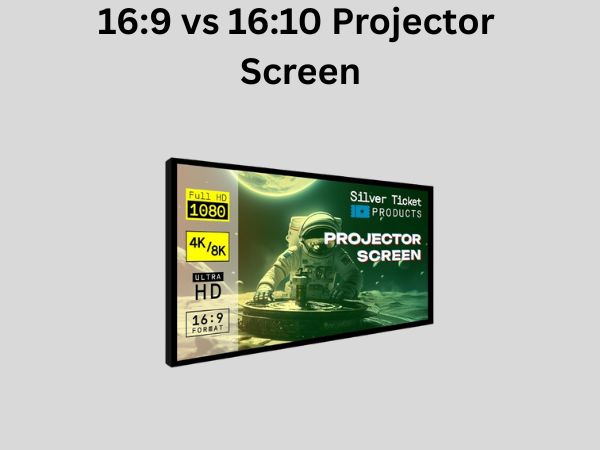
Before we dive into the specifics of 16:9 versus 16:10, let’s establish what an aspect ratio actually is. An aspect ratio is simply the relationship between the width and height of your screen. When we say 16:9, we mean that for every 16 units of width, there are 9 units of height. Similarly, 16:10 means 16 units of width for every 10 units of height.
This might sound like a small numerical difference, but it translates into a visible change on your wall. The 16:10 format is slightly taller than 16:9, creating a less elongated viewing area. This extra vertical space becomes important depending on what you’re watching or displaying.
The 16:9 Aspect Ratio Explained
What Makes 16:9 the Industry Standard?
The 16:9 aspect ratio has become the dominant format in entertainment and technology. When you watch Netflix, stream movies on your smart TV, or attend a movie theater showing a modern film, you’re almost certainly looking at 16:9 content. This format was standardized back in the early 2000s and has remained the go-to choice for content creators worldwide.
Why did the industry settle on 16:9? The answer lies in compromise. It provides a wider viewing experience than older 4:3 television formats while still being practical for various applications. It’s like finding the sweet spot in a seesaw—balanced enough to work for most situations.
16:9 Dimensions and Screen Sizes
If you purchase a 100-inch 16:9 projector screen, you’re getting a display that measures approximately 87 inches wide by 49 inches tall. These dimensions create that characteristic widescreen look that feels natural and cinematic. The horizontal stretching is why movies on 16:9 screens feel immersive—they fill your peripheral vision more effectively.
Advantages of 16:9 Projector Screens
- Perfect alignment with mainstream movie content and streaming services
- Wider viewing experience that feels more engaging for entertainment
- Better utilization of horizontal space in most living rooms
- More affordable options available in the market
- Easier to find compatible content without letterboxing or pillarboxing
- Ideal for cinematic experiences and immersive gaming
Limitations of 16:9 for Specific Uses
Despite its popularity, 16:9 isn’t perfect for everything. If you’re someone who frequently uses your projector for office presentations, you might find that 16:9 isn’t the most efficient use of vertical space. When you’re displaying a spreadsheet or document-heavy content, that extra vertical real estate would be incredibly valuable. It’s like trying to fit a tall painting into a wide frame—you’re wasting potential space.
The 16:10 Aspect Ratio Explained
Understanding the 16:10 Format
The 16:10 aspect ratio is taller and less stretched than 16:9. A 100-inch 16:10 screen measures approximately 83 inches wide by 52 inches tall. That extra three inches of height might not sound like much, but it creates a notably different viewing experience, particularly for content that demands vertical space.
16:10 emerged as a standard in the computer and professional display industry. You’ll find this aspect ratio on many monitors, laptops, and professional-grade presentations. It represents a shift toward accommodating both entertainment and productivity needs.
Where Did 16:10 Come From?
The 16:10 format gained traction in the mid-2000s as computer monitors began moving away from the boxy 4:3 standard. Tech companies recognized that professionals needed a bit more vertical space for documents, spreadsheets, and coding work. By adopting 16:10, they created a format that worked better for work-related tasks while still providing a reasonably wide viewing angle.
Advantages of 16:10 Projector Screens
- Superior vertical space for document-heavy presentations
- Better fit for traditional computer monitor content
- Excellent for office and professional settings
- Reduced need for letterboxing on certain types of content
- More efficient use of wall space in taller rooms
- Great for mixed-content environments (work and entertainment)
Disadvantages of 16:10 for Entertainment
Here’s where 16:10 shows its limitations. Modern movies are created with 16:9 in mind. When you watch a film on a 16:10 screen, you’ll often see small black bars at the top and bottom of the image. This is called letterboxing, and while it’s not terrible, it does mean you’re not utilizing your full screen. For someone who values their movie-watching experience, this can feel like a compromise.
16:9 vs 16:10 for Movie Watching
The Movie Enthusiast’s Dilemma
If you’re someone who loves films, this is perhaps the most important section for you. The vast majority of modern movies—streaming films, theatrical releases, and online content—are created in 16:9 format. When you watch these on a 16:9 projector screen, the image fills your entire display without any wasted space. The content creators intended for their work to be viewed this way, and it shows.
On a 16:10 screen, you’ll experience those black bars I mentioned. While some people don’t mind them, others find them aesthetically displeasing and feel like they’re wasting screen real estate. It’s similar to hanging a square painting in a rectangular frame—technically it works, but something feels off.
Special Consideration: Ultra-Wide and Extended Content
Some cinematic content is actually filmed in even wider formats like 2.39:1 (often called scope format). In these cases, both 16:9 and 16:10 will display the content with letterboxing. However, 16:9’s extra width handles these ultra-wide formats slightly better than 16:10 does, since it prioritizes horizontal space over vertical.
16:9 vs 16:10 for Gaming
Gaming Performance and Immersion
Gamers often have strong opinions about aspect ratios, and for good reason. Most modern video games are developed with 16:9 in mind. Whether you’re playing the latest action title, exploring an open-world environment, or competing in esports, the game engine is typically optimized for 16:9 displays.
When you use a 16:9 projector screen for gaming, you get the experience the developers intended. Your field of view is optimal, HUD elements appear in the right positions, and there’s no distortion or cropping. It’s like playing a game the way it was meant to be played.
Gaming on 16:10: Pros and Cons
Using a 16:10 screen for gaming introduces some considerations. Some games will display with black bars on the sides (pillarboxing) if they don’t support the aspect ratio. Other games might stretch or distort to fill the screen, which can look awkward. However, some modern games do support 16:10, and in those cases, the extra vertical space can actually provide a slight advantage by showing more of the environment vertically.
Competitive Gaming Advantages
For competitive gamers, every pixel counts. The 16:9 format’s wider field of view is generally preferred in competitive esports because it prioritizes horizontal awareness, which is crucial in games where spotting enemies on the sides matters. The established competitive gaming scene almost universally uses 16:9 displays, which means you’ll be playing under conditions similar to professional tournaments.
16:9 vs 16:10 for Office and Professional Use
Why Offices Prefer Different Formats
Here’s where 16:10 really shines. In a professional setting where you’re presenting spreadsheets, documents, data visualizations, or code, that extra vertical space becomes invaluable. Imagine you’re displaying a financial report on a 16:9 screen versus a 16:10 screen. On 16:9, you might need to scroll through your document or use a smaller font size. On 16:10, you can fit more information vertically without sacrificing legibility.
Document and Presentation Efficiency
When you’re giving a presentation, you want your audience to see all the important information without excessive scrolling or resizing. A 16:10 screen allows you to display a full page of a document more naturally. Many business presentations are created in standard document proportions, which align better with 16:10 than with 16:9.
Coding and Technical Work
If you’re using your projector for coding demonstrations or technical presentations, 16:10 has a clear advantage. Code editors benefit from vertical space, allowing you to display more lines of code simultaneously. When you’re teaching or demonstrating programming concepts on a big screen, this extra vertical real estate makes a substantial difference in readability and comprehension.
Room Considerations and Installation
Wall Space and Room Dimensions
Before choosing between 16:9 and 16:10, consider your actual room. If you have a wide wall but limited ceiling height, 16:9 makes more sense. It maximizes the use of your horizontal space without requiring excessive vertical height. Conversely, if you have tall walls or a smaller width-to-height ratio in your room, 16:10 might fit more naturally into your space.
Viewing Distance and Screen Size
The appropriate viewing distance depends partly on your aspect ratio choice. With 16:9’s wider format, you might be sitting slightly further from the screen to take in the full width comfortably. With 16:10, the less extreme width might allow for closer seating in some cases. Think about your actual room layout and seating arrangement when making this decision.
Content Availability and Flexibility
Finding Content for Your Chosen Format
Here’s a practical reality: there’s simply more 16:9 content available. If you browse Netflix, YouTube, or any streaming service, the majority of what you’ll find is in 16:9. This is a major advantage for 16:9 projector screens because you’ll have access to a vast library of content optimized for your display.
16:10 content exists, certainly, but it’s less prevalent in consumer entertainment. You’ll find it more commonly in professional software, business presentations, and computer-generated content. If your primary use case involves mixed content—some movies, some work presentations—16:9 offers more flexibility with fewer compromises.
Price Considerations
Cost Differences Between Formats
Generally speaking, 16:9 projector screens are more abundant and typically more affordable than 16:10 options. The larger market demand for 16:9 means more manufacturers produce them, creating healthy competition and better pricing. If budget is a concern, 16:9 screens usually offer better value.
16:10 screens, being more specialized, often cost more per inch of diagonal measurement. However, they still represent reasonable value for someone who specifically needs that format for professional work.
Making Your Final Decision
Assessing Your Primary Use Case
The best way to choose between 16:9 and 16:10 is to honestly evaluate how you’ll primarily use your projector. Are you a movie buff who wants cinematic perfection? Go 16:9. Are you a business professional who needs to display documents and presentations regularly? 16:10 makes more sense. Will you be using it roughly equally for entertainment and work? 16:9 edges ahead due to its ubiquity and lower cost, though 16:10 remains viable.
Future-Proofing Your Investment
Consider where content creation is headed. 16:9 remains the dominant standard and shows no signs of changing. If you’re investing in a projector screen that you plan to keep for many years, 16:9 is the safer choice. It’s the format that’ll remain most compatible with future content.
Conclusion
The choice between 16:9 and 16:10 projector screens ultimately comes down to your specific needs and how you plan to use your projector. Neither format is objectively better—they’re simply optimized for different purposes.
If you’re primarily interested in watching movies, streaming content, and gaming, a 16:9 projector screen is your ideal choice. It aligns with the vast majority of modern content, provides an immersive cinematic experience, and offers better availability and pricing. The 16:9 format has become the global standard for entertainment, and switching to this format means seamlessly enjoying content exactly as creators intended.
However, if you’re in a professional environment where you frequently present documents, spreadsheets, or code, or if you’re in a situation where you’ll be using your projector equally for work and entertainment, the 16:10 format deserves serious consideration. The extra vertical space provides genuine advantages for document-based content, and it’s still more than capable of displaying entertainment content, albeit with some letterboxing.
Take time to think about your room dimensions, your actual viewing habits, and your budget. Visit a showroom if possible and see both formats in person. What feels right to you will likely be the right choice. Remember, a projector screen is a long-term investment, so choosing the format that aligns with your lifestyle and needs ensures you’ll be satisfied with your purchase for years to come.
Frequently Asked Questions
Can I watch 16:9 movies on a 16:10 projector screen without black bars?
Yes and no. Technically, 16:10 screens can display 16:9 content, but you’ll typically see thin black bars at the top and bottom of the image (letterboxing). This happens because 16:10 is slightly taller proportionally, and the projector maintains the correct aspect ratio of the content. Some people find this minimal, while others prefer avoiding it altogether. If you’re particular about having content fill your entire screen, this is something to consider.
Are there any projectors that don’t support both 16:9 and 16:10 formats?
Modern projectors are quite flexible and can display both aspect ratios effectively. However, older projectors might have limitations. It’s always worth checking your specific projector’s specifications to confirm it can handle both formats without significant distortion. The screen itself is essentially a passive surface, so any standard projector can display content on either format—it’s more about how the content will appear on that screen size and shape.