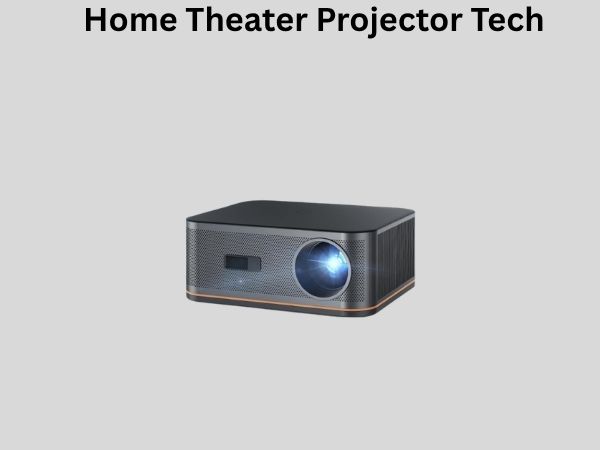
Home Theater Projector Tech: DLP vs. LCD – Which Should You Choose?
When you’re setting up a home theater, choosing the right projector can feel like you’re trying to pick between two equally attractive paths in a dense forest. Both lead somewhere nice, but they’ll take you on completely different journeys. Today, we’re diving deep into the world of DLP and LCD projectors—two technologies that have dominated the home theater market for years—so you can finally figure out which one deserves a spot in your living room.
Understanding Home Theater Projector Basics
Before we wade into the specifics of DLP versus LCD, let’s talk about what projectors actually do and why they’ve become such a game-changer for home entertainment. A projector takes a bright light source and uses optical technology to shrink that light and project it onto a screen, creating an image. Think of it like a sophisticated cousin of the old-school slide projectors your grandparents might have used.
The magic happens in how different technologies manipulate that light. DLP and LCD represent two fundamentally different approaches to solving the same problem: how do you create a vibrant, detailed image that fills your entire wall? Understanding these differences isn’t just academic—it directly impacts your viewing experience, your wallet, and your long-term satisfaction with your investment.
What is DLP Technology?
DLP stands for Digital Light Processing, and it’s a technology that Texas Instruments developed back in 1987. At its core, DLP uses something called a Digital Micromirror Device, or DMD. Imagine millions of tiny mirrors—we’re talking about mirrors that are roughly one-fifth the width of a human hair—arranged on a silicon chip. Each of these mirrors can flip back and forth thousands of times per second.
How DLP Mirrors Create Your Image
Here’s where it gets fascinating. A bright light source shines on these mirrors, and they reflect that light toward your screen or away from it, depending on what the projector needs to display. The speed at which these mirrors flip is incredibly fast—so fast that your eyes perceive it as a continuous, stable image rather than a flickering mess. It’s like watching a conductor orchestrating thousands of musicians, except the musicians are microscopic mirrors and they’re all perfectly synchronized.
The fact that DLP uses reflective technology rather than transmissive technology (which LCD uses) gives it some distinct advantages and disadvantages that we’ll explore later.
The Color Wheel in DLP Systems
One characteristic feature of many DLP projectors is the color wheel. This spinning wheel has colored filters on it, and it rotates so quickly that it creates the illusion of full color. Think of it like how a television creates all its colors from just red, green, and blue light. Some premium DLP projectors use multiple color wheels or more advanced filtering systems to improve color performance, but the basic principle remains the same.
What is LCD Technology?
LCD, or Liquid Crystal Display, is technology you’re probably already familiar with if you own a television, computer monitor, or smartphone. In an LCD projector, light passes through liquid crystal panels that can either allow light to pass through or block it. Unlike DLP’s reflective approach, LCD is transmissive—the light travels through the panels rather than bouncing off mirrors.
The Three-Panel LCD System
Most LCD projectors use three separate panels, one each for red, green, and blue light. This is why LCD projectors tend to have more consistent color reproduction compared to DLP’s color wheel approach. The light from your source gets split into three separate streams, each one passes through its corresponding colored panel, and then these three streams combine to create your final image.
This architecture gives LCD projectors some inherent strengths in color fidelity and brightness consistency, since all three colors are being processed simultaneously rather than sequentially.
Image Quality Comparison
Now we’re getting into the territory where most people actually make their decisions. Image quality is subjective, but there are measurable differences between these technologies that you’ll notice on your screen.
Sharpness and Detail Resolution
DLP projectors typically offer excellent sharpness and perceived resolution. The reflective nature of the mirrors means there’s minimal light loss, and the precision of the micromirrors creates crisp edges and fine details. If you’re watching a nature documentary with tiny details in the landscape, a DLP projector will likely render those details with excellent clarity.
LCD projectors also deliver good sharpness, but because light passes through the liquid crystals, there’s inherently more light loss. This doesn’t necessarily mean softer images, but it does mean slightly lower brightness levels for the same wattage bulb. However, modern LCD projectors have become increasingly sophisticated, and the gap has narrowed considerably.
The Rainbow Effect in DLP
Here’s something you need to know about DLP projectors: some users notice what’s called the “rainbow effect.” Because DLP uses a color wheel that cycles through colors sequentially, fast-moving objects or quick eye movements can sometimes result in seeing brief flashes of individual colors rather than the combined color. It’s like your eyes catch the transition between colors before they fully blend.
Not everyone sees this effect, and many DLP owners never notice it. But if you’re someone with sensitive eyes or if you sit relatively close to the projector, it’s worth considering. Some newer DLP projectors have reduced this effect with faster color wheels or multiple wheels.
Brightness and Contrast Analysis
Brightness in projectors is measured in lumens. More lumens means the projector can throw a brighter image, which is particularly important if you’re watching in a room that isn’t completely dark. This is where DLP has traditionally held an advantage.
Why DLP Often Wins on Brightness
Because DLP’s reflective technology loses less light in the optical path, DLP projectors can achieve higher brightness levels using similar wattage bulbs compared to LCD. If you’re planning to use your projector in a room with ambient light or if you want a larger projection surface, DLP’s brightness advantage becomes practically important.
Contrast Ratio Considerations
Contrast ratio—the difference between the brightest whites and darkest blacks—is another important metric. DLP projectors have traditionally offered excellent contrast because those mirrors can be precisely controlled. However, LCD projectors have been steadily improving in this area, and many modern LCD models boast impressive contrast ratios.
For a true cinema experience where you’re watching in a dark room with carefully controlled lighting, both technologies can deliver stunning contrast. The difference matters more if you have ambient light in your viewing space.
Color Accuracy Breakdown
This is where things get really interesting, because color accuracy directly impacts your enjoyment of movies, games, and other visual content.
LCD’s Color Consistency Advantage
Because LCD projectors use three simultaneous light paths rather than a sequential color wheel, they tend to deliver more consistent color reproduction. The three-panel design means every frame receives the same color processing, which can result in more natural-looking colors, especially for skin tones and subtle color gradations.
If you’re someone who watches a lot of movies and you’re particular about how colors should look, this matters. You won’t have the slight color artifacts that can sometimes appear with color wheel-based systems.
DLP’s Color Wheel Advancements
That said, DLP manufacturers have made significant improvements to color wheel technology. Some high-end DLP projectors now use six-segment color wheels or even multiple color wheels, which increases color accuracy and reduces the likelihood of seeing color artifacts. Premium DLP models can rival LCD in color quality.
Maintenance and Longevity
Owning a projector isn’t just about the initial purchase—you need to think about keeping it running smoothly for years to come.
Filter Maintenance Requirements
LCD projectors use filters that need regular cleaning to prevent dust from accumulating on the liquid crystal panels. Over time, dust can reduce brightness and image quality. You’ll need to clean or replace these filters periodically, which adds to your maintenance routine.
DLP projectors also use filters, but because the mirrors are sealed inside the projector, they’re less susceptible to dust accumulation on the actual light-manipulating surfaces. This can mean slightly less maintenance over the long term.
Bulb Lifespan and Degradation
Both DLP and LCD projectors use high-intensity discharge bulbs or, in newer models, laser light sources. The bulb lifespan is typically similar between technologies, usually ranging from 2,000 to 5,000 hours of operation depending on the specific model and brightness settings. However, some users report that DLP bulbs maintain their brightness more consistently as they age.
Long-Term Component Reliability
DLP’s sealed optical engine means the mirrors are protected from environmental factors. LCD projectors’ liquid crystals are also quite durable, but the more complex optical path with three separate panels means there are potentially more components that could eventually fail. In practice, both technologies are reliable when manufactured by reputable companies, but the simpler DLP architecture might have a slight edge in long-term durability.
Price Considerations
Let’s talk money, because this often makes the final decision for most people.
Entry-Level Price Points
At the entry-level, both DLP and LCD projectors offer good value. You can find decent home theater projectors from either technology in the $300-$800 range. At this price point, the specific features and brand reputation matter more than the underlying technology choice.
Mid-Range and Premium Markets
In the mid-range and premium segments, DLP projectors tend to be slightly more affordable than comparable LCD models with similar brightness and image quality. This is partly because DLP has a longer manufacturing history and established supply chains. If budget is a concern, DLP might offer better value for money.
Cost of Replacement Parts and Upgrades
Both technologies have similar replacement bulb costs and similar lifespans. However, when it comes to major repairs, DLP’s simpler architecture might be easier and cheaper to service. This is something worth considering if you plan to own your projector for many years.
Sound Integration Options
While we’re focusing primarily on the visual technology, how your projector integrates with your sound system matters for the complete home theater experience.
Built-In Speaker Quality
Most home theater projectors have minimal built-in speakers—just enough for basic audio if you absolutely need it. Both DLP and LCD projectors typically offer similar speaker options. Neither technology inherently performs better in this regard.
Audio Connectivity and Compatibility
What matters more is the connectivity options. Modern projectors from both camps offer HDMI inputs, which carry audio signals, and some offer optical audio outputs for connecting to external sound systems. This is more about the projector model you choose than the underlying display technology.
Installation Flexibility
How easy is it to get your projector up and running in your specific space?
Throw Distance and Lens Options
Both DLP and LCD projectors come in various models with different throw ratios. This refers to the distance the projector needs to be from the screen to create a certain size image. Some projectors are designed for long throw distances (you can sit far back and still get a large image), while others are short-throw (useful for small rooms). Both technologies offer similar flexibility in this regard.
Ceiling Mount Compatibility
Both DLP and LCD projectors can be mounted on ceilings or positioned on shelves. Most models support 360-degree rotation for proper image orientation. The physical mounting hardware is essentially the same regardless of technology choice.
Real-World Performance Scenarios
Let’s get practical. How do these projectors actually perform in common home theater situations?
Well-Controlled Dark Rooms
If you have a properly light-controlled room with blackout curtains or in a basement, both technologies shine. DLP’s excellent contrast and LCD’s color accuracy both become apparent. You’ll notice the difference more based on the specific projector model and price point than on the technology choice.
Rooms with Ambient Light
In rooms where you can’t completely eliminate ambient light, DLP’s brightness advantage becomes more noticeable. If light is streaming through windows or you have living room lights on while watching, a brighter DLP projector might maintain better image quality than an equivalent LCD model.
Gaming and Sports Viewing
Are you planning to use this projector for gaming or watching live sports? Both of these applications have specific demands.
Input Lag for Gaming
If you’re connecting gaming consoles, input lag matters. This is the delay between when you make an input (like pressing a button) and when the projector displays the result. Modern DLP and LCD projectors have both improved in this area, and the differences are minimal with current technology. However, DLP projectors have traditionally had a slight advantage here due to their simpler processing architecture.
Motion Handling for Sports
For watching fast-moving sports action, you want a projector that handles motion smoothly without ghosting or blur. DLP’s reflective technology can handle rapid image changes slightly better than LCD’s transmissive approach. However, modern LCD projectors have become quite good at this as well, especially models with higher refresh rates.
Movie Watching Experience
For what most people actually use their home theater for—watching movies—what’s the difference?
Color Accuracy for Film
Movies are color-graded by professionals using specific standards. LCD projectors’ color consistency advantage means you’re more likely to see the image exactly as filmmakers intended. If you’re a cinematography enthusiast or you really appreciate color grading in films, this matters.
Brightness for Large Screens
If you’re planning a very large projection surface (100+ inches), DLP’s brightness advantage becomes more important. The larger the screen, the more light you need to maintain proper brightness across the entire surface. DLP projectors can achieve larger image sizes at reasonable brightness levels.
Conclusion
So, which technology should you choose? Here’s the honest answer: it depends on your specific situation, and both can deliver excellent home theater experiences.
Choose DLP if you want the brightness advantage for larger screens or rooms with ambient light, if you appreciate its contrast and sharpness, if budget is a significant concern, or if you like the simpler architecture for long-term reliability. DLP projectors are particularly well-suited for installations where brightness matters more than color perfection.
Choose LCD if color accuracy is your priority, if you’re going to be watching movies in a perfectly controlled dark environment, if you want to avoid any possibility of the rainbow effect, or if you prefer the simpler color management of a three-panel system. LCD proj