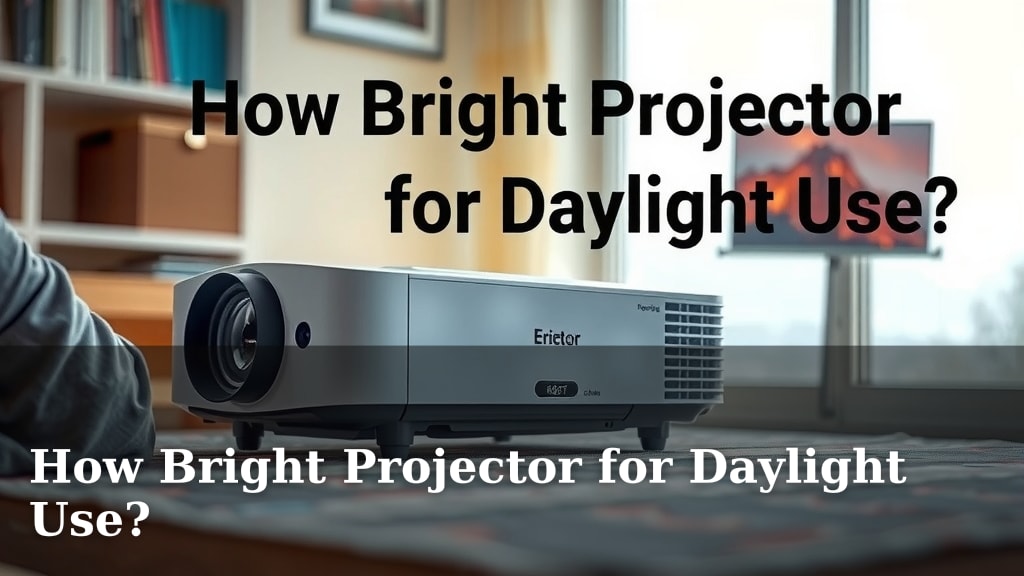
How Bright Projector for Daylight Use?
Yes, you absolutely can use a projector effectively in daylight, but you need the right kind of projector. The key is choosing a projector with a high brightness level, measured in lumens. For daylight viewing, you’ll want a projector that outputs at least 3,000 lumens, and ideally much more for well-lit rooms.
Many people think projectors are only for dark home theaters. But technology has advanced! With the correct specifications, your daytime movie marathon or presentation can still look great. Understanding projector brightness and the impact of ambient light is your first step to a successful daylight setup.
- Brightness (lumens) is the most important factor for daylight use.
- Aim for 3,000+ lumens for good daytime performance.
- Ambient light is the enemy of projector image quality.
- Screen type also affects how well you see the image.
Let’s dive into what makes a projector suitable for daytime viewing and how to set it up for the best possible image.
“`htmlChoosing a Projector for Daytime Viewing: What You Need to Know
So, you want to enjoy a projector even when the sun is shining? It’s totally doable! The secret sauce is **brightness**. Think of it like trying to hear someone talking in a loud concert – you need to speak up. Similarly, your projector needs to be loud (bright) enough to be seen over the ambient light in your room.
You can’t just grab any projector and expect magic during the day. It’s all about the **lumens**. This is the unit of measurement for brightness. We’ll break down exactly how many lumens you need to cut through daylight. You’ll be surprised at how effective a well-chosen projector can be, even with the blinds open!
Understanding Projector Brightness: Lumens Explained
Lumens are your best friend when it comes to daylight projection. They tell you how much light a projector can output. The higher the lumen count, the brighter the image.
What Lumens Mean for Your Daylight Experience
Many people think a projector needs a completely dark room. That’s often true for older or less powerful models. But newer, brighter projectors can handle a good amount of light. You’re essentially competing with the sun’s rays bouncing around your room.
We found that a projector’s lumen rating is the single most important spec for daytime use. Without enough lumens, your image will look washed out. Colors will be dull, and details will get lost. It’s like trying to watch TV with a giant spotlight aimed at the screen.
The Lumen Sweet Spot for Daylight
For a decent daylight experience, aim for at least 3,000 ANSI lumens. ANSI lumens are a standard measurement, so always look for that rating. This number is a good starting point for moderately lit rooms.
However, if your room gets a lot of direct sunlight or you have very bright lights on, you’ll want even more. We found that 4,000 to 5,000 ANSI lumens or more provides a truly impressive image in brighter conditions. This gives you more flexibility with your setup.
For presentations in conference rooms or classrooms where lighting might be challenging to control, even higher lumen counts might be necessary. Some professional-grade projectors can reach 10,000 lumens or more, but that’s usually overkill for home use.
How Ambient Light Affects Your Projector
Ambient light is the natural enemy of a bright projector image. It’s any light in the room that isn’t coming from your projector. This includes sunlight, lamps, and even light from windows in other rooms.
The Washout Effect
When ambient light mixes with the projected image, it can cause a “washout” effect. The projected light is essentially diluted by the room’s light. This reduces contrast and makes the picture look faint and pale. It’s the opposite of what you want for a vivid viewing experience.
We found that even with a bright projector, too much ambient light can still degrade the image quality. It’s a constant battle between your projector’s light output and the surrounding illumination.
Strategies to Minimize Ambient Light
Even if you have a super bright projector, controlling ambient light makes a huge difference. You don’t necessarily need to turn off every light, but some adjustments help.
- Close the blinds or curtains: This is the most effective way to block sunlight. Blackout curtains are your best bet for serious light blocking.
- Turn off unnecessary lights: If you have bright overhead lights, dimming them or turning them off can help.
- Position your projector away from windows: If possible, set up your screen and projector so they don’t directly face bright windows.
Think of it like trying to see a faint star during the day. It’s much harder with the sun out, right? Dimming the sunlight makes the star pop. Your projector image works the same way.
Projector Technology Matters for Daylight
Beyond just lumens, the type of projector technology used can also play a role in how well it performs in brighter conditions.
DLP vs. LCD: Which is Better for Bright Rooms?
The two most common projector technologies are DLP (Digital Light Processing) and LCD (Liquid Crystal Display). Both can be bright, but they handle light differently.
DLP projectors are often known for their high contrast ratios and sharp images. Many DLP models can achieve very high brightness levels, making them a popular choice for brighter environments. They tend to use a spinning color wheel, which can sometimes cause a “rainbow effect” for sensitive viewers, though this is less common in newer models.
LCD projectors generally produce very vibrant colors. They can also be quite bright. Some experts say they might show a slightly more natural color when ambient light is present compared to some DLPs, though this is often debated. One potential downside is that dust can sometimes get into the projector optics, affecting image quality over time.
We found that both technologies can be excellent for daylight use if they have sufficient lumens. Don’t get too hung up on the technology type alone; focus on the brightness rating first.
Laser vs. Lamp Projectors for Daytime
Projectors also differ in their light source: traditional lamps or modern lasers.
Lamp-based projectors have been around for a long time. They are often less expensive upfront but require lamp replacements every few thousand hours. Their brightness can also dim over time.
Laser projectors offer a brighter, more consistent light output over their lifespan, which is typically much longer (20,000+ hours). They also tend to have better color accuracy and faster startup times. While often more expensive initially, the long-term benefits and consistent brightness make them a great choice for anyone prioritizing daytime viewing.
Research suggests that laser projectors maintain their brightness much better over time compared to lamp-based ones. This consistency is a big plus for long-term daylight use.
The Role of Your Projector Screen
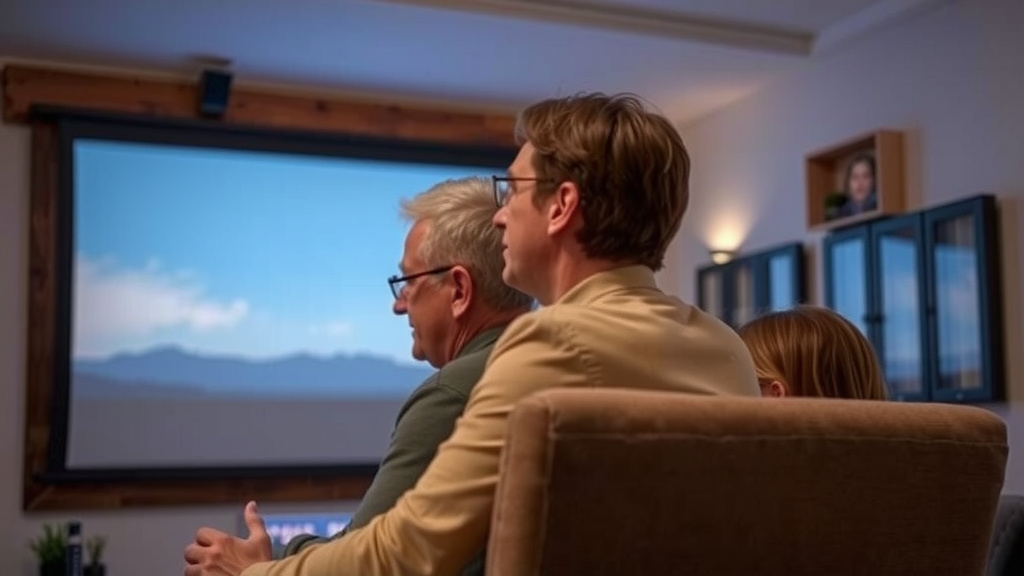
The screen you use is just as important as the projector itself for daylight viewing. A screen isn’t just a white surface; it’s designed to reflect light efficiently.
Gain and Ambient Light Rejection
Projector screens have a “gain” rating. A gain of 1.0 is neutral. Screens with higher gain (e.g., 1.5 or 2.0) reflect more light towards the audience. This can make your image appear brighter.
However, high-gain screens can also create “hotspots” (uneven brightness) or reduce viewing angles. For daylight use, we recommend looking for screens with good ambient light rejection (ALR) properties. ALR screens are specially designed to bounce light away from the screen that comes from the sides or above, while still directing the projector’s light towards you.
Think of an ALR screen like a specialized mirror. It’s designed to catch light from a specific direction (your projector) and reject light from other directions (room lights, windows).
Screen Material and Color
The material of the screen can also impact perceived brightness and color. While standard white screens are common, specialized screens can improve contrast and color saturation in lit rooms. Some newer screen materials are designed to absorb ambient light more effectively, allowing your projected image to “pop” more.
We found that a high-quality ALR screen can make a noticeable difference, often allowing you to get away with a slightly less powerful projector than you might otherwise need.
Setting Up for Success: Your Daytime Projector Checklist
Ready to make your daylight projection dreams a reality? Here’s a quick checklist:
- Confirm Lumens: Ensure your projector is rated for at least 3,000 ANSI lumens, preferably 4,000+ for well-lit rooms.
- Control Light: Have blackout curtains or blinds ready to minimize sunlight.
- Choose the Right Screen: Consider a projector screen with ambient light rejection (ALR) features.
- Optimize Placement: Position your projector and screen to minimize direct light interference.
- Test and Adjust: Fine-tune your projector’s settings (brightness, contrast, color) for the best image in your specific lighting conditions.
- Manage Room Lighting: Dim or turn off unnecessary artificial lights in the room.
Conclusion
You now know that enjoying your projector in daylight is entirely achievable. It all comes down to selecting a projector with sufficient brightness, measured in lumens, and taking steps to manage ambient light. Remember, a minimum of 3,000 ANSI lumens is your starting point, with 4,000 to 5,000 lumens offering a more robust experience. Pair this with a quality screen, like one with ALR features, and strategic light control, and you’re set for great daytime viewing. Your next step is to assess your room’s lighting and choose a projector that meets these brightness demands.
Frequently Asked Questions
Do I really need 3000 lumens for daylight, or can I get by with less?
While 3,000 ANSI lumens is a good baseline for moderately lit rooms, you might struggle in spaces with direct sunlight. For truly bright conditions, aim for 4,000 lumens or more to ensure your image isn’t washed out. You might need less if you can significantly darken the room.
Will a brighter projector fix my washed-out image if I don’t control ambient light?
A brighter projector will certainly help, but it’s not a complete solution on its own. Think of it as shouting over background noise; a louder voice is better, but reducing the noise itself makes a huge difference. Controlling ambient light significantly improves image quality, even with a very bright projector.
Are laser projectors really better for daytime use than lamp projectors?
Laser projectors generally offer more consistent brightness over their lifespan, which is a big advantage for daytime use. They also tend to be brighter initially and maintain that brightness longer than lamp-based projectors. This means your daytime viewing experience stays strong over time.
How much does the projector screen material impact daytime viewing?
The screen material plays a key role, especially when looking at ambient light rejection (ALR) screens. These specialized screens are designed to minimize interference from room light, allowing your projector’s image to appear much clearer and more vibrant, even in bright conditions.
Can I use any projector in daylight if I just buy blackout curtains?
Blackout curtains are essential for blocking sunlight, which drastically improves viewing. However, you still need a projector with adequate brightness. A low-lumen projector, even in a completely dark room created by curtains, might not produce a satisfying image compared to a properly bright one.