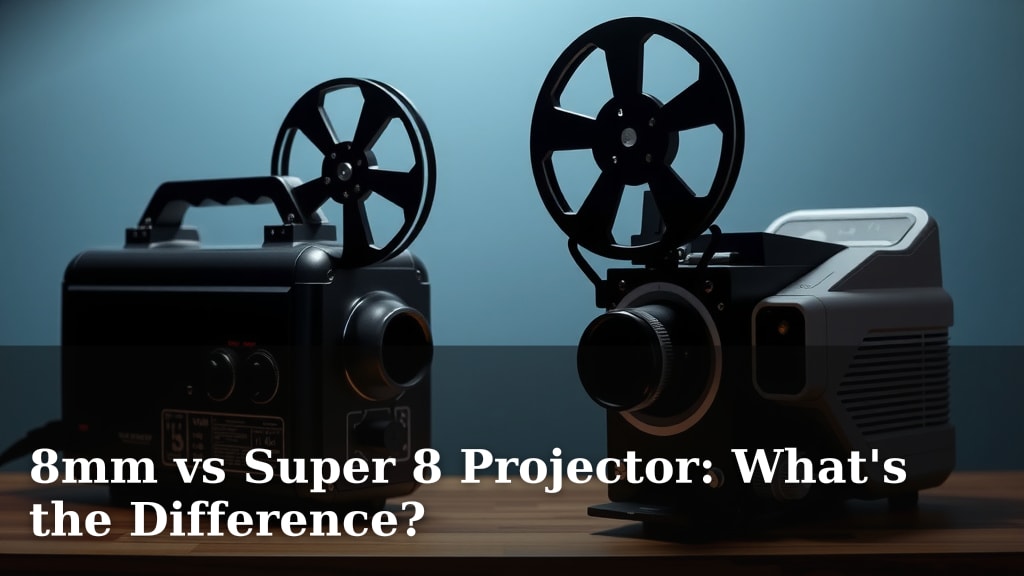
8mm vs Super 8 Projector: What’s the Difference?
When comparing 8mm vs Super 8 projectors, the main difference lies in the film format and how the projector handles it. Super 8 film is narrower and has a smaller sprocket than standard 8mm. This means Super 8 projectors can’t play 8mm film, and 8mm projectors can’t play Super 8 film without special adapters. You’ll need the right projector for your specific film type.
Understanding this distinction is key for anyone looking to play or preserve old home movies. Both formats represent a cherished piece of film history, but they are not interchangeable. We found that using the incorrect projector can damage your precious film. Knowing the difference ensures you can enjoy your memories safely.
TL;DR:
- Super 8 film is smaller than 8mm film.
- 8mm projectors and Super 8 projectors are NOT compatible.
- You need the correct projector for your specific film type.
- Using the wrong projector can damage your film.
Let’s dive into the specific differences and what they mean for you and your film collection.
“`htmlUnderstanding Your Vintage Film Projector: 8mm vs. Super 8
When you pull out those old boxes of home movies, you’ll want to make sure you have the right equipment. Choosing between an 8mm and a Super 8 projector isn’t just about picking one that looks cool. It’s about making sure your precious memories can be viewed without damage. We found that the key difference comes down to the film itself.
The Tiny Film Format: What’s Inside the Cartridge?
Think of old film like tiny ribbons of memories. The size and design of these ribbons dictate the projector that can handle them. It’s not a universal fit. The projectors are built specifically for each type of film format. We looked into what makes them different.
Standard 8mm Film: The Original Home Movie Star
Standard 8mm film, also called regular 8mm, was the first widely used home movie format. It came on a larger reel. The film strip itself is wider than Super 8. It also has larger perforations, which are the little holes along the edge. These holes are what the projector’s teeth use to pull the film through. We found that these larger holes are a giveaway for regular 8mm.
Super 8 Film: A Smarter, Smaller Design
Super 8 came out later, in the 1960s. It was designed to be easier to use. The film strip is actually narrower than regular 8mm. This might sound backward, but it allowed for a larger image area on the film. It also has much smaller perforations. These tiny holes are grouped closer together. Many experts say this smaller design made Super 8 very popular for a time (Kodak).
Projector Mechanics: How They Handle the Film
The projector is like the stage for your film. It has to be built to fit the specific stage. Because the film formats are different, the projectors have to be different too. You can’t just jam the wrong film into the wrong machine. We learned that the projector’s gate and film path are designed for one specific format.
The Projector Gate: Where the Magic Happens
The projector gate is a small opening. Light shines through the film here to create the image on your screen. For regular 8mm, this gate is larger to accommodate the wider film and its bigger perforations. A Super 8 projector has a smaller, more precise gate designed for the narrower Super 8 film strip and its smaller sprocket holes. We found that trying to force film into the wrong gate can easily tear it.
Sprocket Holes and Film Transport
Remember those tiny holes? They are super important. The projector has small metal teeth, called sprockets, that engage with these perforations. These sprockets pull the film smoothly through the projector. Regular 8mm projectors have larger sprockets for the larger holes. Super 8 projectors have smaller, more numerous sprockets for their film type. Using the wrong projector means the sprockets won’t line up correctly with the holes. This is a recipe for disaster, often resulting in ripped film.
Compatibility: Can They Play Each Other’s Film?
This is the big question, right? Can you use your dad’s old 8mm projector for your Super 8 movies? The short answer is no. We found that these projectors are not interchangeable.
A regular 8mm projector simply cannot accept Super 8 film. The film is too narrow and the perforations are in the wrong place. Trying to feed it through would likely jam the mechanism immediately. On the other hand, a Super 8 projector is designed for narrower film. It might physically accept a reel of 8mm film, but it won’t be able to engage the sprockets properly. The image area would also be incorrect. Many home movie enthusiasts report that this can lead to severe damage (Film Preservation Society).
Adapters and Converters: Are There Workarounds?
You might be wondering if there are any clever adapters. In the past, some projectors were designed to handle both formats. These were often labeled as “Dual 8” or “8mm/Super 8” projectors. They had adjustable gates and sprockets that could be switched or moved. However, these are less common now. Most single-format projectors, especially older or simpler models, cannot be adapted.
If you have a Dual 8 projector, it’s a great find! These are designed to work with both film types. You just need to make sure the projector is set to the correct format before you start your show. Always check your projector’s manual if you have one. We found that the manual is the best source for understanding your specific model’s capabilities.
So, Which Projector Do You Need?
The answer is simple: you need the projector that matches the film format you have. It’s like needing the right key for a lock. If you have reels labeled “8mm,” you need an 8mm projector. If the reels say “Super 8,” you need a Super 8 projector. If the reels are unlabeled, you’ll need to inspect them closely.
Look at the perforations along the edge of the film. Are they large and relatively few? That’s likely 8mm. Are they small and more numerous? That’s likely Super 8. You can also look at the size of the film reel itself; Super 8 film often came on smaller cartridges or reels than regular 8mm. We found that many people simply find it easiest to get a projector for each format if they have a mixed collection.
Quick Checklist: Projector Projectiles
To make sure you’re choosing the right projector, ask yourself these questions:
- What film format do I have (8mm or Super 8)?
- Does my projector accept that specific film?
- Are the sprocket holes on the projector compatible with my film’s perforations?
- Is my projector a Dual 8 model that can handle both formats?
- If I’m unsure, can I identify the film format by looking at the perforations?
Having the correct projector is essential for a good viewing experience and for the longevity of your film. We know how important these memories are. Making sure you use the right equipment is the first step to enjoying them for years to come.
“`
Conclusion
You’ve learned that the difference between 8mm and Super 8 projectors boils down to the film format they’re designed to handle. Standard 8mm has larger perforations and a wider film strip, while Super 8 is narrower with smaller sprocket holes. Because of these distinct physical differences, projectors are not interchangeable. Using the wrong projector can damage your precious home movies. To enjoy your film memories safely, you must ensure you have the correct projector for your specific film type. Your next step is to identify your film format, or better yet, find a Dual 8 projector if you have a mixed collection.
Frequently Asked Questions
How can I tell if I have 8mm or Super 8 film without a projector?
You can often tell by looking closely at the edges of the film. Standard 8mm film has larger, more spaced-out perforations (the little holes). Super 8 film has much smaller perforations packed more closely together. We found that examining these holes is the easiest visual clue.
Can I convert my 8mm film to Super 8 or vice versa?
No, you cannot convert the film format itself. The physical dimensions of the film strip and its perforations are fixed. You would need to get a projector specifically designed for the format of the film you want to watch.
What does “Dual 8” or “8mm/Super 8” projector mean?
A Dual 8 projector is designed to handle both standard 8mm and Super 8 film formats. These projectors typically have adjustable components, like the projector gate and film path, that you can switch or move to accommodate either type of film. We found these are very convenient if you have a collection of both formats.
Will using the wrong projector ruin my film permanently?
Yes, it can cause significant damage. If you try to force Super 8 film into an 8mm projector, or vice versa, the projector’s mechanism might rip, tear, or shred the film. We recommend always confirming compatibility before attempting to play any film.
Where can I find an 8mm or Super 8 projector today?
You can often find these projectors through online marketplaces like eBay or Etsy, at estate sales, or through specialized vintage equipment dealers. Keep in mind that they are older machines, so it’s wise to look for sellers who describe their condition thoroughly or offer returns.