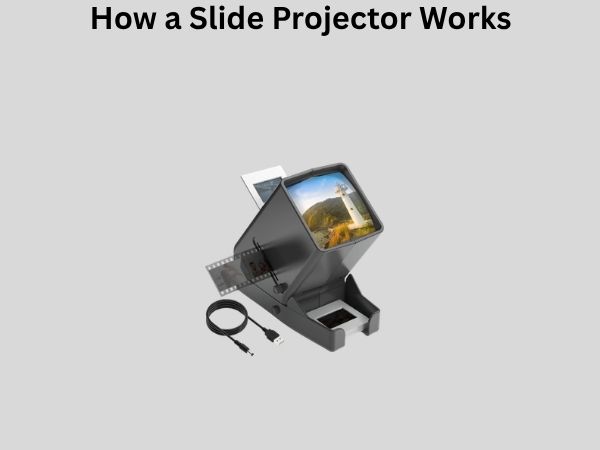
How a Slide Projector Works: A Complete Guide to This Classic Technology
Remember when families would gather around in dimly lit living rooms, eagerly waiting for the next photograph to appear on the white screen? That nostalgic experience was made possible by the humble slide projector—a device that transformed small transparent slides into large, vibrant images. But have you ever wondered what actually happens inside that machine? How does it take something so tiny and blow it up to fill an entire wall? Let’s dive into the fascinating mechanics of slide projectors and discover why this technology has remained a beloved tool for educators, photographers, and nostalgic enthusiasts for decades.
Understanding the Basics: What Exactly Is a Slide Projector?
A slide projector is essentially an optical instrument designed to display photographic slides on a screen or wall. It’s like a sophisticated magnifying glass combined with a light source and a lens system. The projector takes a small 35mm film slide—typically measuring just 2 inches by 2 inches—and enlarges it to create a much larger image that can be viewed by an audience.
Think of it this way: if you hold a small photograph up to a bright light and look at it through a magnifying glass at just the right angle, you’d see a larger version of that image projected onto a surface behind the lens. That’s essentially what a slide projector does, but with incredible precision and sophistication.
The Essential Components Inside Your Slide Projector
To truly understand how a slide projector works, we need to break down its key components. Each part plays a crucial role in the journey from slide to projected image.
The Light Source: The Heart of the Projector
At the core of every slide projector is an incredibly bright light source. Most traditional slide projectors use a halogen bulb or a xenon lamp, though some older models used incandescent bulbs. These aren’t your ordinary household light bulbs—they’re specially designed to produce extremely intense, focused light.
The halogen bulb is particularly popular because it provides consistent, bright illumination while remaining relatively energy-efficient. Xenon lamps, on the other hand, produce an even brighter light and are often found in professional-grade projectors. The reason projectors need such bright light becomes clear when you consider that the light must pass through a small slide, travel through multiple lenses, and still be bright enough to create a clearly visible image on a distant screen.
The Reflector Mirror: Directing Light Where It Needs to Go
Behind the light bulb sits a carefully curved mirror called a reflector. This isn’t just any mirror—it’s precisely shaped to catch light emitted from the back and sides of the bulb and redirect it forward through the slide. Imagine trying to collect rainwater in a bucket; the curved shape helps funnel everything toward a single point. Similarly, the reflector mirror ensures that as much light as possible passes through the slide rather than being wasted.
The Slide Tray and Advance Mechanism
The slide tray is where your collection of photographic slides sits, waiting their turn. Most slide projectors use a rotating carousel or tray that can hold anywhere from 40 to 140 slides, depending on the model. The advance mechanism—controlled by a remote button or manual lever—rotates this tray to position each slide directly in the light path.
When you press the advance button, an electric motor engages, rotating the carousel precisely so that the next slide drops into position in front of the light source. It’s a beautifully engineered system that’s incredibly reliable, which is why slide projectors from decades ago still work today.
The Condenser Lens System: Focusing the Light
After the light passes through the reflector, it encounters the condenser lens system. This is a series of specially shaped lenses positioned between the light source and the slide. The job of these lenses is to take the scattered light from the bulb and condense it into a narrow, focused beam that will pass evenly through the entire slide.
Without the condenser lenses, the light would be uneven, creating hot spots and dark areas on your projected image. With them in place, the light is distributed uniformly across the slide, ensuring that every part of your photograph is illuminated equally.
The Slide Gate and Stage
The slide gate is a metal frame that holds your slide in precise position within the light path. It’s incredibly important because if the slide isn’t positioned exactly right, the image won’t project clearly. The stage is the platform upon which the slide gate sits, and it’s designed to keep everything in perfect alignment.
The Projection Lens: The Real Magnifier
Here’s where the magic really happens. The projection lens is responsible for taking the light that has passed through your tiny slide and bending it in such a way that it creates a magnified, focused image on your screen. This is typically an interchangeable component, which allows you to change the size and sharpness of your projected image.
Different projection lenses have different focal lengths. A lens with a shorter focal length will project a larger image but works best when the projector is close to the screen. A lens with a longer focal length produces a smaller image and works better for larger distances. Some projectors come with a standard lens, while others allow you to swap lenses depending on your needs.
The Focus Mechanism
Ever notice that knob on the front of a slide projector that you turn to make the image crisp and clear? That’s the focus mechanism, and it works by moving the projection lens slightly forward or backward. By adjusting this distance, you ensure that the light rays converge perfectly on your screen, creating a sharp, detailed image rather than a blurry mess.
The Complete Journey of Light: Step-by-Step
Now that we understand the components, let’s trace the exact path that light takes through a slide projector:
- Step One: The bright halogen or xenon bulb switches on, emitting intense light in all directions.
- Step Two: The reflector mirror behind the bulb captures light that would otherwise be wasted and directs it forward.
- Step Three: The condensed light encounters the condenser lens system, which focuses and distributes it evenly.
- Step Four: The focused light passes through your photographic slide, and the colors and details of the photograph filter and modify the light beam.
- Step Five: The light, now carrying the image information from your slide, enters the projection lens.
- Step Six: The projection lens bends and magnifies this light, creating an enlarged, inverted image.
- Step Seven: The magnified light beam travels through the air and strikes your projection screen, creating the visible image you see.
Why Is the Slide Inverted When It Travels Through the Projector?
You might have noticed something interesting if you’ve ever really paid attention to how slides work: the slide is inserted upside down and backward into the projector. This seems counterintuitive, but it’s actually a beautiful consequence of how light and lenses work together.
When light passes through a lens, it bends in such a way that the image gets flipped both horizontally and vertically. By inserting your slide upside down and backward, the projector flips it back to its correct orientation when it reaches the screen. It’s like taking a wrong turn that leads you exactly where you need to go.
The Role of Heat in Slide Projectors
Have you ever held your hand near a projector and felt intense heat radiating from it? That heat is a significant byproduct of the projector’s operation, particularly from the bright bulb. This heat isn’t just an inconvenience—it’s something that projector engineers had to carefully manage.
Most slide projectors include a cooling fan and ventilation system to prevent the heat from damaging the slides or other internal components. The slide itself is made of plastic and can warp or melt if exposed to excessive heat. Additionally, the projector’s electronic components can malfunction if temperatures get too high. That’s why it’s important to never block the ventilation ports on your projector and to allow it to cool down properly after use.
Manual Versus Automatic Slide Advance: Two Different Approaches
Manual Advance Systems
The most basic slide projectors use a simple mechanical system. You manually rotate the slide carousel by hand, or you pull a lever to advance to the next slide. This gives you complete control over timing and allows you to pause on any slide for as long as you want.
Automatic Advance Systems
More sophisticated projectors include a motorized advance system controlled by a remote control or a switch on the projector itself. When you press the button, an electric motor precisely rotates the carousel to the next position. Many automatic systems also allow you to pre-program a timing sequence, so slides advance automatically at set intervals, perfect for creating a slideshow presentation.
Dissolve Units and Special Effects
Professional slide projectors often feature what’s called a dissolve unit. This is an accessory that works with two projectors to create smooth transitions between slides. As one slide fades out, the next simultaneously fades in, creating an elegant, flowing presentation rather than a jarring cut from one image to the next.
Some dissolve units even allow for special effects like zoom, fade, and wipe transitions. While these might seem like simple tricks by today’s digital standards, they were genuinely impressive during the golden age of slide presentations.
The Advantages of Using a Slide Projector
You might wonder why anyone still uses slide projectors when we have digital projectors and screens. The answer lies in several genuine advantages:
- Image Quality: Slide projectors produce remarkably vibrant, saturated colors that many photographers still consider superior to digital alternatives. The light passes directly through the photographic slide, preserving the original color information without digital compression or translation.
- Longevity: A well-maintained slide projector can operate reliably for decades. Slides themselves, stored properly, can preserve images for a century or more, far longer than most digital media.
- Simplicity: There are no complicated software systems to master. You simply load your slides, focus the image, and enjoy. It’s gloriously straightforward.
- No Power Issues: Once warmed up, a slide projector isn’t dependent on software updates, driver compatibility, or system crashes.
- Cost-Effective: Used slide projectors are remarkably affordable, making them accessible to anyone interested in this technology.
Understanding Different Types of Slide Projectors
Standard 35mm Slide Projectors
These are the most common type, designed for standard 35mm photographic slides. They’re what most people picture when they think of slide projectors.
Medium Format Projectors
For photographers working with larger film formats like 6×6 or 6×7, medium format projectors are available. They operate on the same principles but are built to accommodate the larger slides.
Stereo Projectors
These specialized projectors can display stereoscopic images, creating a 3D effect when viewed with special glasses. They work by projecting two slightly different images simultaneously, mimicking how our two eyes perceive depth.
Maintenance Tips for Long-Lasting Performance
To keep your slide projector working beautifully for years to come, a few maintenance practices go a long way:
- Clean the projection lens regularly with a soft, lint-free cloth and lens cleaner designed for optical glass.
- Allow the projector to warm up for a few minutes before use and cool down after each session.
- Keep the ventilation ports clear and unobstructed to ensure proper heat dissipation.
- Store the projector in a dry, dust-free environment when not in use.
- Use a protective cover to shield it from dust and accidental damage.
- Replace the projection bulb according to the manufacturer’s recommendations—using an old, dimming bulb reduces image brightness and quality.
The Cultural Impact of Slide Projectors
Slide projectors represent more than just optical technology—they’re woven into the fabric of how we’ve shared memories and knowledge. Educational institutions used them to teach generations of students. Photographers built their entire careers around creating stunning slide presentations. Families gathered together not to scroll through phones, but to sit together and experience images on a large screen, discussing and reminiscing about the moments captured.
There’s something uniquely engaging about the slide projector experience. The slight pause between slides, the focus and refocus, the careful sequencing of images to tell a story—all of these elements forced presenters and audiences to engage more thoughtfully with visual information.
The Future of Slide Projectors
While digital technology has largely replaced slide projectors in mainstream use, there’s a surprising resurgence of interest among photographers and collectors. Vintage slide projectors are being sought after by enthusiasts who appreciate their optical quality and mechanical reliability. Additionally, some professional photographers still prefer the color reproduction and image quality that slides deliver.
Artists have also begun incorporating vintage projectors into their work, celebrating the aesthetic of this older technology and exploring how it differs from our digital present.
Conclusion
The slide projector, though it may seem like outdated technology, represents a remarkable achievement in optical engineering. By combining a bright light source, precision mirrors and lenses, and an elegant mechanical system, slide projectors transform tiny photographic slides into large, vivid images that can be shared with audiences. Understanding how these devices work gives us appreciation for the thoughtful engineering behind them and the role they’ve played in how we’ve communicated and shared memories.
Whether you’re a collector restoring an old projector, a photographer exploring vintage technology, or simply curious about how this classic device operates, the principles behind it remain as elegant today as they were when slide projectors first became popular. The next time you encounter a slide projector, you’ll appreciate not just the image on the screen, but the sophisticated optical journey that light takes to get there.
Frequently Asked Questions About Slide Projectors
What is the difference between a slide projector and a digital projector?
A slide projector uses actual photographic slides as its source material and projects light directly through these transparent images. A digital projector, by contrast, uses electronic components and digital image processing to create projected images from digital sources like computers or media players. Slide projectors are admired for producing exceptionally saturated colors and sharp images, while digital projectors offer greater flexibility and ease of use with modern technology.
Can you use modern photographs with a slide projector?
Not directly. Slide projectors require photographic slides, which are physical transparent film positives. To use modern digital photographs, you would need to convert them to slide film through a specialized service, or print them onto transparent film using compatible printers. However, this defeats much of the purpose of using a slide projector, as digital images can typically be displayed more easily using a digital projector.
How long does it take for a slide projector bulb to burn out?
Most slide projector bulbs have a lifespan of between 50 to 150 hours of use, depending on the specific bulb type and quality. Some premium bulbs can last longer. The bulb will gradually dim over time, and when you notice the projected image becoming less bright, it’s usually time to replace it with a fresh bulb designed for your specific projector model.
Are vintage slide projectors still good to use?
Absolutely! Many slide projectors made several decades ago still function beautifully and can produce excellent image quality. However, you should have an older projector inspected and serviced by someone knowledgeable before heavy use. The cooling system may need attention,