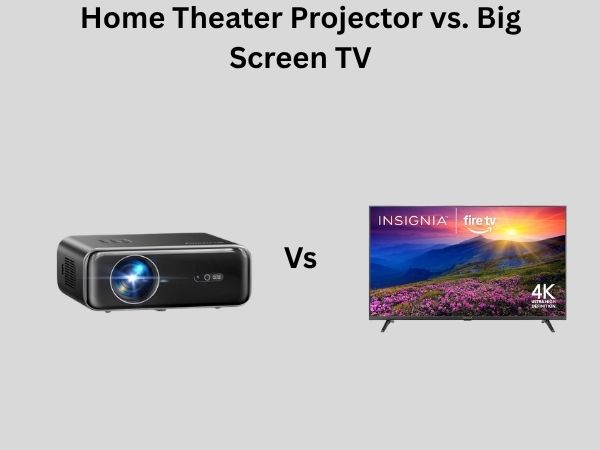
Home Theater Projector vs. Big Screen TV: The Ultimate Comparison
When it comes to transforming your living room into an entertainment haven, you’re probably facing one of the biggest decisions in home entertainment today. Should you invest in a massive television screen, or would a projector setup serve you better? I’ve spent considerable time researching both options, and I’m here to walk you through everything you need to know to make the right choice for your space and lifestyle.
The truth is, there’s no one-size-fits-all answer. Each option brings distinct advantages and drawbacks that depend heavily on your room layout, budget, viewing habits, and personal preferences. Let me break down this comparison in a way that’ll help you visualize which option truly makes sense for you.
Understanding the Core Technology
Before we dive into comparisons, let’s understand what we’re actually dealing with here. A big screen TV is something most of us know intimately—it’s a flat panel display that sits in your entertainment center, emitting light directly at your eyes. A home theater projector, on the other hand, works by throwing an image onto a screen or wall from a distance, much like how movie theaters have operated for decades.
The fundamental difference in how these devices work plays a crucial role in determining which might be better for you. Think of it like the difference between reading a book with a flashlight pointed at it versus having the book itself glow. Both deliver the information, but the experience feels entirely different.
How Big Screen TVs Deliver Picture Quality
Modern televisions have become incredibly sophisticated. They use advanced backlighting systems, quantum dot technology, and local dimming zones to create stunning images with deep blacks and vibrant colors. The brightness of a TV is typically measured in nits, with high-quality models delivering 1,000 to 3,000 nits of brightness, which means they perform exceptionally well even in brightly lit rooms.
How Projectors Create the Image
Projectors work differently—they shine light onto a surface to create the image. Most home theater projectors deliver between 1,500 and 3,000 lumens, which sounds similar to TV brightness, but the delivery method is fundamentally different. That light is spread across a much larger surface area, which can make them appear less bright in comparison, especially in rooms with ambient light.
Screen Size: The Cinematic Experience Factor
Let’s talk about the elephant in the room—or rather, the massive image on the wall. When you watch a projector, you’re looking at something that can easily reach 100 to 150 inches diagonally. The largest commercial TVs top out around 98 inches, and they’re rare, expensive, and difficult to find. This size difference fundamentally changes how you experience content.
Have you ever been to a movie theater and felt completely immersed in the story? That’s what a projector can bring to your home. Your peripheral vision fills with the image, your brain receives fewer distractions from your surroundings, and you’re drawn into what you’re watching in a way that even a large TV struggles to match.
The TV Advantage in Screen Size
Now, before you get too excited about projector sizes, understand that TVs have a significant advantage in terms of native resolution scaling. A 65-inch 4K TV has significantly more pixels per inch than a 120-inch projector. This matters when you’re sitting closer to the screen. If your viewing distance is less than 8 feet, a large TV will look sharper than a projector.
Optimal Viewing Distances
Industry standards suggest you should sit at a distance from 1.2 to 1.5 times the diagonal screen width for optimal viewing. This means:
- A 65-inch TV should be viewed from 8 to 10 feet away
- A 120-inch projector screen should be viewed from 14 to 18 feet away
If your room can accommodate this distance comfortably, a projector delivers an experience that’s difficult to beat. If you’re in a smaller space, a TV becomes the more practical choice.
Picture Quality and Image Performance
This is where things get genuinely interesting. You might assume that because projectors create massive images, they sacrifice quality. The reality is more nuanced than that.
Contrast and Black Levels
High-end TVs with local dimming technology can produce incredibly dark blacks because they can actually turn off or dim backlighting in specific areas of the screen. Premium projectors, especially laser-based models, have improved dramatically in this area, but they still face inherent physics challenges. A projector creates blacks by producing very little light in those areas, while a TV creates blacks by actually blocking light. This gives quality TVs a theoretical advantage in contrast ratio.
Color Accuracy and Brightness
Projectors have made remarkable strides here. Modern 4K projectors offer excellent color accuracy and brightness levels that work well in dedicated home theater rooms with controlled lighting. TVs, however, maintain their advantage in bright environments. If your room has multiple windows or you plan to watch content during daytime, a TV’s superior brightness becomes critically important.
Response Time and Motion Handling
Are you a gamer or sports enthusiast? Response time matters to you. TVs typically have response times measured in milliseconds, making them superior for fast-moving content and gaming. Projectors historically lagged behind in this department, though newer models have improved considerably. If you plan to use your screen for competitive gaming, a TV remains the better choice.
Installation and Setup Considerations
Here’s where practical reality kicks in. Setting up a projector isn’t as simple as unboxing a TV and plugging it in, though it’s not rocket science either.
Space Requirements for Projectors
Projectors require specific placement to work optimally. You need:
- Proper throw distance from the projection lens to your screen
- Ceiling or wall mounting hardware
- Cable management from the projector to your media sources
- Adequate ventilation for the projector’s cooling system
- A dedicated projection screen (or a light-colored painted wall)
Some projectors offer short-throw or ultra-short-throw capabilities, meaning they can be placed closer to the wall without losing image quality. These models are more flexible in small rooms but typically cost more.
TV Installation Simplicity
TVs are refreshingly straightforward. Mount it on the wall, plug it in, connect your devices, and you’re done. No calibration headaches, no screen installation requirements, no ceiling mounting complications. This simplicity appeals to many people who just want their entertainment system working without fuss.
Maintenance Requirements
Projectors have bulbs or laser light sources that degrade over time. Bulb-based projectors might require replacement every 3,000 to 5,000 hours of use, which translates to years for casual viewers but months for heavy users. Laser projectors last longer but cost significantly more upfront. TVs have no such maintenance requirements—they simply age naturally, and modern panel technology has proven remarkably durable.
Cost Analysis: Initial Investment and Long-term Value
Let’s talk money, because this significantly influences your decision. Budget matters, and understanding where your money goes helps you make an informed choice.
Entry-Level Projector Systems
A decent home theater projector starts around $800-$1,200, but here’s the hidden cost: you also need a screen, which runs $300-$1,000+ depending on size and quality. Then add professional installation costs if you’re ceiling-mounting, plus acoustic treatments if you’re creating a dedicated theater room. Your “simple projector purchase” suddenly becomes a $2,000-$4,000 project.
Premium Projector Investment
If you want a truly exceptional projector experience, you’re looking at $3,000-$8,000+ for the projector alone, plus all those additional costs. A top-tier laser projector system with professional installation can easily exceed $15,000.
Big Screen TV Pricing
A 65-inch 4K smart TV with excellent picture quality runs $1,200-$2,500. An 85-inch premium model might cost $3,000-$6,000. While these prices are substantial, they represent the total investment. Add a quality TV stand or wall mount ($200-$500), and you’re in a comparable range to a projector system, but with less complexity.
Long-term Cost of Ownership
If you choose a projector, factor in bulb replacement costs. A $200-$400 replacement bulb every few years adds up. TVs have no such consumable costs, making them cheaper to own over a 10-year period, assuming the technology doesn’t become obsolete (which is always a consideration in electronics).
Lighting Conditions and Room Environment
Your room environment plays a pivotal role in determining which option works best for you. Different watching scenarios suit different technologies.
Projectors in Controlled Environments
Projectors absolutely thrive in dark, dedicated home theater rooms. When ambient light is controlled, a projector delivers an immersive, theater-like experience that’s hard to beat. The larger image, combined with darkness eliminating distractions, creates genuine magic. But take that same projector into a bright family room, and you’ve got a disappointing, washed-out image.
TVs in Any Lighting Condition
TVs excel in versatile living spaces. They look fantastic in bright daylight, maintain their punch in well-lit rooms, and still deliver excellent picture quality when watched in darkness. This flexibility makes them ideal for rooms that serve multiple purposes. Your living room might host movie nights, daytime sports watching, and casual television viewing—a TV handles all scenarios equally well.
Ambient Light and Image Degradation
Even small amounts of ambient light can significantly degrade a projector’s image. Light from windows, lamps, or even reflected ceiling lights can wash out colors and reduce apparent brightness. TVs maintain consistent performance regardless of ambient light, making them genuinely more practical for most homes.
Content Consumption Patterns and Lifestyle
How you actually use your entertainment system matters tremendously. Your viewing habits should directly influence your choice.
Movie Enthusiasts and Projector Appeal
If you’re someone who watches movies multiple times weekly and genuinely appreciates the theatrical experience, a projector makes compelling sense. You’ll love the big screen, the immersion, and the cinema-like atmosphere. You’ll tolerate the maintenance, the setup complexity, and the lighting requirements because you deeply value the payoff.
Casual Viewers and TV Convenience
If you watch TV for an hour or two most days—catching up on shows, watching news, sports, or casual entertainment—a TV’s simplicity and versatility serve you better. You won’t appreciate the projector’s theater immersion enough to justify its limitations, and you’ll love the TV’s convenience.
Gaming and Competitive Performance
Gamers should carefully consider their priorities. Casual gaming works fine on projectors, but if you play competitive online games where reaction time matters, a TV’s lower input lag and faster response time become essential. The larger screen is nice, but not at the expense of performance.
Multi-Purpose Rooms
Is your entertainment space also a living room, a workspace, or a social gathering area? TVs integrate seamlessly into multi-functional spaces. A projector works best when the room is dedicated primarily to entertainment, with controlled lighting and optimized setup.
Connectivity and Smart Features
Modern entertainment involves streaming services, gaming consoles, and smart home integration. How do these technologies interact with your choice?
TV Smart Features and Apps
Nearly every modern TV includes built-in smart platforms like Roku, Google TV, or Samsung’s Tizen. You can stream Netflix, Disney+, YouTube, and hundreds of other services directly from the TV without additional equipment. Voice control integration with Alexa or Google Assistant is standard. This seamless experience is hard to replicate with projectors.
Projector Connectivity Options
Projectors don’t have the same built-in smart functionality. You’ll need a separate streaming device—an Apple TV, Roku, Fire Stick, or similar. This adds cost and complexity, though it also provides flexibility. You can upgrade your streaming device without replacing the projector, which some consider an advantage.
Audio Considerations in Your Setup
You can’t talk about home entertainment without addressing sound, and this area shows important differences between options.
TV Audio Limitations
Most TVs, even expensive ones, have mediocre built-in speakers. You’ll likely want external speakers or a soundbar, adding $300-$2,000+ to your setup. The good news is that TV audio integration is straightforward.
Projector Audio Advantage
Many people building projector systems are already planning proper home theater audio. They invest in surround sound systems, subwoofers, and acoustic treatments as part of the complete package. This dedicated audio investment can surpass what most TV-based systems include, but it’s also optional—you can use a projector with simple speakers too.
The Aesthetic and Design Factor
Don’t underestimate how your entertainment system looks in your space. Aesthetics influence daily satisfaction with your investment.
TV Visual Presence
A large TV is visually prominent. It’s a statement piece in your room, and some people love that while others find it dominating. Modern TV frames and swivel mounts can minimize the visual impact, but fundamentally, a TV is a constant presence in your space.
Projector Invisibility
Ceiling-mounted projectors largely disappear into your room’s architecture. When not in use, there’s no black rectangle dominating your wall. Some people find this more aesthetically pleasing. The projection screen can retract into a ceiling cassette or roll down only when needed, keeping your room looking uncluttered.
Reliability and Technology Lifespan
You’re making a significant investment, so longevity matters. Which technology will serve you longer before becoming obsolete?
TV Reliability and Obsolescence
Modern TVs are exceptionally reliable. Hardware failure is uncommon, though it can happen. The real concern with TVs is technological obsolescence. New display technologies emerge constantly—mini-LED, QD-OLED, MicroLED. Your TV might work perfectly for 10 years but feel outdated as technology advances. However, if it works, it works, and many people are content watching on older panels.
Projector Longevity
A quality projector can last many years, especially with modern laser light sources. But as with TVs, technology advances. 4K projectors are becoming standard, and future innovations will make today’s models seem dated. The advantage with projectors is that you can upgrade the projector itself while keeping your screen and installation infrastructure.
The Verdict: Making Your Decision
So which option should you choose? The honest answer is that it depends entirely on your specific situation. Let me outline the scenarios where each option shines.
Choose a Projector If:
- You have a dedicated, controllable-lighting room (basement, converted bedroom, or true home theater room