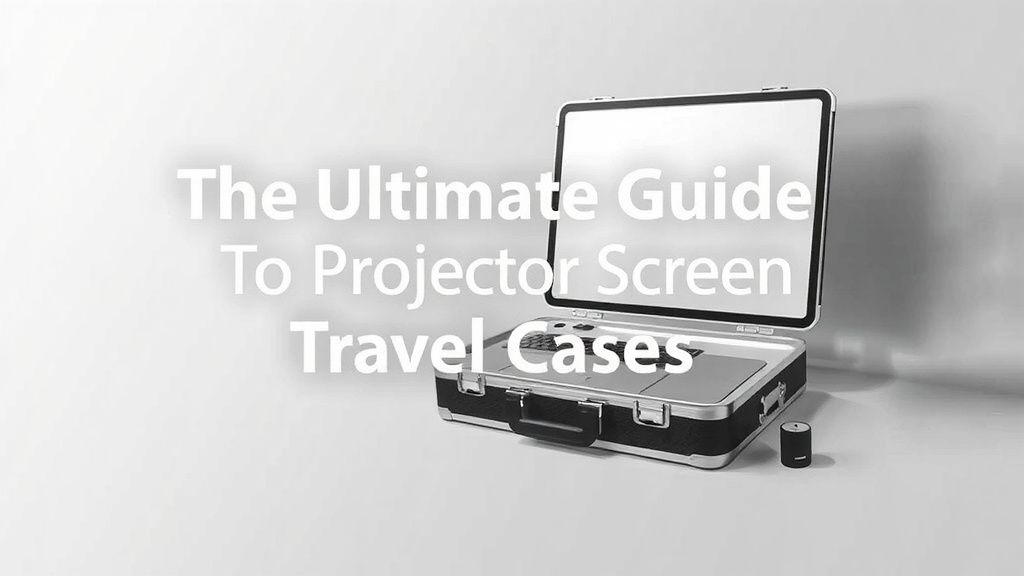
The Ultimate Guide to Projector Screen Travel Cases
Yes, you need a projector screen travel case if you want to keep your screen safe from dents, scratches, and bending during transport. These padded cases are the simplest way to protect your investment, especially if you move your setup between homes, offices, or event venues. Without one, a single bump in the car trunk can ruin your screen’s surface and ruin your next movie night.
We found that a good travel case does more than just cushion your gear. It also keeps the screen clean from dust and dirt, and it makes carrying a bulky screen much easier with comfortable handles or straps. Many experts say that buying a case is just as important as buying the screen itself, since replacement screens are costly and annoying to install.
- A projector screen travel case prevents costly damage from impacts and bending.
- Hard cases offer maximum protection, while soft cases are lighter and easier to store.
- Always measure your screen’s diagonal size and depth before picking a case.
- Look for features like padded interiors, reinforced zippers, and shoulder straps.
- Using a case also keeps your screen dust-free, which means a clearer picture.
Below, we break down everything you need to know about picking the right projector screen travel case for your needs. Let’s walk through the different types, sizes, and features so you can buy with total confidence.
Choosing the Right Protection for Your Projector Screen
You probably didn’t spend a ton of money on a nice projector screen just to watch it get ruined in the back of your SUV. We get it. Getting the right case is a smart move, and it doesn’t have to be confusing. Let’s break down the options so you can find a perfect match for your gear.
Think of a projector screen like a big piece of glass. It might not shatter, but it can bend, dent, or get scratched pretty easily. We found that most screen damage happens during loading and unloading, not while the screen is actually in use. A good case is basically a mobile garage for your screen.
Hard Cases vs. Soft Cases
Your first big decision is choosing between a hard case and a soft case. Both do the job, but they fit different needs. We recommend looking at your travel style before you pick one.
Hard cases are like a turtle shell for your gear. They are rigid and offer the highest level of impact protection. If you throw your gear in a truck bed or stack heavy items on top, this is your safest bet. Many professional AV installers we spoke with prefer hard cases for this reason. For extra security when leaving gear in shared spaces, our guide to choosing a lockable projector carry case covers hard-shell options.
Soft cases are like a heavy winter coat. They are padded, flexible, and much lighter to carry. They are easier to squeeze into a car trunk or closet. For most casual users who just travel to a friend’s house now and then, a soft case is plenty. Research shows that most impacts are low-force bumps, which a padded soft case handles fine.
Weight and Portability Trade-offs
We found that weight is a big deal for people. A hard case can add several pounds to your load. That might not sound like much, but when you are also carrying the projector, cables, and a laptop, every pound counts. Soft cases usually weigh less than five pounds, which makes them easier on your back. Think about how far you usually walk from your car to the venue. That walk feels longer with a heavy case. For a closer look at carrying the projector itself, our guide to the best projector bag covers padded options with laptop sleeves.
Measuring Your Screen for a Case Fit
Before you click “buy,” you need to know your screen’s exact size. You can’t just guess. We found that most sizing mistakes come from people measuring the wrong part of the screen. Let’s fix that right now.
Grab a tape measure and check two things: the diagonal size and the depth of the casing. The diagonal is the standard way screens are described, like a 100-inch screen. The depth is how thick the screen’s housing is. You need both numbers.
Understanding Diagonal vs. Depth
The diagonal measurement tells you the viewing area, but the case needs to fit the actual physical frame. A 120-inch screen has a much longer frame than a 100-inch one. You need a case that is longer than the screen frame itself. We recommend adding at least 2 to 3 inches of extra length for padding.
The depth is just as important. Some screens have a bulky motorized housing at the bottom. That adds to the depth. If your case is too shallow, you won’t be able to zip it up. Many experts say to measure the thickest part of the screen housing and add an inch. That gives you breathing room.
Quick Measuring Checklist
- Measure the diagonal screen size (corner to corner).
- Measure the longest edge of the physical frame.
- Measure the depth at the thickest point of the housing.
- Add 2 inches to the length for padding allowance.
- Add 1 inch to the depth for zipper clearance.
- Write these numbers down before shopping.
Key Features to Look For in a Travel Case
Not all cases are created equal. We dug into the details and found a few features that make a huge difference in real-world use. Pay attention to the zippers, the padding, and the straps. These small things can make or break your experience.
A flimsy zipper will fail when you are in a hurry. A thin strap will dig into your shoulder. We found that spending a little more on these features saves you headaches later. It’s like buying a good suitcase versus a cheap one.
Interior Padding and Lining
The padding inside the case is your screen’s first line of defense. Look for at least 10mm of foam padding on all sides. That is thick enough to absorb minor bumps. The lining should be soft and non-abrasive. A soft fleece or felt lining prevents scratches on the screen surface. We found that some cases have a divider inside, which is great for separating the screen from the stand.
Handles, Straps, and Wheels
Carrying a long case is awkward. It swings and hits things. That is why handles and straps are so important. Look for a case with a comfortable padded handle on top. Also, check for a detachable shoulder strap. That frees up your hands and balances the weight. For larger screens, wheels are a lifesaver. Rolling a 100-pound screen is much easier than carrying it.
Reinforced Zippers and Stitching
You don’t want a zipper to blow out mid-trip. Look for heavy-duty zippers with metal pulls. The stitching should be double-stitched at stress points. We recommend checking the seams where the handles attach. That is usually the first place a case breaks. A little extra attention to these details goes a long way.
Comparing Case Materials for Durability
The material of the case determines how well it holds up against weather and wear. We found that most cases are made from either nylon or polyester. Each has its own strengths. Here is a quick comparison to help you decide.
| Material | Durability | Weather Resistance | Weight |
|---|---|---|---|
| Nylon | High abrasion resistance | Good, resists water splashes | Moderate |
| Polyester | Good, less tear-resistant | Fair, may soak through | Light |
| Canvas | Excellent, very thick | Good, heavy-duty | Heavy |
We found that ballistic nylon is the gold standard. It resists tears and punctures very well. If you travel often, that is the material to look for. For occasional trips, a good polyester case will do the job just fine.
Protecting Your Screen from Dust and Moisture
It’s not just about bumps. Dust and moisture can damage your screen over time. A travel case keeps the surface clean and dry. We found that many people forget this, but it is a huge benefit of using a case.
Dust particles can scratch the screen when you wipe it. A case keeps the dust out so you don’t have to wipe it as often. Moisture can cause mildew or damage the reflective coating. A waterproof or water-resistant case helps prevent this. Many guidelines recommend keeping screens in a dry environment to preserve the coating (Consumer Reports).
Storing Your Screen in the Case
Can you store your screen in the case full-time? We found that it is generally safe to do so. Keeping it in the case protects it from accidental knocks at home. Just make sure the screen is completely dry before you zip it up. Storing a damp screen in a sealed case is a recipe for mold. We recommend airing out the case every few months to keep it fresh.
Understanding Case Sizes and Compatibility
Let’s talk numbers. Cases come in standard sizes, but not all brands match up perfectly. We found that it is best to buy a case from the same brand as your screen if possible. They are designed to fit together. If you use a different brand, just rely on your measurements.
You will see cases labeled as “fits 100-inch screens” or similar. Use that as a starting point, but always double-check the physical dimensions. A “fits 100-inch” case from one brand might be slightly different from another. Your measuring tape is your best friend here.
Common Size Ranges
- Small (up to 80 inches): Great for portable screens and home use.
- Medium (80 to 100 inches): The most popular size for living rooms.
- Large (100 to 120 inches): For serious home theaters and events.
- Extra Large (120 inches and up): Usually for commercial or outdoor use.
Smart Packing Tips for Travel
You got the case. Now, how do you pack it the right way? We found that a little technique goes a long way. It’s not just about throwing the screen inside. There is a method to keep everything secure.
Always place the screen in the case with the screen surface facing inward, toward the padding. This protects the surface from direct impact. If your case has straps inside, use them to hold the screen steady. You don’t want it sliding around while you drive.
Padding the Ends
The ends of the screen are the most vulnerable parts. They stick out and take the brunt of any impact. If your case has extra padding at the ends, great. If not, you can add a small towel or bubble wrap inside. We found that this simple hack prevents a lot of damage. It is a low-cost way to add extra protection.
Balancing the Load
When you carry the case, try to balance the weight evenly. Hold it from the middle if possible. That makes it easier to manage and reduces stress on the case. If you are putting it in a car, lay it flat on the bottom of the trunk. Don’t stack heavy boxes on top of it. We recommend putting it in last and taking it out first.
Budgeting for a Quality Case
How much should you spend? We found that prices range from $30 to over $200. The price depends on the size, material, and features. You don’t need to buy the most expensive one, but you also shouldn’t buy the cheapest. The sweet spot for most people is a mid-range soft case.
Think of the case as insurance. A $60 case protects a $300 screen. That is a smart investment. We found that people who skip the case often regret it after the first scratch. It’s a lot cheaper to buy a case upfront than to replace a screen later.
Where to Look for Deals
Check online marketplaces and electronics stores. We found that prices vary a lot between retailers. Look for sales around major holidays. You can also check for open-box deals or slightly used cases. Just make sure the zippers and straps are in good condition before buying used.
Final Thoughts on Keeping Your Gear Safe
Getting a travel case is one of the easiest ways to protect your gear. We found that it saves you money and frustration in the long run. You will have peace of mind knowing your screen is safe and sound. That means you can focus on enjoying the movie, the game, or the presentation.
Take a few minutes to measure your screen and think about how you travel. Then, pick a case that fits your budget and your needs. You will be glad you did the first time you pull your screen out of the trunk, perfectly intact and ready to go.
Conclusion
Your projector screen is a big investment, and a travel case is the smartest way to protect it. We have shown you that the right case prevents dents, scratches, and dust buildup, which keeps your picture crystal clear for years. Whether you pick a hard case for heavy travel or a soft one for occasional use, the key is getting the right size and features.
So, grab your tape measure and check your screen’s diagonal and depth right now. Then, pick a case that fits your travel style and your budget. You will have total peace of mind knowing your gear is safe and ready for your next movie night or business presentation. Do not wait until it is too late—get your case today and keep your screen looking brand new.
Frequently Asked Questions
Can I use a regular duffel bag or backpack for my projector screen?
You could, but we do not recommend it. A standard bag lacks the rigid padding and support your screen needs to prevent bending. A bump or a heavy item on top can easily dent your screen’s frame or damage the surface. A purpose-built projector screen case is a much safer choice.
My screen is slightly larger than the case dimensions. Will it still fit?
If your screen is even a little bigger than the case specs, you should not try to force it. Squeezing a screen into a tight case puts pressure on the frame and can cause damage. You need to choose a case that is at least 2 to 3 inches longer than your screen’s physical frame for a comfortable and safe fit.
Is it safe to store my projector screen in the travel case when it is not in use?
Yes, storing your screen in its case is generally a great idea. It keeps the screen safe from accidental bumps and collects less dust than leaving it out in a closet. Just make sure your screen is completely dry before you zip the case up to prevent mold or mildew from growing.
How do I clean my projector screen travel case?
For most nylon and polyester cases, you can spot clean them with a damp cloth and mild soap. You can also vacuum the inside with a brush attachment to remove dust and debris. Avoid putting your case in the washing machine, as that can damage the padding and zippers.
What is the best type of case for flying with a projector screen?
For air travel, you need maximum protection, so we recommend a hard case. Airline baggage handlers are not gentle, and your screen will be stacked with other luggage. A hard case with thick foam padding is your best defense against the rough handling your gear will face in the cargo hold.