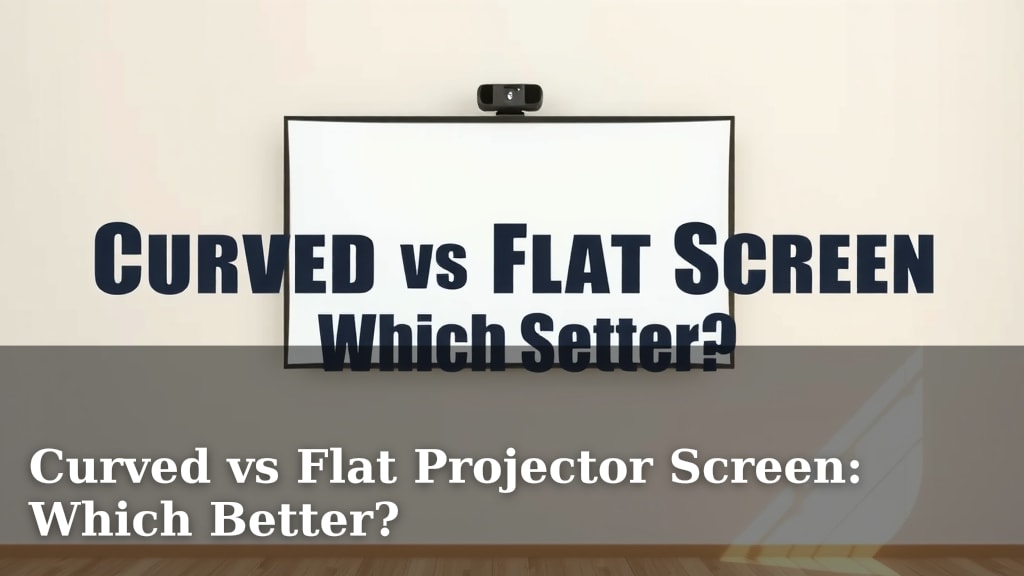
Curved vs Flat Projector Screen: Which Better?
When deciding between a curved vs flat projector screen, a curved screen often wins for a more immersive viewing experience. Curved screens wrap around your field of vision, reducing distortion and making it feel like you’re inside the movie. Flat screens are simpler and work well in most rooms.
We found that the best choice depends on your room’s size and how you plan to use it. While flat screens offer a straightforward solution, curved options can truly transform your home theater setup by minimizing light loss and improving on-axis brightness. Think of it as choosing between a great picture and a truly cinematic picture.
- Curved screens offer a more immersive, wrap-around view.
- They can reduce distortion and improve brightness consistency.
- Flat screens are a simpler, more common choice.
- The best screen depends on your room and viewing habits.
Let’s break down the key differences between curved and flat projector screens to help you make the right pick for your home theater.
Choosing the Right Projector Screen: Curved vs. Flat Explained
Deciding between a curved and a flat projector screen is a key step in building your ideal home theater. Each type offers a different viewing experience. We found that the best choice truly depends on your room’s layout and how you watch movies or play games.
Understanding Curved Projector Screens
A curved projector screen might seem like a fancy choice. But it has some real benefits for your viewing pleasure. Many experts say these screens are designed to hug your peripheral vision. This can make the picture feel much bigger.
The Immersive Effect of Curves
Think about sitting in a movie theater. The screen often has a slight curve. This helps pull you into the action. A curved home projector screen does something similar. It wraps the image around you. This creates a more immersive and engaging experience. It feels like you’re part of the scene, not just watching it.
Reducing Distortion and Improving Brightness
One of the biggest advantages of a curved screen is how it handles light. When a projector beam hits a flat surface from an angle, the edges can get dimmer. This is called edge fall-off. A curved screen helps reduce this. The shape directs light more evenly towards your eyes. This means the brightness is more consistent across the entire screen. Many sources suggest this can lead to a sharper, more uniform image.
When a Curved Screen Shines (Literally)
Curved screens are often recommended for larger screen sizes. They are also great for rooms where you have a fixed seating position. Because the screen curves towards you, the light is focused. This minimizes light loss at the edges. We found that if you want that “wow” factor and a truly cinematic feel, a curved screen is often the way to go.
Exploring Flat Projector Screens
Flat projector screens are the traditional and most common type. They are the standard for a reason. They are versatile and work well in many different environments. If you’re looking for a straightforward solution, a flat screen is likely what you’ll consider first.
Simplicity and Versatility
Flat screens are easy to install. They don’t require complex mounting considerations. They fit well in almost any room. You don’t need a specially shaped space for them. This makes them a popular choice for many homeowners. Their simplicity means less fuss and a more direct setup.
Performance in Typical Rooms
In most living rooms or media rooms, a flat screen performs admirably. For moderate viewing distances, the slight distortion at the edges might not even be noticeable. We found that for casual viewing and general use, a flat screen provides a perfectly good picture. It’s a reliable option that gets the job done without any fuss.
Factors Affecting Flat Screen Performance
The performance of a flat screen can be influenced by a few things. The projector’s placement is important. If the projector is too high or too low, you might need to adjust its angle. This can cause keystone distortion, which is when the image looks trapezoidal. Also, ambient light in the room can wash out the picture on a flat screen. Keeping the room dark is key for the best results.
Key Differences Summarized
Let’s look at how these two screen types stack up against each other. It’s not about one being definitively “better,” but rather which is better for *your* specific setup.
| Feature | Curved Screen | Flat Screen |
|---|---|---|
| Immersion | High; wraps around your field of vision. | Moderate; standard viewing experience. |
| Distortion | Minimized, especially at edges. | Can occur at edges if projector angle is off. |
| Brightness Consistency | Generally excellent across the screen. | Can vary, especially at wider angles. |
| Room Requirements | Often better for larger rooms with fixed seating. | Versatile; works in most room sizes. |
| Installation | Can be more complex due to shape. | Simple and straightforward. |
| Cost | Typically more expensive. | Generally more affordable. |
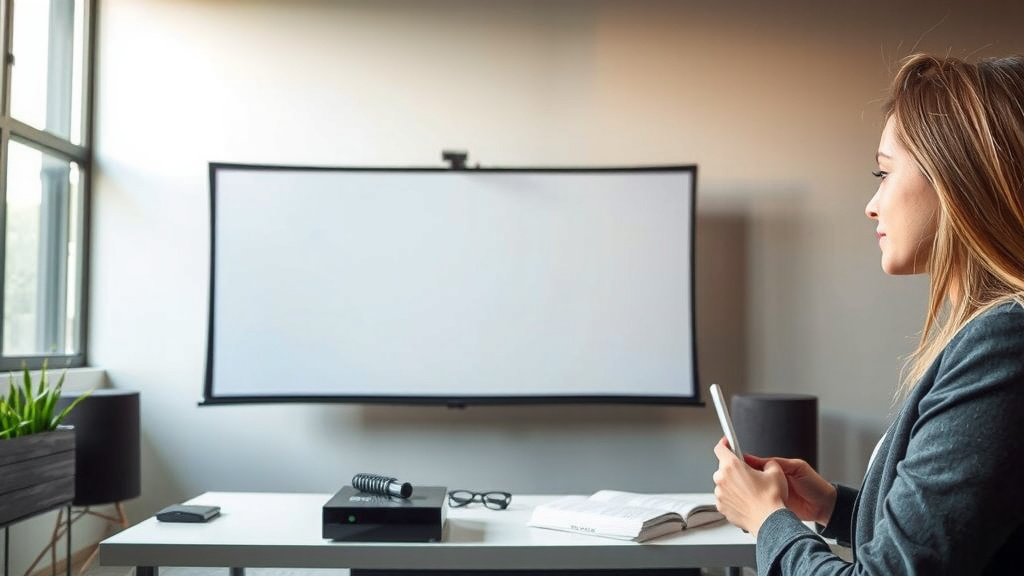
Which Screen is Right For Your Home Theater?
The choice between a curved and flat projector screen boils down to your priorities and your room. Many experts suggest considering these points.
Room Size and Layout
For smaller rooms or rooms with flexible seating, a flat screen is often the more practical choice. It’s easier to position and works well without special considerations. If you have a dedicated home theater space with a fixed viewing distance and want the ultimate in immersion, a curved screen might be worth the investment. We found that larger rooms benefit more from the light-focusing properties of curved screens.
Viewing Habits and Content
What do you watch? If you’re a serious cinephile who loves epic movies and immersive video games, the enhanced realism of a curved screen can be a game-changer. For general TV watching, sports, or presentations, a flat screen will likely suffice perfectly well. Think about what kind of experience you want to have most often.
Budget Considerations
Curved screens generally come with a higher price tag. This is due to the more complex manufacturing process and materials involved. Flat screens are typically more budget-friendly. If cost is a significant factor, a high-quality flat screen can still deliver an excellent viewing experience. You might need to optimize your room lighting and projector setup more carefully.
Ease of Installation
If you’re a DIY enthusiast who wants a simple setup, a flat screen is the clear winner. They mount easily and are less finicky. Curved screens might require specific brackets or a more involved mounting process. We found that for many users, the simplicity of a flat screen is a major advantage.
Making Your Final Decision: A Quick Checklist
To help you decide, run through this quick checklist. It’ll guide you toward the best screen for your home.
- Does your room allow for a fixed, optimal viewing distance? (If yes, curved might be great.)
- Do you prioritize maximum immersion over all else? (If yes, lean towards curved.)
- Are you on a tighter budget? (If yes, flat is likely the better option.)
- Is ease of installation a top priority for you? (If yes, flat is usually simpler.)
- Do you have a large screen size planned? (If yes, curved screens often perform better at scale.)
- Is your room easily controllable for ambient light? (If yes, both can work, but it’s crucial for flat screens.)
Conclusion
You’ve learned that choosing between a curved and a flat projector screen is all about matching the screen to your space and viewing style. A curved screen offers that thrilling, immersive cinema experience, perfect for larger setups and dedicated movie buffs. On the flip side, a flat screen provides a reliable, versatile, and often more budget-friendly solution for everyday viewing in most rooms. We found that the best way to decide is to honestly assess your room’s layout, your primary viewing habits, and your budget. Before you click “buy,” think about which screen type will truly bring your favorite content to life in your home.
Frequently Asked Questions
Will a curved screen make my projector brighter?
Yes, a curved screen can help improve brightness consistency. It redirects light more effectively towards your viewing position, minimizing light loss at the edges. This can result in a more uniform and perceived brighter image compared to a flat screen, especially with projectors positioned at an angle.
Can I use a curved screen in a small room?
Curved screens are generally best suited for larger rooms with a fixed viewing distance. In smaller rooms, the curve might be too pronounced for comfortable viewing from all angles. A flat screen is usually a more practical choice for smaller spaces, offering better flexibility.
Is a curved screen difficult to install?
Installation can be more involved for curved screens. They often require specific mounting brackets to maintain their shape and curvature. Flat screens are typically much simpler to hang, making them a preferred option for those who prioritize ease of setup.
Does the curvature of a screen affect gaming?
Yes, the curvature can enhance your gaming experience by increasing immersion. The wrap-around effect can draw you more deeply into the game world, similar to how it enhances movies. This makes on-screen action feel more engaging.
What if my projector isn’t perfectly aligned with a flat screen?
If your projector isn’t perfectly aligned with a flat screen, you might experience keystone distortion (a trapezoidal image) or uneven brightness. While projectors have keystone correction, it can sometimes degrade image quality. A curved screen is more forgiving of slight projector angles and can help maintain a more uniform picture.