4K Projector vs Laser Projector: Key Differences Explained
If you’re shopping for a projector, you’ve probably stumbled across the debate between 4K projectors and laser projectors. I know, it can feel overwhelming when you’re staring at all these technical specs and trying to figure out which one actually deserves your hard-earned money. The thing is, these two technologies aren’t mutually exclusive—some projectors are both 4K and laser-based, while others are one or the other. So let me break this down for you in a way that makes actual sense.
What Exactly Is a 4K Projector?
A 4K projector is all about resolution. When we talk about 4K, we’re referring to the number of pixels that make up the image you’re seeing on your screen. A 4K projector has a native resolution of 3840 by 2160 pixels, which is four times the resolution of a standard 1080p (Full HD) projector. Think of it like comparing a photo taken with an old camera to one taken with a modern smartphone—the newer one captures way more detail.
The beauty of 4K is that you get incredibly sharp, crisp images with fine details that jump off the screen. If you’re watching a nature documentary or a high-budget film, you’ll actually notice the difference. Everything from the texture of fabric to individual blades of grass becomes crystal clear.
How 4K Compares to Lower Resolutions
Let me put this in perspective for you. A 1080p projector has about 2 million pixels, while a 4K projector has around 8 million pixels. That’s a massive jump in information density. When you’re projecting onto a large screen—say, 100 inches or more—this resolution difference becomes incredibly noticeable. The image quality goes from good to genuinely spectacular.
Understanding Laser Projectors
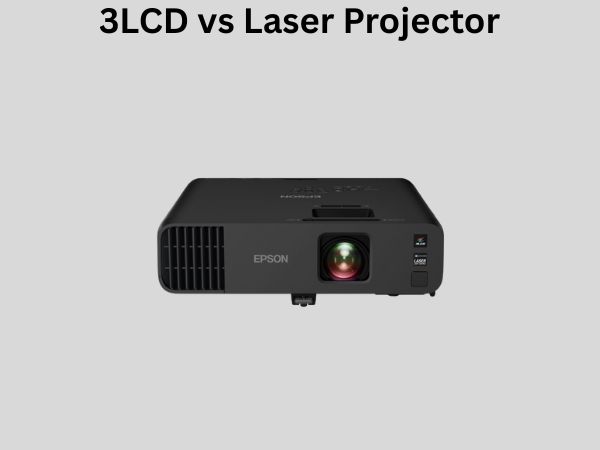
Now, laser projectors are a different beast entirely. Instead of using a traditional lamp as a light source, laser projectors use laser light to create the image. This is a fundamental difference in how the light is generated, and it has massive implications for performance.
Laser projectors come in a few varieties. You’ve got pure laser models that use red, green, and blue lasers to create color, and you’ve got hybrid models that combine a laser with other light sources. The key advantage here is brightness, consistency, and longevity. A laser projector can run for 20,000 hours or more without significant brightness degradation, whereas traditional lamp-based projectors start dimming after a few thousand hours.
Why Laser Light Matters
Laser light is coherent and powerful, which means it delivers consistent brightness and color saturation throughout the life of the projector. It’s not like a lamp that gradually burns out—a laser stays bright and vibrant for years and years. This is particularly important in professional settings where you need reliability and consistency.
The Real Differences: A Side-by-Side Comparison
Here’s where things get interesting. The differences between 4K and laser projectors matter, but they’re not always what people think they are. Let me walk you through the major factors.
Resolution and Sharpness
This is where 4K projectors shine (pun intended). If your main concern is image sharpness and detail, a 4K projector will give you superior resolution. A laser projector might be absolutely fantastic in every other way, but if it’s only 1080p or 2K resolution, it won’t match the crisp, detailed image of a 4K model.
That said, many modern laser projectors now come in 4K configurations, so you don’t necessarily have to choose between them. You can get a laser projector that’s also 4K, which gives you the best of both worlds.
Brightness and Light Output: A Critical Advantage
This is where laser projectors typically dominate. Laser projectors are significantly brighter than traditional lamp-based projectors, even 4K models. We’re talking about projectors that can deliver 3,000 lumens or more, compared to 1,500-2,500 lumens for many standard projectors.
What does this mean for you in practical terms? If you want to use your projector in a room with ambient light, a laser projector is your friend. You won’t need to blackout your home theater room completely. Laser projectors can handle daytime presentations, bright conference rooms, and well-lit living spaces without washing out the image.
Understanding Lumens
Lumens measure how bright a projector is. Think of it like wattage for light output. The higher the lumen count, the brighter the projector. For dark rooms, you might get away with 1,500 lumens. For rooms with some ambient light, you’d want at least 2,500 lumens. For outdoor use, you’re looking at 3,000 lumens or higher.
Color Accuracy and Vibrancy
Both 4K and laser projectors can deliver excellent color, but they achieve it differently. Laser projectors, particularly those with true laser color systems, can produce incredibly vibrant and saturated colors. The laser light is so pure that colors pop off the screen in a way that’s genuinely impressive.
However, a high-quality 4K projector with good color calibration can match or even exceed the color performance of some laser projectors. It really depends on the specific model and how much the manufacturers have invested in color science.
Color Volume and Brightness
Here’s a nuance that matters: color volume is the ability to maintain color saturation at high brightness levels. Many projectors can show vibrant colors at low brightness, but when you crank up the brightness, the colors become washed out. Laser projectors excel at maintaining color volume because their light source is so powerful and efficient.
How Long Will They Last? Lifespan and Maintenance
This is where laser projectors have a genuine technological advantage. Traditional lamp-based projectors (including many 4K models) have lamps that need to be replaced every 2,000 to 5,000 hours of use. That translates to roughly 1-3 years of regular use. The lamp replacement can cost several hundred dollars, which adds up quickly.
Laser projectors, on the other hand, can run for 20,000 hours or more before experiencing any meaningful brightness degradation. That’s potentially a decade or more of heavy use before you need to worry about replacement costs. From a total cost of ownership perspective, this is huge.
Maintenance Requirements
Beyond lamp replacement, laser projectors also require less general maintenance. There are fewer consumables to replace, and the cooling systems are more robust. Both types need regular filter cleaning to prevent dust accumulation, but overall, laser projectors are more hands-off in terms of upkeep.
The Money Question: Cost Considerations
Let’s be honest—price matters when you’re making a purchasing decision. In general, laser projectors cost more upfront than equivalent traditional lamp-based projectors. You might pay 30-50% more for a laser model with the same brightness and resolution.
However, when you factor in the cost of lamp replacements over five years, the financial advantage often shifts to laser. You might spend $3,000-$4,000 on a laser projector and keep it for a decade with minimal additional costs. Meanwhile, you could spend $2,000 on a lamp projector but drop another $1,500-$2,000 on lamp replacements, plus the hassle of replacing them.
Entry-Level vs. Premium Options
If you’re looking for an entry-level option, traditional lamp-based 4K projectors offer better value. But if you’re willing to invest in quality equipment, laser projectors—especially those that are also 4K—provide better long-term value and performance.
Installation and Setup: What You Need to Know
Both types of projectors require proper installation, but there are some differences in their demands. Laser projectors, particularly high-brightness models, need careful calibration to avoid image artifacts. Some laser projectors can produce speckle (a grainy texture) if not properly engineered, though most modern models have addressed this issue.
4K projectors, especially those that use pixel-shifting technology to achieve 4K resolution, may require more precise focus and alignment to reveal their full sharpness advantage. The higher resolution means that any slight misalignment becomes more noticeable.
Room Preparation
Both require a properly prepared space. You’ll want:
- A projection surface (screen or white wall)
- Proper cable routing
- Adequate ventilation for heat dissipation
- Dust-free environment to protect filters
- Appropriate ambient light control depending on brightness needs
Noise Levels: A Factor You Shouldn’t Ignore
If you’re planning to use your projector in a living room where you’re watching movies, noise is definitely something to consider. Projectors generate heat, and that requires cooling fans. Some projectors are whisper-quiet, while others sound like a small aircraft.
Interestingly, laser projectors can be quieter than you’d expect because their light source is so efficient that they don’t generate as much heat as traditional lamps. That means smaller cooling fans and lower noise levels. Many high-end laser projectors operate at 25-30 decibels, which is barely noticeable.
Traditional lamp-based projectors, particularly high-brightness models, tend to be noisier. They often operate at 35-40 decibels, which is more noticeable in a quiet viewing environment.
What Are These Projectors Best For? Real-World Use Cases
So, which should you actually buy? Let me give you some practical guidance based on how you’ll use the projector.
Choose a 4K Projector If:
- You prioritize image sharpness and detail above all else
- You’re building a high-end home theater in a darkened room
- You watch a lot of 4K content from streaming services or physical media
- Budget is a significant concern and you need the best resolution per dollar
- You don’t need extreme brightness
Choose a Laser Projector If:
- You want long-term reliability and durability
- You need brightness for rooms with ambient light
- You’re using it in a professional or commercial setting
- You want minimal maintenance and replacement costs over time
- You prefer a quieter operating experience
Choose a 4K Laser Projector If:
- You want the best of both worlds—resolution and brightness
- You have the budget for premium equipment
- You want a projector that will last 10+ years without lamp replacements
- You need excellent performance in multiple environments
The Technology Behind the Scenes
Understanding how these technologies work helps clarify why they have different strengths. Traditional projectors use a metal halide or UHP lamp as their light source. This light is passed through mirrors and lenses to create the image. The brightness gradually fades as the lamp ages, and eventually, you need replacement.
Laser projectors use coherent light from laser diodes or laser modules. This light is inherently more efficient and maintains consistency throughout its lifespan. Some laser projectors use RGB (red, green, blue) laser systems for perfect color accuracy, while others combine laser with LCD or DLP technology.
4K resolution can be achieved through different technologies. Some projectors have native 4K chips with actual 4K resolution. Others use pixel-shifting technology, where a slightly lower native resolution is rapidly shifted to create the appearance of 4K resolution. Native 4K is technically superior, but good pixel-shifting implementations can be nearly indistinguishable to the human eye.
Making the Right Choice for Your Situation
This decision really comes down to understanding your priorities. Ask yourself these questions:
What’s my primary use case? Are you building a home theater, setting up a business presentation system, or looking for a portable projector?
How much ambient light am I dealing with? If you have significant ambient light, brightness is crucial, and laser wins. If you can control lighting, a traditional 4K projector might work great.
What’s my budget? Can you afford the higher upfront cost of a laser projector, or does entry-level 4K make more sense for you?
How long do I plan to keep this projector? If you’re upgrading every few years, the durability advantage of laser is less important. If you want a long-term investment, laser pays dividends.
What content do I primarily watch? If you’re watching 4K content regularly, a 4K projector gives you the full resolution. If you’re mostly streaming standard content, the 4K advantage is less important.
Conclusion
The battle between 4K projectors and laser projectors isn’t really about which is universally better—it’s about which is better for you. A 4K projector delivers superior resolution and sharp, detailed images, making it the clear choice for movie enthusiasts who want maximum detail and clarity in a controlled viewing environment. Laser projectors, meanwhile, offer incredible brightness, minimal maintenance, quiet operation, and exceptional longevity, making them perfect for people who need reliability and flexibility in how and where they use their projector.
The good news? Many manufacturers are now offering 4K laser projectors that combine the strengths of both technologies. If you can swing it, a quality 4K laser projector will give you stunning image quality, incredible brightness, quiet operation, and a projector that will serve you faithfully for a decade or more.
Whatever you choose, make sure it aligns with your actual needs, your space, and your budget. There’s no point in paying for features you won’t use, but there’s also no point in being penny-wise and pound-foolish by skimping on a projector that will disappoint you. Take your time, read reviews specific to the models you’re considering, and when possible, see them in action before making your final decision.
Frequently Asked Questions
Can you get a projector that is both 4K and laser?
Absolutely, and more and more manufacturers are offering these hybrid models. A 4K laser projector combines the sharp resolution of 4K technology with the brightness and longevity benefits of laser light sources. These are premium products that deliver exceptional performance across the board, though they come with a higher price tag to match.
How much brighter is a laser projector compared to a traditional lamp projector?
Laser projectors are typically 50-100% brighter than comparable lamp-based projectors. A high-end laser projector might deliver 3,000 lumens, while a lamp-based projector might offer 1,500-2,000 lumens. This brightness advantage makes laser projectors much better suited for rooms with ambient light or outdoor use.