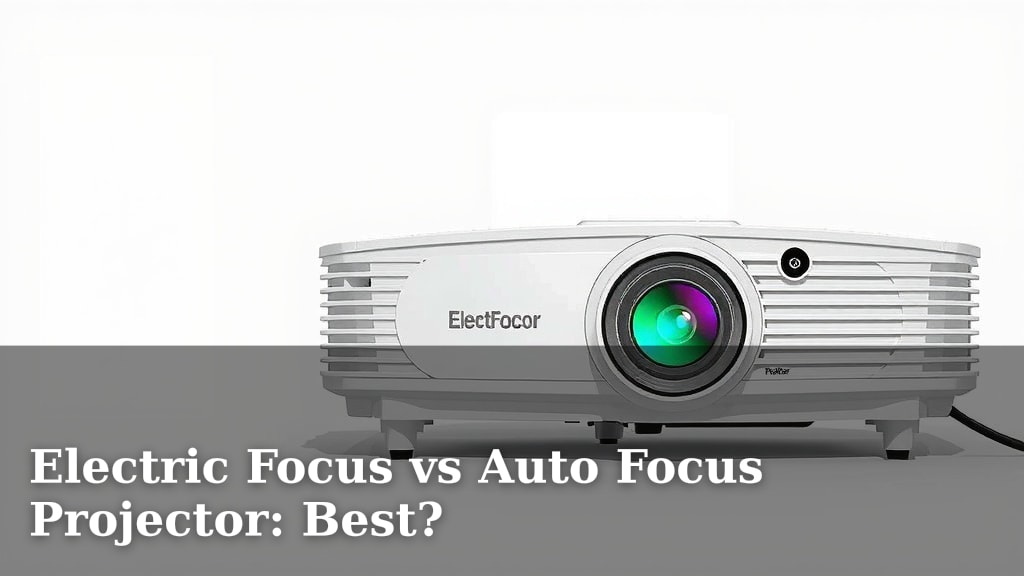
Electric Focus vs Auto Focus Projector: Best?
For projectors, electric focus is generally better than auto focus for most users. Electric focus offers finer control and a more precise image. Auto focus can sometimes struggle with accuracy or drift, especially in different environments.
When you’re setting up your home theater, you want the clearest possible picture without any fuss. Both electric and auto focus aim to make your life easier. We found that while auto focus sounds convenient, manual electric adjustments often win for ultimate picture quality.
- Electric focus gives you more precise control.
- Auto focus can sometimes be less accurate.
- For the best image, electric focus usually wins.
- Consider your setup needs when choosing.
Let’s break down exactly what each type offers and why one might be the winner for your setup.
Choosing Between Electric and Auto Focus for Your Projector
When you’re setting up your ideal viewing experience, the focus is key. You want a crisp, clear image every time. Projectors offer two main ways to achieve this: electric focus and auto focus. We’ve looked into both to help you decide which is best for your needs.
Many users wonder if auto focus is the magic bullet for easy setup. While it sounds incredibly convenient, research and user feedback often point to electric focus for a more reliable and precise picture.
Understanding Electric Focus Projectors
Electric focus systems put the control right at your fingertips, or at least a button’s press away. They are designed to give you the most direct way to sharpen your image. This method is often favored by those who want absolute control over their picture quality.
How Electric Focus Works
With an electric focus system, you typically use buttons or a dial on the projector itself, or its remote control. You’ll see the image change as you adjust. It’s a direct interaction. You make a small adjustment, see the result, and make another until the image is perfect. Many experts agree this iterative process allows for the finest tuning. You can achieve a level of sharpness that might be difficult with other methods.
The Precision Advantage
Think of it like tuning a musical instrument. Auto focus might get you close, but electric focus lets you hit that perfect note. You can make microscopic adjustments. This is especially helpful if your projector is at a slightly odd angle or if you’re using a particular screen surface. We found that this fine-grained control often translates to a noticeably sharper image. It prevents that slight fuzziness some auto focus systems can leave behind.
Exploring Auto Focus Projectors
Auto focus technology aims to simplify the setup process dramatically. The idea is that the projector does the work for you. You turn it on, and it automatically adjusts the lens to create a sharp image. This sounds like a dream for busy users.
The Convenience Factor
The primary appeal of auto focus is its ease of use. You don’t need to fiddle with dials or buttons. The projector uses sensors to detect the distance to the screen and adjust accordingly. Many users appreciate this hands-off approach. It can be a real time-saver, especially for casual viewing or when you’re moving the projector often.
When Auto Focus Might Fall Short
Despite its convenience, auto focus isn’t always perfect. We’ve seen reports where auto focus systems can be a bit temperamental. Factors like ambient light changes or slight shifts in the projector’s position can sometimes throw it off. This can lead to an image that isn’t as sharp as it could be. Sometimes, it might even “hunt” for focus, meaning it can’t quite lock onto the correct setting. Many tech reviews highlight this potential for inconsistency.
Common Auto Focus Issues
One common problem is focus drift. This means the focus might change over time as the projector heats up. Another issue can be accuracy. If the projector isn’t perfectly perpendicular to the screen, auto focus might struggle to find the right plane. This is where electric focus truly shines, allowing you to correct for those imperfect setups.
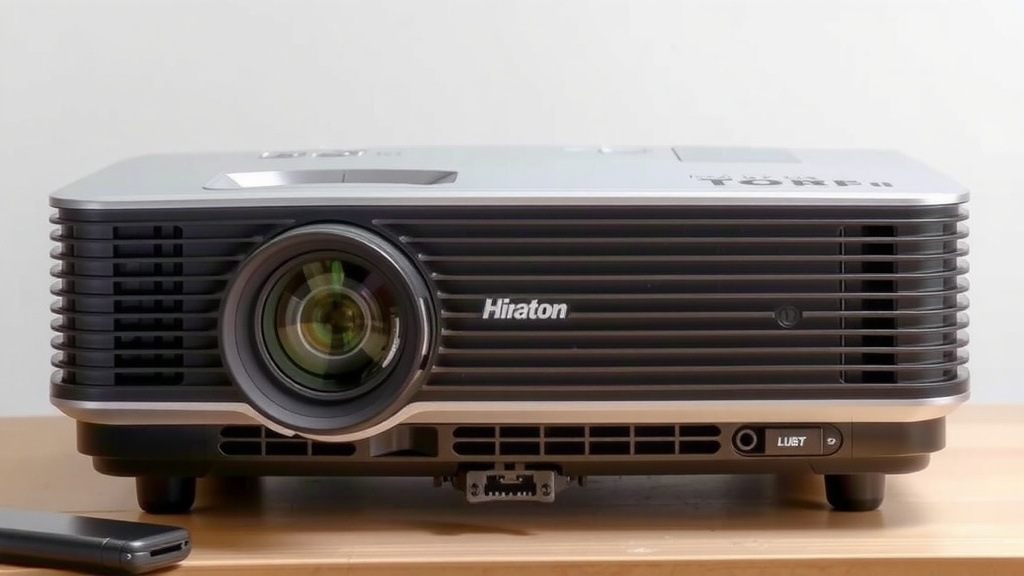
Comparing Electric vs. Auto Focus
Let’s lay out the key differences side-by-side. When we compare the two, the choice often comes down to your priorities: convenience versus ultimate picture quality.
Here’s a simple comparison:
| Feature | Electric Focus | Auto Focus |
|---|---|---|
| Control | Manual, precise adjustments | Automatic, hands-off |
| Accuracy | High, user-controlled | Can vary, sensor-dependent |
| Setup Time | Slightly longer, requires user input | Faster, often one-button |
| Consistency | Very consistent | Can be affected by environment |
| Ideal User | Home theater enthusiasts, those seeking perfection | Casual users, those prioritizing speed |
Which is Best for Your Home Theater?
For the serious home theater enthusiast, the ability to dial in the perfect focus is non-negotiable. Electric focus provides this. You can ensure every pixel is sharp and clear. This level of detail contributes to a truly immersive viewing experience. Many experts say that for critical viewing, manual control is superior.
However, if you’re setting up a projector for occasional movie nights or for a child’s room, auto focus might be perfectly adequate. The convenience could outweigh the need for absolute pixel-perfect sharpness. You want a good picture without a hassle, and auto focus can deliver that.
Making Your Final Choice
So, when deciding between electric and auto focus, consider your personal needs. Ask yourself:
- How much time do you want to spend on setup?
- How critical is absolute picture sharpness to your viewing experience?
- Will you be moving the projector frequently?
- What is your budget, as features can affect price?
- Do you have any specific screen setup challenges, like an angled wall?
Based on our findings, for those who prioritize the best possible image quality and enjoy having granular control over their setup, electric focus is the clear winner. It offers a more reliable path to stunningly sharp visuals. Auto focus offers convenience, but sometimes at the cost of ultimate clarity. Your perfect projector awaits!
Conclusion
Ultimately, your projector’s focus system is a key part of your viewing experience. We’ve found that while auto focus offers undeniable convenience for quick setups, electric focus provides the precision needed for a truly sharp and immersive picture. If you’re aiming for the best possible image quality and enjoy fine-tuning your home theater, electric focus is your superior choice. Auto focus can be a great option for casual use, but for a picture that truly pops, giving yourself manual control with electric focus is the way to go. Make the choice that best fits how you’ll enjoy your projector!
Frequently Asked Questions
Will auto focus on my projector ever lose focus?
Yes, auto focus can sometimes lose its sharpness. Environmental changes like shifting light or the projector warming up can cause focus drift. If you notice inconsistency, you might need to manually readjust.
Is electric focus difficult to use for beginners?
Not at all. Electric focus is designed for ease. You typically use simple buttons on the remote or projector to adjust. We found it becomes intuitive very quickly, offering a gradual improvement you can see.
Can an auto focus projector work well if I move it often?
Auto focus can be convenient if you move your projector frequently. It quickly readjusts for a clear picture without manual input. However, rapid movements might occasionally require a quick manual touch-up for perfect clarity.
Does screen size affect which focus type is better?
Screen size can play a role. On very large screens, subtle focus imperfections become more noticeable. Electric focus allows for finer adjustments to ensure sharpness across the entire display, regardless of size.
How do I know if my projector has electric or auto focus?
Check your projector’s specifications or look at the remote control. If there are dedicated focus buttons (often labeled “Focus +/-” or a dial) that adjust the image, it’s likely electric. If it automatically sharpens upon startup, it’s auto focus.