3D TV vs 3D Projector: Which Technology Is Right for Your Home?
When you’re thinking about upgrading your home entertainment setup, you’ve probably wondered whether a 3D TV or a 3D projector would give you the best viewing experience. It’s kind of like choosing between a sports car and a truck—both get you where you need to go, but they do it in completely different ways. In this comprehensive guide, I’m going to walk you through everything you need to know to make an informed decision that actually fits your lifestyle, budget, and viewing preferences.
Understanding the 3D Display Technology Landscape
Before we dive into the nitty-gritty comparison, let’s talk about how 3D technology actually works. You see, both 3D TVs and 3D projectors rely on similar principles to create that immersive three-dimensional experience. They essentially show your left eye and right eye slightly different images, creating depth perception that tricks your brain into seeing a three-dimensional picture on a flat surface. Pretty clever, right?
The main difference lies in how they deliver this experience to your living room. A 3D TV is essentially a self-contained unit that does all the work internally, while a 3D projector needs a screen to display the image. Think of it as the difference between a built-in kitchen appliance and a standalone one—both functional, but requiring different setups.
What Exactly Is a 3D TV and How Does It Work?
A 3D TV is a television set that’s been specifically engineered to display three-dimensional content. These TVs come equipped with special technology that allows them to show different images to each of your eyes simultaneously, creating that coveted depth effect. Most modern 3D TVs use what’s called active shutter technology or passive polarized technology to achieve this effect.
Active Shutter Technology in 3D TVs
Active shutter 3D TVs work by rapidly switching what each eye sees. You wear special glasses that have liquid crystal shutters that open and close in sync with the TV’s display. When the left shutter is open, your left eye sees an image while your right eye sees black. Then it switches almost instantaneously, and your right eye sees its image while the left shutter closes. Your brain combines these alternating images to create the illusion of depth. It’s remarkably fast—your eyes don’t even perceive the flickering.
Passive Polarized Technology
Passive 3D TVs use polarized lenses in the glasses, kind of like movie theater 3D glasses. The TV displays two images simultaneously, overlapped on the screen. The polarized lenses in your glasses filter these images so each eye only sees the intended picture. This technology is becoming increasingly rare in TVs, but you’ll still find it in some models.
Understanding 3D Projectors and Their Mechanics
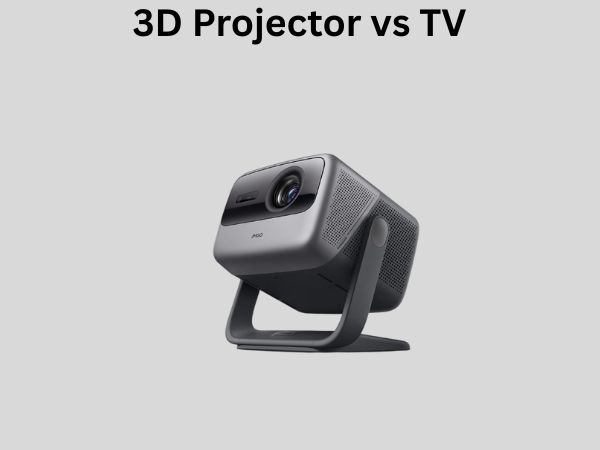
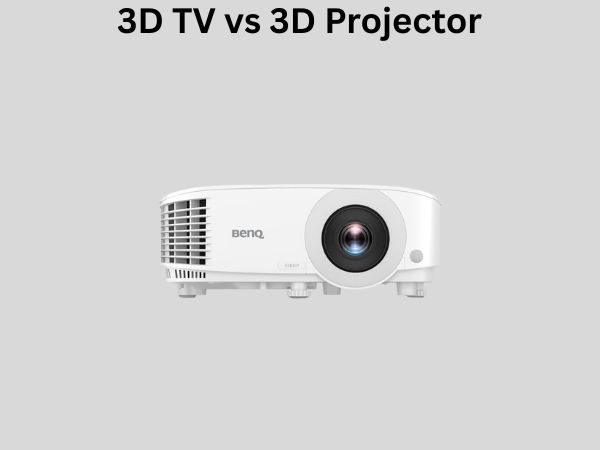
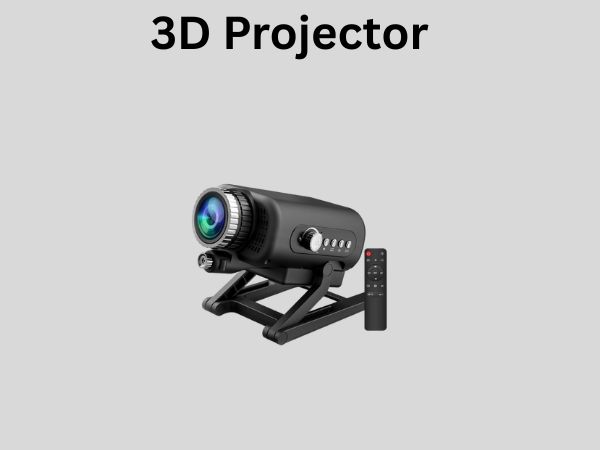
A 3D projector operates on similar principles but projects the image onto a screen instead of having a built-in display panel. The projector creates the 3D effect using the same technologies as TVs—either active shutter or passive polarization—but on a much larger scale. This means you get to enjoy that three-dimensional experience on a screen that can be absolutely massive.
Projection Technology Types
3D projectors typically use one of three light source technologies: DLP, LCD, or LCoS. Each has its own strengths and weaknesses, but they all can deliver impressive 3D images when properly calibrated. DLP projectors are known for their contrast and brightness, LCD projectors offer vibrant colors, and LCoS projectors provide a smooth, film-like quality.
Size and Display Real Estate: A Major Consideration
Here’s where things get interesting. If you’ve ever watched a movie on a massive projector screen and then went back to your regular TV, you understand the difference immediately. A 3D projector can create screens ranging from 80 inches all the way up to 150 inches or even larger. Your typical 3D TV maxes out around 85 inches, though that’s already pretty enormous for most living rooms.
The immersive experience you get from a projector is simply incomparable when you’re dealing with that kind of screen size. It’s the difference between watching a concert on a phone versus being in the front row. Your peripheral vision gets filled with the image, making you feel truly transported into whatever you’re watching.
Picture Quality and Image Brightness Comparison
3D TV Image Quality
3D TVs have come a long way in terms of picture quality. Modern 3D TVs offer excellent color accuracy, deep blacks, and stunning contrast ratios. Because you’re sitting relatively close to the screen, even small imperfections in the image can become noticeable. However, manufacturers have optimized their technology to deliver crisp, clear 3D images with vibrant colors and excellent detail.
One advantage of 3D TVs is their brightness capabilities. Since you’re watching in a more controlled environment typically, brightness levels around 400 to 600 nits are usually sufficient and actually optimal for the 3D experience. Higher brightness can sometimes cause eye strain when wearing 3D glasses.
3D Projector Image Quality
3D projectors tend to sacrifice some brightness compared to their 2D counterparts because the 3D technology requires more processing of the light. You’ll typically find projectors ranging from 2,000 to 4,000 lumens for quality 3D projection. This is actually plenty bright for a darkened theater environment, but it does mean you need a dedicated, light-controlled space.
The image quality from a projector depends heavily on your screen quality and room conditions. A top-tier projector paired with a premium projection screen can deliver breathtaking image quality, but if your room has lots of ambient light or your screen is subpar, the experience suffers.
Cost Analysis: Initial Investment and Long-Term Expenses
3D TV Pricing
Quality 3D TVs have become more affordable over the years. You can find a decent 55-inch 3D TV for around $400 to $800, while larger models of 75 inches or more might run you $1,500 to $3,000. The beautiful part about a TV is that it’s pretty much plug-and-play. You buy it, mount it, and you’re done. There’s no additional screen to purchase or installation complexity.
The ongoing costs are minimal. You might need to replace the active shutter glasses if they break, which typically costs between $50 and $150 per pair. That’s about it for maintenance.
3D Projector Pricing
Here’s where projectors can get expensive. A quality entry-level 3D projector might cost $800 to $1,500, but if you want truly excellent quality, you’re looking at $2,000 to $5,000 or more. But that’s just the projector. You also need to invest in a projection screen, which can range from $300 for a basic motorized screen to $2,000 plus for a premium tensioned screen.
Then there’s installation. Unless you’re handy, you might want professional installation to ensure proper alignment and calibration, which adds another $500 to $2,000 to your bill. You’ll also need 3D glasses for everyone in your household, and you might want backup pairs.
Over time, projector bulbs need replacement, costing anywhere from $200 to $500 depending on the projector model. You might get 3,000 to 5,000 hours from a bulb, so if you’re a heavy user, this becomes a recurring expense.
Installation and Setup Complexity
Installing a 3D TV
Setting up a 3D TV is straightforward enough for most people. Mount it on your wall, connect your streaming devices or cable box, put on the 3D glasses, and you’re watching. Maybe take five minutes to calibrate the picture settings if you’re particular about it. The learning curve is minimal because you’re already familiar with how TVs work.
Installing a 3D Projector
Projector installation is considerably more involved. You need to figure out the throw distance—basically, how far the projector needs to be from the screen to display the correct image size. You need to determine screen size based on your room dimensions and viewing distance. You’ll want to manage cables, potentially install ceiling mounts, and ensure proper ventilation because projectors generate heat and noise.
Calibration is also more critical with projectors. You might need to adjust lens shift, focus, keystone correction, and color settings to achieve the best image. This isn’t necessarily difficult, but it requires more thought and patience than setting up a TV.
Content Availability and Practical Viewing Options
Here’s something you need to consider seriously: how much 3D content are you actually going to watch? The reality is that 3D content creation hasn’t exploded the way many predicted. While there are plenty of 3D movies available on Blu-ray, streaming services haven’t embraced 3D as much as you might hope.
Netflix offers some 3D content, but it’s limited. Amazon Prime Video has a small library of 3D movies. Disney Plus doesn’t offer 3D content. So unless you’re collecting 3D Blu-rays, your 3D viewing options are somewhat restricted. This is true whether you own a 3D TV or a 3D projector.
That said, both technologies can upconvert 2D content to 3D, though the quality varies. It’s not true 3D, but some people find it adds a nice depth dimension to regular movies and shows. Your mileage may vary on whether this is worth the glasses-wearing effort.
Comfort and Eyestrain Considerations
Watching 3D Content for Extended Periods
Here’s something nobody talks about enough: watching 3D content can actually make your eyes tired, especially if you’re doing it for hours. The glasses themselves add weight on your face, which becomes noticeable after a while. Active shutter glasses also require battery changes or charging, which is annoying when you just want to relax.
Your eyes have to work harder when viewing 3D because they’re constantly adjusting to the depth cues. This can lead to headaches or eye strain, particularly if the 3D calibration isn’t perfect or if you’re sitting too close to the screen. Some people are more sensitive to this than others—it’s genetic based on how your visual system processes depth.
3D TV Comfort Factors
With a 3D TV, you’re typically sitting 8 to 12 feet away, which helps reduce eye strain. The screen size is manageable, and you can adjust your viewing angle relatively easily. If discomfort sets in, you can just take off the glasses and watch in 2D, no problem.
3D Projector Comfort Factors
With a projector, you’re sitting further back, which theoretically is better for your eyes. However, if you’ve set up a large screen, it can be harder to position yourself at the optimal viewing distance. Some people find that the larger image actually increases eye strain because their eyes have to work harder to track motion across the bigger display.
Room Requirements and Space Considerations
Space Needs for a 3D TV
A 3D TV needs wall space and viewing distance. For a 65-inch TV, you’d ideally sit about 8 to 10 feet away. That’s manageable in most living rooms. You don’t need to control ambient light, though darker rooms do enhance the picture. You don’t need ceiling height for mounting, and the TV doesn’t generate significant heat or noise.
Space Needs for a 3D Projector
A projector is more demanding. You need either ceiling space for mounting or a table in the right location. The throw distance matters—a short-throw projector might work in a smaller room, but standard projectors need considerable distance between the projector and screen. You need a dedicated dark room or at least light-controllable space for the best experience. You also need to consider heat dissipation and ensure the projector isn’t going to overheat in your space.
If you don’t have a dedicated home theater room, setting up a projector becomes a compromise. It might work, but not optimally.
Maintenance and Longevity
3D TV Maintenance
3D TVs are remarkably low-maintenance. You clean the screen occasionally, and that’s about it. Modern TVs are built to last 7 to 10 years or more with regular use. The 3D technology is integrated into the set, so there’s nothing to replace or maintain there. Active shutter glasses might need battery replacements, but that’s minimal.
3D Projector Maintenance
Projectors require more attention. You need to keep the air filters clean, manage heat output, and eventually replace the bulb or LED module. If something goes wrong internally, repair costs can be substantial. However, quality projectors can last many years if maintained properly.
Flexibility and Upgradability
Once you buy a TV, you’re committed to that TV for years. The good news is that TVs are replaceable components—you can upgrade to a newer model without major complications. Projectors offer similar flexibility since you can replace the projector unit while keeping your screen.
However, if you’ve invested in a custom installation with wiring and permanent screen setup, upgrading a projector becomes more involved. You might need to rewire or recalibrate the room.
Which Option Is Better for Different Scenarios?
Choose a 3D TV If:
- You have a living room with a standard layout and multiple uses
- You watch content casually and want a multipurpose device
- You don’t have control over ambient light in your space
- You prefer simplicity and minimal installation effort
- You’re budget-conscious and want lower total investment
- You share your viewing space with others and need easy 2D viewing options
- You have limited space for a dedicated theater room
Choose a 3D Projector If:
- You have a dedicated dark room for a home theater
- You want the largest possible screen and immersive experience
- You’re willing to invest time in setup and calibration
- You watch movies regularly and want cinema-like quality
- You have ceiling height available and can manage installation
- You want that genuinely theatrical experience at home
- You’re ready for a higher total investment but want premium features
The Hybrid Approach: Why Not Both?
If budget allows, some home enthusiasts actually use both. A 3D TV serves as the everyday entertainment device, while a projector provides the full theater experience on weekends when they’re in the mood. This gives you flexibility and the best of both worlds, though it obviously requires the most investment.
Conclusion
Choosing between a 3D TV and a 3D projector isn’t about which one is objectively better—it’s about which one fits your lifestyle, your space, and your viewing habits. A 3D TV offers convenience, simplicity, and affordability. It works in any room, requires minimal setup, and serves as a general-purpose entertainment device. A 3D projector delivers an unmatched immersive experience with a genuinely massive screen, but it demands a dedicated space, more careful installation, and ongoing