3D Projector: How Does It Work? A Simple Explanation
Have you ever sat in a movie theater and wondered how those stunning three-dimensional images seem to leap right off the screen toward you? Or perhaps you’re considering investing in a 3D projector for your home and want to understand what makes it tick? You’re not alone. The technology behind 3D projection can seem like pure magic, but I promise you, it’s actually based on some fascinating science that’s easier to understand than you might think.
In this comprehensive guide, I’m going to walk you through exactly how 3D projectors work, breaking down the complex technology into digestible pieces. By the end, you’ll have a clear understanding of the mechanics, the different technologies involved, and why these devices create such immersive viewing experiences.
Understanding the Basics: What Is a 3D Projector?
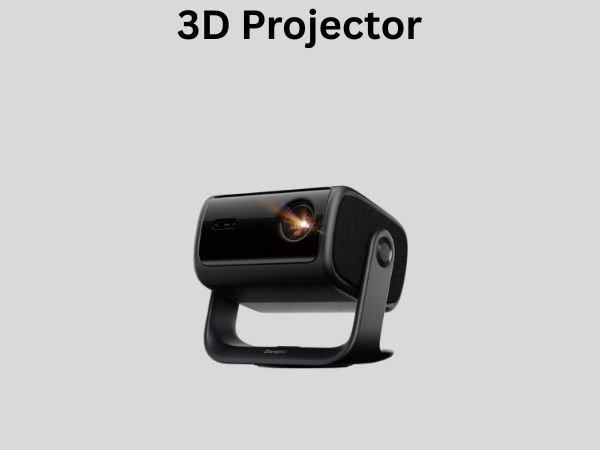
Before we dive into the technical nitty-gritty, let’s establish what we’re actually talking about. A 3D projector is a device that creates the illusion of depth on a flat screen, making images appear to have height, width, and depth—just like real life. Think of it like this: your regular projector shows you a flat image, but a 3D projector shows you two slightly different images simultaneously, each designed for one of your eyes.
This dual-image approach is the secret sauce that creates the three-dimensional effect. It’s the same principle that allows you to perceive depth in the real world. Your two eyes see slightly different perspectives of everything around you, and your brain combines these perspectives to understand how far away objects are and how they relate to each other in space.
The Eye and Perception: How Your Brain Creates Depth
The Power of Binocular Vision
Your eyes are positioned about two inches apart, which might not seem significant, but it’s everything when it comes to depth perception. This separation means that each eye views the world from a slightly different angle. Your brain is constantly comparing these two different images and using the differences to calculate depth.
For example, if you hold your finger up and look at it while closing one eye at a time, you’ll notice your finger appears to jump slightly. This is parallax, and it’s the fundamental principle that 3D projectors exploit. They create two images with different perspectives, mimicking what your left and right eyes naturally see.
Stereo Vision in Action
The technical term for this process is called stereoscopic vision or stereo vision. When both eyes work together like this, they create what we call stereopsis—the actual perception of depth. Without stereo vision, you’d still have some depth cues from the size of objects and shadows, but you’d miss out on the most immediate and powerful depth perception mechanism that nature equipped us with.
The Core Technology: How 3D Projectors Deliver Dual Images
Active Shutter 3D Projection Technology
One of the most common methods used in 3D projectors is called active shutter technology. Imagine a pair of electronic glasses with lenses that can switch between transparent and opaque incredibly fast. That’s essentially how active shutter 3D works.
Here’s the process: the projector displays an image for the left eye, and at the same time, electronic shutters in the 3D glasses block your right eye. Then, in a fraction of a second, the projector switches to an image for the right eye, and the shutters flip—blocking the left eye and allowing the right eye to see. This happens so rapidly, usually 60 times per second for each eye, that your brain perceives continuous motion with depth.
The key to making this work is synchronization. The 3D glasses must be perfectly timed with the projector. This is typically accomplished through infrared signals, Bluetooth, or USB connections that keep the glasses and projector in perfect harmony.
Passive 3D Projection: Polarization Technology
Another approach, and one that’s increasingly popular, uses passive 3D technology based on polarization. This method doesn’t require electronic glasses or batteries. Instead, it relies on the properties of polarized light.
Think of light like a wave rippling across the ocean. Normally, light waves vibrate in all directions. But polarized light is filtered so that it only vibrates in one specific direction. A 3D projector using polarization technology projects two images simultaneously, each polarized in a different direction. The glasses you wear have polarized lenses that match these directions, ensuring that each eye receives only the image intended for it.
The advantage here is comfort and practicality. You don’t need to worry about battery life, and passive glasses are much lighter and easier to wear for extended periods. However, you do lose some brightness compared to active shutter systems.
The Projector’s Role: Creating Two Distinct Images
Image Processing and Rendering
For a 3D projector to work effectively, it needs to receive 3D source material. This typically comes in the form of specially created 3D video or film where two images are encoded—one for each eye. Streaming services, Blu-ray discs, and digital cinemas all support these formats.
The projector receives this dual-image data and processes it. Its job is to display these images in a way that reaches your eyes correctly. Whether using active shutters or polarization, the projector must be capable of handling the higher bandwidth and processing power required to manage two simultaneous image streams.
Resolution and Brightness Considerations
Here’s something important to understand: 3D projection comes with some trade-offs. In active shutter systems, you’re essentially cutting the brightness in half because each eye only receives light half the time. In polarization systems, the polarizing filters naturally reduce brightness.
This is why manufacturers have continuously improved projector technology. Modern 3D projectors are significantly brighter than earlier models, compensating for this inherent brightness loss. Additionally, native resolution considerations matter—a 4K 3D projector needs to be twice as powerful as a standard 4K projector to achieve the same perceived brightness.
The Display Surface: Your Screen Matters Too
Reflective Properties of 3D Screens
Not just any screen will do for 3D projection. The surface you project onto plays a crucial role in maintaining the 3D effect. Standard white screens can scatter light randomly, which would disrupt the carefully arranged polarized light or shutter timing. This is why specialized 3D screens are often recommended.
For passive polarized 3D systems, the screen must maintain polarization. For active shutter systems, the screen just needs to be reflective without depolarizing the light, though a high-quality screen definitely helps maintain contrast and color accuracy.
Comparing 3D Projection Technologies
Active Shutter vs. Passive Polarization: The Showdown
Let’s compare these two dominant technologies side by side so you can understand their respective strengths and weaknesses:
- Brightness: Active shutter systems are generally brighter because they don’t rely on polarizing filters that naturally reduce light. This makes them better for rooms with ambient light.
- Comfort: Passive systems win here. No batteries mean no weight, and many people find passive glasses more comfortable for extended viewing sessions.
- Cost: Passive 3D systems are typically less expensive both for the projector and the glasses themselves.
- Crosstalk: Active shutter systems can occasionally experience crosstalk, where images meant for one eye leak into the other, creating a ghosting effect. Passive systems are generally free from this issue.
- Scalability: Passive systems work better in venues where you need to provide glasses to many people, like movie theaters.
Understanding Crosstalk and Image Quality Issues
What Is Crosstalk?
Crosstalk is the enemy of good 3D viewing. It occurs when the image meant for your left eye briefly appears in your right eye, or vice versa. This creates a ghosting or shadowing effect that’s distracting and breaks the immersion of the experience.
In active shutter systems, crosstalk can happen if the glasses don’t sync perfectly with the projector or if the shutter transition time isn’t fast enough. High-quality projectors minimize this by having incredibly fast switching speeds and robust synchronization protocols.
Refresh Rate and Flicker
The refresh rate of a 3D projector is critical to perceived quality. Remember, in active shutter systems, each eye sees the image 30 times per second (in a 60Hz system), which is the bare minimum for comfortable viewing without noticeable flicker. Higher refresh rates like 120Hz give you 60 frames per second to each eye, resulting in much smoother motion.
3D Content Sources: Where Does the Material Come From?
Blu-ray and Physical Media
3D Blu-ray discs contain encoded stereoscopic video that’s specifically formatted for 3D playback. These remain one of the highest-quality sources for 3D content, offering excellent image quality and reliable 3D formatting.
Streaming Services and Online Content
Major streaming platforms now offer 3D content, though the selection is more limited than you might expect. The bandwidth requirements for streaming high-quality 3D video are significant, so most services reserve this for premium content or special releases. Services like Netflix, YouTube, and Amazon Prime occasionally offer 3D titles, particularly action films and nature documentaries.
Gaming and Interactive Content
Gaming is another thriving source of 3D content. Many gaming consoles and PC games support 3D output through HDMI connections. This is where 3D projectors truly shine for home entertainment, as they can create incredibly immersive gaming experiences.
The Mathematics Behind 3D: Depth Perception and Disparity
Understanding Parallax and Convergence
When creating 3D content, filmmakers and content creators must carefully calculate the horizontal disparity between the left and right eye images. This disparity—the difference in horizontal position of the same object between the two images—is what creates the perception of depth.
Objects that appear closer to you have larger disparity, while distant objects have smaller disparity. If an object in the left image is significantly further to the left than it is in the right image, your brain interprets this as the object being very close to the screen. This is why 3D content creation is actually quite complex; creators must carefully plan and render these disparities.
The Comfort Zone and Viewing Distance
There’s actually a “comfort zone” for 3D viewing that depends on screen size and viewing distance. Sit too close to a large screen, and the disparity becomes too extreme, which can cause eye strain. This is why recommended viewing distances matter for 3D displays. Generally, you should sit at a distance of 1.5 to 3 times the screen width away for optimal 3D comfort.
Installation and Setup Considerations
Room Preparation for 3D Projection
Setting up a 3D projector isn’t radically different from setting up a regular one, but there are some additional factors to consider. First, light control is paramount. Any ambient light will wash out the 3D effect and reduce perceived depth. Blackout curtains or a dedicated media room are essential.
Second, the seating arrangement matters more with 3D. Everyone should be positioned fairly directly in front of the screen, within the optimal viewing angle. Watching 3D from the extreme sides of a room can degrade the effect and cause discomfort.
Audio Considerations
While not technically part of the 3D projection system, audio is crucial for the overall immersive experience. A good surround sound system works in tandem with 3D visuals to create a truly immersive environment. Many people invest in quality audio when they go with a 3D projector setup.
Common Problems and Troubleshooting
Dealing with Eye Strain
Some people experience eye strain or fatigue when watching 3D content. This can be caused by several factors: sitting too close to the screen, excessive depth effects in the content, improperly calibrated 3D settings, or simply individual sensitivity to 3D viewing. Taking regular breaks and adjusting the 3D intensity can help.
Synchronization Issues
If your active shutter glasses aren’t syncing with your projector properly, you’ll see ghosting or flicker. This is usually resolved by re-syncing the glasses, checking battery levels, or ensuring no obstructions exist between the glasses and projector’s infrared receiver.
The Future of 3D Projection Technology
3D projection technology continues to evolve. Researchers are working on glasses-free 3D displays that use autostereoscopic technology to deliver 3D content without requiring special eyewear. While these aren’t yet practical for large-scale projection, they represent an exciting future direction.
Additionally, improvements in resolution, brightness, and refresh rates continue to make 3D projection more compelling. As 4K and even 8K content becomes more common, 3D projectors are keeping pace with these advancements.
Is 3D Projection Right for You?
3D projection is fantastic for entertainment enthusiasts who want an immersive home cinema experience. If you watch a lot of action movies, play video games, or appreciate cutting-edge technology, a 3D projector could be a worthwhile investment. However, if you’re primarily watching regular content or your budget is tight, standard projection might serve you just as well.
Conclusion
3D projectors are remarkable pieces of technology that bring the magic of three-dimensional imaging into your home or business. By understanding how they work—whether through active shutter glasses or passive polarization—you can make informed decisions about whether this technology is right for you and how to get the most out of it.
The core principle is elegant in its simplicity: by delivering two slightly different images to your left and right eyes and synchronizing them correctly, 3D projectors trick your brain into perceiving depth on a flat surface. It’s a testament to how sophisticated our visual systems are and how cleverly technology can work with our biology.
Whether you’re a movie enthusiast, a gamer, or someone who simply appreciates immersive technology, understanding the mechanics of 3D projection helps you appreciate the engineering that goes into creating these experiences. The next time you watch a 3D movie or game through a projector, you’ll have a much better appreciation for the complex dance between hardware, software, and the remarkable human eye that makes it all possible.
Frequently Asked Questions
Can I use a regular projector as a 3D projector?
Unfortunately, no. A regular projector lacks the necessary hardware and processing capabilities to handle 3D content. It cannot sync with 3D glasses, and it doesn’t process dual images. You need a projector specifically designed and equipped for 3D projection. However, you could potentially use software solutions with certain regular projectors, though the results would be suboptimal compared to a dedicated 3D projector.
Do 3D projectors work with all types of content?
3D projectors work best with content that’s specifically created or formatted for 3D viewing. Regular 2D content like news broadcasts or standard movies won’t automatically appear in 3D. However, some newer projectors include 3D conversion features that can attempt to create a 3D effect from 2D content, though the results are generally less impressive than native 3D content.
How much does a quality 3D projector cost?
Quality 3