How Big Can a Projector Screen Really Be? The Ultimate Guide to Maximum Projector Screen Sizes
Have you ever wondered what the absolute limits are when it comes to projector screen sizes? Maybe you’re dreaming of that massive home theater experience, or perhaps you’re setting up a conference room that’ll knock everyone’s socks off. The truth is, projector screens can get surprisingly large, but there are real-world factors that determine just how big is too big. Let me walk you through everything you need to know.
Understanding Projector Screen Dimensions: Where Do We Start?
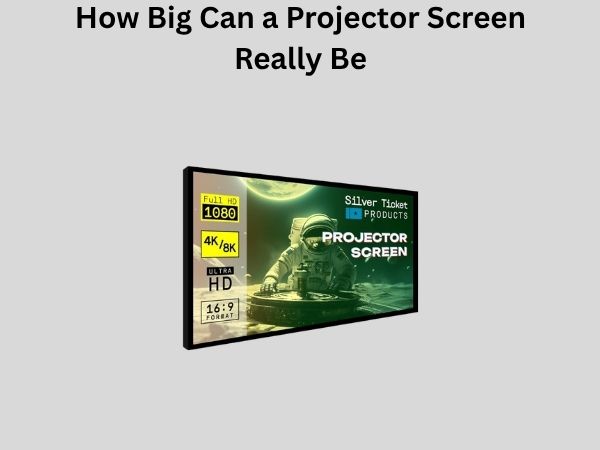
Before diving into the extremes, let’s establish what we’re actually talking about here. When we discuss projector screen size, we’re primarily referring to the diagonal measurement of the viewable area—the same way we measure TV screens. This measurement, typically ranging from 40 inches to well over 200 inches, forms the foundation of our entire discussion.
Think of it like this: a projector screen size isn’t just a random number someone pulled out of thin air. It’s carefully calculated based on your room dimensions, viewing distance, and the projector’s capabilities. Getting this balance right is what separates an amazing viewing experience from one that leaves you with neck strain and eye fatigue.
The Theoretical Maximum: How Large Can Projector Screens Actually Get?
Here’s where things get interesting. Commercially available projector screens can reach absolutely staggering sizes. We’re talking about screens that measure 300 inches, 400 inches, even pushing toward 500 inches or more in some specialized installations. Can you imagine a screen that’s nearly 42 feet wide? That’s bigger than a school bus!
Professional and Commercial Applications
In professional settings—think outdoor events, concert venues, or massive conference halls—screens can be absolutely enormous. Some of the largest permanently installed projector screens in the world measure well over 100 feet in width. These aren’t your typical home theater setups, though. They’re engineered solutions built for specific purposes with budgets that would make most homeowners’ eyes water.
The thing about these mega-screens is that they’re not just larger versions of consumer products. They involve specialized materials, reinforced mounting systems, and projectors powerful enough to illuminate such vast surfaces without washing out the image quality. It’s engineering at its finest.
Practical Home Theater Limits
Now, let’s bring this back to reality for most people. If you’re setting up a home theater, you’re probably looking at screens that range from 100 to 150 inches as a reasonable upper limit for most rooms. Some enthusiasts do push to 180 or even 200 inches, but that requires some serious space and planning.
Why the difference? Because what works in a 10,000-square-foot venue doesn’t necessarily work in your living room. Scaling matters. Physics matters. Your wallet definitely matters too.
The Role of Viewing Distance in Screen Size Selection
Here’s something crucial that many people overlook: the relationship between screen size and viewing distance is absolutely fundamental. This isn’t arbitrary—it’s based on how our eyes actually perceive images.
The 1.5x Rule Explained
Industry experts often reference the 1.5x viewing distance rule. What does this mean? If you’re sitting 10 feet away from your screen, your optimal screen diagonal should be around 67 inches (10 feet × 1.5). This ensures your entire field of view is occupied by the screen without you having to move your head around like you’re watching a tennis match.
But here’s where it gets more nuanced. If you want a more immersive experience—something that really fills your vision—some folks prefer the 1.2x rule, which gives you a larger screen relative to distance. Conversely, if you want a more cinematic experience that lets you focus on details, the 2x rule works well.
Finding Your Sweet Spot
The “right” screen size really depends on your personal preferences and room layout. Are you looking for comfortable viewing while reading subtitles clearly? Are you wanting that IMAX-like sensation where the screen dominates your visual field? Your answer determines whether you should go bigger or stick with something more modest.
Let me give you some practical reference points:
- For rooms with 8-10 feet of viewing distance: 60-80 inch screens work beautifully
- For rooms with 12-15 feet of viewing distance: 100-130 inch screens hit the sweet spot
- For rooms with 16-20 feet of viewing distance: 150-180 inch screens provide immersion without strain
- For rooms exceeding 20 feet: 200+ inch screens become viable and exciting
Physical Space Constraints and Room Dimensions
You know what’s funny? People often fall in love with the idea of a 300-inch screen without actually measuring their room. Then reality hits like a ton of bricks. The wall width, ceiling height, and available floor space all impose real limits on what’s physically possible.
Wall Width Considerations
Obviously, you can’t install a screen wider than your wall allows. A 200-inch screen with a 16:9 aspect ratio spans approximately 16 feet in width. If your wall is only 14 feet wide, that’s not happening without major renovations. This alone eliminates many extreme size options for standard residential spaces.
Ceiling Height and Mounting
Vertical space matters just as much. Large screens need proper mounting infrastructure. You’ll need adequate clearance above and below for installation and to avoid blocking your view. In rooms with lower ceilings, this becomes a real constraint that might force you to go smaller than you’d ideally prefer.
Seating Arrangement Flexibility
Here’s something people don’t always consider: how will your screen interact with your seating? With an extremely large screen, everyone needs to sit relatively close and centered. If people sit off to the sides, the viewing angles become problematic, and you lose image quality. Your room layout and seating plan should influence your final screen size decision.
Projector Power and Image Brightness Requirements
Getting a massive screen is one thing. Getting a bright, vibrant image on that massive screen is another beast entirely. This is where projector specifications become absolutely critical.
Lumens and Screen Size Relationship
The larger your screen, the more light you need to fill it effectively. A 3,000-lumen projector (which is pretty decent for home theater) might look fantastic on a 100-inch screen in a dark room. Put that same projector on a 250-inch screen, and suddenly it’s underwhelming. The image becomes washed out and lacks punch.
Here’s a rough guideline: each additional 50 inches of screen diagonal roughly requires 1,000 additional lumens to maintain the same brightness level. It’s not a perfect formula, but it gives you a sense of the relationship.
Contrast and Color Performance
Beyond brightness, larger screens magnify every imperfection in your projector’s performance. Contrast ratio becomes more critical. Color accuracy becomes more apparent. If you’re going big, you need to invest in a quality projector. Cheap projectors simply don’t cut it at extreme screen sizes.
Screen Material and Construction for Large Format Displays
Not all projection screen materials are created equal, especially when you’re talking about sizes that could double as house siding.
Material Durability and Stretch
Large screens undergo incredible stress. The weight of the material itself, combined with tension needed to keep it flat and wrinkle-free, creates massive forces at the edges and corners. Quality materials designed for large screens use specially engineered fabrics that resist stretching and maintain their shape over years of use.
Budget materials? They sag, wrinkle, and deteriorate. When you’re going big, investing in premium screen material isn’t just about image quality—it’s about longevity.
Aspect Ratio Flexibility
Here’s something interesting: larger screens sometimes force you into specific aspect ratios. A 2.35:1 cinema ratio looks incredible on a massive screen but might feel cramped if your room doesn’t support those dimensions. Standard 16:9 offers flexibility, but you lose some of that cinematic magic.
Environmental Factors Affecting Maximum Screen Size
Environmental conditions play a role that many people underestimate. Temperature fluctuations, humidity, and even air circulation can impact how large a screen you should install.
Temperature and Humidity Effects
Projection screen materials can expand and contract with temperature changes. In very hot climates or rooms with significant humidity variation, materials can behave unpredictably. This is particularly problematic for massive screens where even small changes in material dimension become visible as wrinkles or waviness.
Ventilation and Cooling
Large projectors generate heat. Extremely large screens in poorly ventilated spaces can create hot spots and uneven image performance. Proper HVAC design becomes part of your installation planning when you’re going to extreme sizes.
Budget Considerations for Massive Projector Screens
Real talk: screen size isn’t linear with cost. A 300-inch screen isn’t just three times the price of a 100-inch screen. The costs scale up dramatically, and not just for the screen itself.
Direct Screen Expenses
A quality 100-inch motorized projector screen might run you $2,000-4,000. A 200-inch screen? You’re looking at $8,000-15,000 or more. At 250+ inches, you’re entering the realm of custom engineering, and prices can easily exceed $20,000-30,000.
Hidden Costs
Beyond the screen itself, you’ll need:
- A more powerful projector (potentially $5,000-20,000+)
- Professional installation (often $1,000-5,000 for large screens)
- Structural reinforcement if your walls can’t handle the weight
- Upgraded sound system to match the visual spectacle
- Electrical work for motorized systems
- Climate control upgrades
What started as a screen purchase becomes a full home theater renovation.
Specialized Screen Technologies for Extreme Sizes
When you’re pushing the boundaries of projector screen dimensions, specialized technologies come into play that aren’t common in standard installations.
Modular and Tiled Screen Systems
Some extremely large installations don’t use a single screen. Instead, they use modular panels that connect together, creating screens of virtually unlimited size. Think of it like building a wall out of bricks—you can make it as large as you want by adding more bricks. This approach is common in outdoor events and commercial venues.
Projection Mapping Technology
For the absolute largest applications, multiple projectors are sometimes used with sophisticated mapping software to create seamless images across enormous surfaces. This eliminates the need for a traditional “screen” altogether and opens up possibilities for truly unlimited sizes.
Outdoor Projector Screens: Breaking the Size Barrier
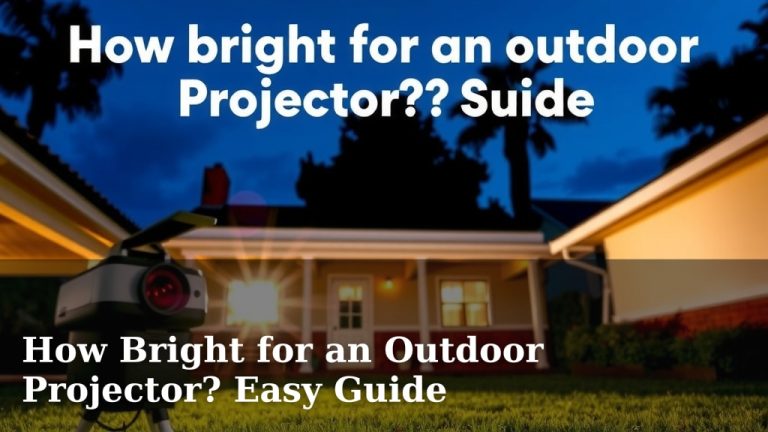
If you remove the constraint of indoor space, screens can get truly massive. Outdoor projector screens regularly exceed 200, 300, or even 400 inches.
Inflatable and Temporary Systems
Inflatable screens can be enormous because they don’t rely on traditional mounting structures. Some inflatable screens measure 30+ feet in width. They’re set up for specific events, then deflated and stored. This flexibility allows for sizes that would be impractical as permanent installations.
Permanent Outdoor Installations
Drive-in theaters and outdoor event venues operate permanent screens that can be 50+ feet wide. These require specialized engineering, weatherproof materials, and outdoor-rated projectors capable of operating in ambient light conditions.
The Practical Limits for Average Users
Let’s step back and talk reality. For the average person setting up a home theater, what’s actually achievable and practical?
Sweet Spot Sizing
Most home theater experts agree that the practical maximum for typical residential spaces sits around 150-180 inches. This size:
- Fits comfortably in most living rooms and dedicated theaters
- Works with reasonably-priced projectors
- Doesn’t require structural modifications
- Delivers an immersive experience without strain
- Maintains image brightness and quality
Budget-Conscious Recommendations
If you’re budget-conscious but still want to go big, look at screens in the 120-150 inch range. This represents the best value proposition for dramatic visual impact without entering the luxury price tier.
Common Mistakes People Make With Large Screens
I’ve seen it happen countless times: someone gets excited about size and makes decisions they later regret. Here are the most common blunders:
Underestimating Projector Requirements
Buying a budget projector and a massive screen is like putting racing tires on a bicycle. The screen reveals every shortcoming of the projector. When you go big on the screen, you must also go adequate on the projector.
Ignoring Room Acoustics
A giant screen demands a giant sound system. Many people install huge visual displays without upgrading their audio, creating a disappointing entertainment experience. Big screen, mediocre audio equals disappointed audience.
Overlooking Viewing Distance Trade-offs
Installing a 200-inch screen in a room designed for 100-inch viewing creates a terrible experience. You’re constantly moving your head. Details blur. Subtitles become a strain. Size without proper distance ruins the whole thing.
Neglecting Maintenance Planning
Large screens collect dust, require careful cleaning, and occasionally need professional maintenance. Many people don’t account for this ongoing responsibility when they go big.
Future Trends in Projector Screen Sizing
Where is projector screen technology heading? What should you expect in the coming years?
Improvement in Projector Brightness
Newer laser-based projectors are producing significantly higher lumen outputs than traditional lamp-based models. This trend will enable larger practical screen sizes for home users without requiring professional-grade installations.
Advanced Materials Development
Scientists are developing screen materials with improved light-reflecting properties, better durability, and enhanced viewing angles. These advances will make extremely large screens more practical and affordable.
MicroLED and Hybrid Solutions
As LED technology improves, we’re seeing hybrid systems that combine projection with LED elements for massive displays. These hybrid approaches might eventually replace traditional projector screens for the largest applications.
Conclusion
So, how big can a projector screen really be? The honest answer is: as big as you want, within reason. Theoretically, there’s no hard limit—screens have been built at 300, 400, or even larger sizes. Practically speaking, though, most people find their sweet spot somewhere between 100-180 inches in home theater settings.
The real question isn’t “how big can it be?” but rather “how big should mine be?” That answer depends on your room dimensions,