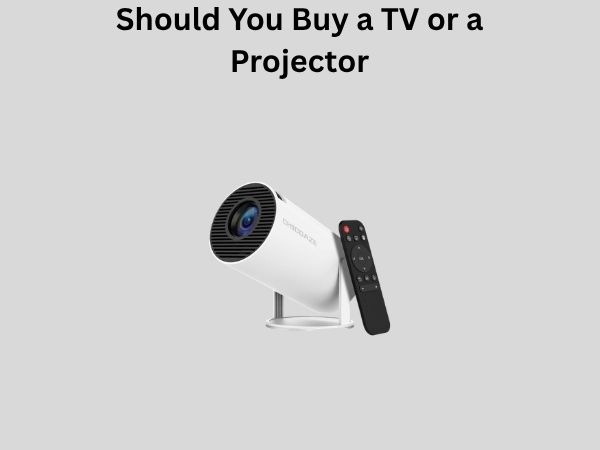
Home Theatre Experience: Should You Buy a TV or a Projector?
When you’re thinking about upgrading your home entertainment setup, one of the biggest decisions you’ll face is whether to invest in a television or a projector. It’s a choice that can significantly impact how you enjoy movies, sports, and gaming for years to come. I’ve spent considerable time researching both options, and I can tell you that there’s no one-size-fits-all answer. What works beautifully for your neighbor might not be the right fit for your space and lifestyle. Let me walk you through everything you need to know to make an informed decision.
Understanding the Core Differences
Before diving into the nitty-gritty details, let’s establish what we’re actually comparing. A television is a self-contained display unit that sits in your room and requires no additional equipment to function. A projector, on the other hand, is like having a magic lantern that throws an image onto a wall or dedicated screen. These fundamental differences ripple through every aspect of the decision-making process, from installation to maintenance to cost.
What Makes TVs Stand Out
Think of a television as the reliable workhorse of home entertainment. It arrives ready to plug in, turn on, and start watching. TVs have become incredibly sophisticated over the past decade, with technologies like OLED, QLED, and mini-LED creating stunning picture quality that rivals what you’d see in a cinema just a few years ago. They’re designed to be viewed from various distances and angles, making them flexible for rooms where people sit at different locations.
The Projector Advantage
Projectors represent a different philosophy altogether. They’re about creating an immersive cinema-like experience right in your own home. When you dim the lights and watch a 100-inch image projected on your wall, there’s something genuinely magical about it. It’s the difference between looking at a painting and walking into a mural that surrounds you with its presence.
Picture Quality Comparison
Let’s talk about what really matters when you’re settling in for a movie night: how good does it actually look? This is where things get interesting because the answer depends heavily on your specific situation.
Television Picture Quality
Modern televisions have reached extraordinary levels of brightness and color accuracy. An OLED TV, for instance, produces perfect blacks because each pixel emits its own light and can turn completely off. This means the contrast ratio is literally infinite. When you’re watching in a well-lit room during the day, a TV wins hands down. The brightness ensures the picture remains vibrant and clear even with ambient light washing over the screen.
- Brightness levels typically range from 500 to 2000 nits on high-end models
- Color accuracy can be factory-calibrated to professional standards
- Refresh rates support fast-moving sports and gaming content seamlessly
- Viewing angles mean everyone in the room sees excellent picture quality
Projector Picture Quality
Here’s where I need to be honest with you: projectors require a dimmed or dark room to truly shine. A 3000-lumen projector in a bright living room will look washed out and disappointing. But turn those lights down, close the curtains, and suddenly you’re experiencing images at a scale that TVs simply cannot match. The immersive quality of a 120-inch projected image is genuinely different from watching a 65-inch TV, no matter how good that TV is.
- Brightness ranges from 1500 to 4000 lumens depending on the projector type
- Image size can range from 80 inches all the way to 200 inches or beyond
- Light output dramatically decreases with ambient room light
- Contrast ratios vary significantly between projector technologies
Installation and Space Requirements
This is where your home’s actual layout becomes crucial. Let me break down what each option needs to thrive in your space.
TV Installation Simplicity
Installing a television is remarkably straightforward. You choose your wall, mount it, connect your cables, and you’re done. Whether you go for a wall mount or a stand, setup takes maybe an hour. There’s no calibration needed, no special room preparation, and no fiddling with throw distances or keystoning. You can literally unplug it and move it to another room if your situation changes.
Projector Space Considerations
Projectors demand more thoughtful planning. You need to consider throw distance—the distance between the projector and your screen. A short-throw projector might only need 2-3 feet of distance, while a standard projector might need 10-15 feet depending on your desired screen size. You’ll also need to think about:
- Where to mount or place the projector (ceiling, shelf, or dedicated projector stand)
- How to hide and manage cables and wiring
- Whether you want a dedicated projection screen or will use a wall
- Ventilation needs for the projector’s cooling system
- Ambient light control through proper window treatments
Cost Considerations
Let’s talk money, because this often becomes the deciding factor for many people. The upfront cost is just the beginning of the financial picture.
Television Costs
You can get a decent 4K television in the 55 to 65-inch range for $500-$1500. If you want something premium with exceptional picture quality, you’re looking at $2000-$5000. Wall mounting adds another $100-$300. These costs are largely one-time expenses, and TVs don’t have ongoing maintenance costs in the traditional sense.
Projector Investment
A quality projector capable of producing a stunning image will cost you anywhere from $1000 to $3000 for a mid-range model, or $4000 and up for premium options. But here’s what many people forget: you also need a quality projection screen, which runs $300-$1000 depending on size and type. You might need professional installation, acoustic treatments, ambient light control solutions, and eventually, you’ll replace the lamp or laser light source, which costs $150-$400.
Long-Term Cost Analysis
When you calculate the total cost of ownership over five years, including lamp replacements, maintenance, and potential repairs, projectors tend to be more expensive to maintain. TVs, by contrast, are remarkably reliable and have few ongoing costs beyond occasional cleaning and potential repairs if something fails.
Room Environment and Light Control
The environment where you’ll be watching makes an enormous difference in which option suits you better. Think of it as choosing between a spotlight and a chandelier—each serves its purpose in different settings.
Bright, Well-Lit Rooms
If your living room gets lots of natural light or you prefer watching TV with normal ambient lighting, a television is your clear winner. The screen’s brightness and inherent contrast will defeat any projector in this scenario. You could have a $10,000 projector in a bright room, and it still wouldn’t look as good as a $1500 TV in the same space.
Dark or Dedicated Theater Rooms
Now, if you have a basement, a spare bedroom, or you’re willing to invest in blackout curtains and controlled lighting, a projector can absolutely dominate. The larger image size combined with complete darkness creates an unbeatable cinematic experience. This is where projectors genuinely excel and justify their investment.
Semi-Controlled Environments
Many of us live in spaces that aren’t purely bright or completely dark. You might have a family room with windows that you can control but where you still want some ambient light for safety. In these situations, you’re in a gray zone where either option can work, but each comes with compromises.
Content Consumption Matters
What you actually watch should heavily influence your decision. Different content types have different demands.
Movies and Cinematic Content
If you’re a film enthusiast who loves watching movies in their theatrical aspect ratios, a projector can be extraordinary. That full immersion is what movies are designed for. However, if you watch all types of content and often have the lights on, a TV becomes more practical.
Sports and Live Events
Sports require brightness, fast refresh rates, and good motion handling. Televisions excel here. The ability to watch a game during the day without darkening your room is a genuine advantage. Plus, most projectors struggle a bit more with fast-moving sports content compared to modern TVs.
Gaming and Interactive Content
If you’re a serious gamer, especially someone who plays fast-paced competitive games, a TV typically offers better response times and refresh rates. Current-generation gaming TVs support 120Hz refresh rates with minimal input lag. Projectors are catching up, but they generally aren’t as optimized for gaming.
General Television and Streaming
For everyday TV shows, news, and casual streaming content, a television is simply more convenient and practical for most households. You can watch anytime, in any lighting condition, without setup or configuration.
Brightness and Contrast Performance
These technical specifications deserve their own discussion because they genuinely impact your viewing experience.
Peak Brightness Advantages
Televisions produce significantly higher peak brightness than projectors. This matters because it allows highlights in a movie to really pop—a bright explosion, sunlight reflecting off water, or the bright suit of a superhero character will look more impactful on a TV. This brightness also preserves detail in bright scenes without washing out the image.
Contrast Ratios
OLED televisions offer infinite contrast ratios because they can turn pixels completely off. This creates stunning blacks that projectors simply cannot match. Even the best projectors have some residual light in their “black” levels. That said, in a completely dark room, many people don’t notice or mind this difference as much as you might expect.
Maintenance and Longevity
How much hassle are you willing to tolerate in exchange for your entertainment experience? Let’s look at the reality of owning and maintaining each option.
Television Maintenance
Televisions are remarkably low-maintenance. You’ll occasionally dust the screen, maybe clean the vents, and that’s largely it. The solid-state technology means there are fewer parts that can fail. Most quality TVs last 7-10 years or more before you might want to upgrade. If something breaks, repairs are usually straightforward.
Projector Maintenance
Projectors require more attention. You need to keep the lens clean, manage heat buildup, and eventually replace the light source. Traditional lamp-based projectors need bulb replacements every 2000-4000 hours of use, which can be expensive. Newer laser projectors have longer lifespans but cost significantly more upfront. Dust and heat are the enemies of projector longevity.
Flexibility and Portability
Sometimes life changes, and you need your entertainment setup to adapt. How much flexibility does each option provide?
TV Flexibility
A television is remarkably portable and adaptable. You can move it to a different room in an afternoon. You can adjust the height, angle, and distance from seating. If you move to a new house, your TV comes with you. This adaptability is genuinely valuable in real life.
Projector Flexibility
Projectors are less flexible. If you’ve installed a ceiling-mounted projector with proper cabling and a fixed screen, relocating it is a significant undertaking. Even a portable projector requires finding a suitable surface to project on in a new location. This relative inflexibility means you need to be confident about your setup before committing.
Aesthetic Considerations
How your entertainment setup looks in your home matters more than some people acknowledge, especially if your family room is also where you spend time during the day.
Television Aesthetics
Modern TVs are sleek and relatively unobtrusive. A thin OLED or QLED TV mounted on a wall is actually quite elegant. Even a TV on a stand doesn’t dominate the room visually. They blend into modern interior design fairly well.
Projector Aesthetics
A projector setup requires consideration of several elements: the projector itself, the screen, the mounting hardware, and cable management. When done well, a dedicated home theater with a projector looks intentionally designed and sophisticated. But a half-done setup with a projector mounted haphazardly can look messy. The payoff is magnificent if you commit to doing it right, but it requires more deliberate design thinking.
The Verdict: Which Should You Choose?
Choose a TV If:
- You watch content in various lighting conditions
- You want simplicity and low maintenance
- You prioritize cost-effectiveness and reliability
- You watch lots of sports, gaming, or daytime content
- You value flexibility and portability
- You’re on a limited budget or don’t have a dedicated theater space
Choose a Projector If:
- You have a dedicated dark room or basement theater
- You’re willing to invest time and money in proper setup
- You primarily watch movies and want maximum immersion
- You want a genuinely large screen experience without massive TV costs
- You can control ambient light effectively
- You value the cinema-like experience above all else
Hybrid Approach: Best of Both Worlds
Here’s a thought that might appeal to some of you: what if you didn’t have to choose? Some enthusiasts invest in both. A smaller TV for casual viewing in a bright or semi-lit room, and a projector setup in a dedicated dark theater space. If your budget allows and you have the space, this approach lets you optimize for different viewing situations and content types.
Making Your Final Decision
Ultimately, the right choice comes down to your specific situation. Consider your room environment, your budget, the content you watch most, and how much maintenance you’re willing to handle. Visit a friend who has a projector setup, or spend time in an electronics store examining quality televisions. The experience of actually seeing these technologies in action will clarify your preferences better than any article can.
Conclusion
The choice between a television and a projector isn’t about which is objectively better—it’s about which is better for you and your lifestyle. Televisions offer convenience, reliability, versatility, and excellent picture quality that works in nearly any lighting condition. They’re the practical choice for most households. Projectors, meanwhile, offer something special: the possibility of creating a genuine home cinema experience that can transport you to another world when the lights go down. If you have the space, budget, and commitment to do it right, a projector can deliver unmatched immersion. But if you want something that works reliably day after day without fuss or maintenance, a quality television remains the superior choice. Think honestly about your priorities, your space, and your budget, and the decision will become clear.
Frequently Asked Questions
Can I use a projector in a room with some natural light?
Technically yes, but practically