DLP Projector vs LCD TV: Better Display Pick?
When choosing between a DLP projector and an LCD TV, your best display pick often depends on your viewing needs and space. For a bright, vibrant picture in a well-lit room, an LCD TV usually wins. If you prioritize a larger screen size for a dedicated home theater and can control ambient light, a DLP projector might be your better choice.
Both technologies offer different strengths for your home entertainment. LCD TVs provide a consistent brightness and excellent color accuracy for everyday viewing. DLP projectors, on the other hand, can offer impressive screen sizes at competitive prices, making them ideal for movie nights or gaming marathons where immersion is key. We found that understanding these core differences is essential.
TL;DR:
- LCD TVs are great for bright rooms and general use.
- DLP projectors excel at large screen sizes for home theaters.
- Consider ambient light and desired screen size when choosing.
- Both have pros and cons for picture quality and cost.
Let’s dive deeper into how DLP projectors and LCD TVs stack up so you can make the right decision for your home.
“`htmlDLP Projector Versus LCD TV: Which Display Reigns Supreme?
So, you’re trying to figure out if a DLP projector or an LCD TV is the right fit for your home entertainment setup. It’s a common question, and the truth is, both have their shining moments. We’ve found that understanding the core technology behind each can really help you decide. Think of it like choosing between a powerful spotlight and a well-balanced floodlight; each has its best use case.
We’ve researched how these two technologies work to bring images to your eyes. Let’s break down the strengths and weaknesses of each so you can feel confident in your choice. We want to help you avoid buyer’s remorse and instead, get ready for some serious binge-watching or gaming sessions.
Understanding the Core Technologies
How LCD TVs Create Your Picture
LCD stands for Liquid Crystal Display. Imagine a sandwich with many layers. At the back, there’s a light source, usually LEDs these days. In front of that, you have polarizing filters and a layer of liquid crystals. These crystals can twist or untwist when an electric current is applied.
When light passes through, the twisting of the crystals controls how much light gets through and what color it becomes. Each tiny dot on your screen, called a pixel, has its own set of red, green, and blue sub-pixels. The TV’s electronics control the liquid crystals for each sub-pixel, mixing the colors to create the final image you see. We found this process is quite precise for creating detailed pictures.
How DLP Projectors Paint Your Screen
DLP stands for Digital Light Processing. This technology uses a tiny chip filled with microscopic mirrors. We’re talking thousands, even millions, of these mirrors. Each mirror represents a pixel on the screen. These mirrors can tilt rapidly back and forth.
A single, powerful light source shines onto these mirrors. When a mirror tilts towards the lens, it reflects light to create a bright pixel. When it tilts away, the pixel appears dark. A spinning color wheel is often used to add color. As the mirrors tilt, the color wheel spins, allowing different colors to reach the screen at the right time. Many experts say this creates a very smooth motion (Cleveland Clinic).
Key Differences in Performance
Brightness and Contrast: Battling the Light
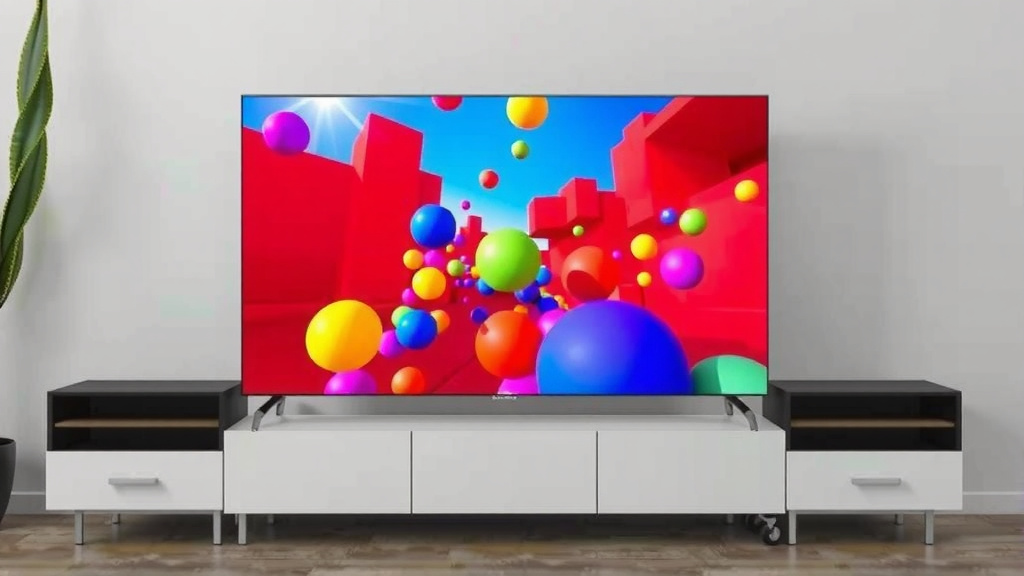
When it comes to brightness, LCD TVs generally have the edge, especially in rooms with ambient light. Their built-in backlight system is designed to cut through daylight or overhead room lighting. This makes them great for daytime viewing or in living rooms that aren’t set up as dedicated home theaters. We found that their consistent brightness is a major plus for everyday use.
DLP projectors, on the other hand, need a darker environment to truly shine. While some newer models are getting brighter, they still perform best when you can control the light. Ambient light can wash out the projected image, making colors appear dull and blacks less deep. However, when the lights are low, DLP projectors can achieve very impressive contrast ratios, making dark scenes pop.
Color Accuracy and Picture Quality
LCD TVs are known for their vibrant and accurate colors right out of the box. The way they control light for each pixel allows for a very faithful reproduction of colors. Many have excellent color gamut coverage, meaning they can display a wide range of hues. We found that for watching nature documentaries or visually rich movies, LCDs often deliver a stunning experience.
DLP projectors can also produce excellent colors, but sometimes the color wheel can introduce what’s known as the “rainbow effect.” This is where you might see brief flashes of red, green, or blue when there’s fast motion or high contrast. Not everyone notices it, and newer DLP projectors have reduced this significantly. However, for those sensitive to it, it can be a distraction. The sharpness of a DLP image is often praised, though.
Screen Size and Immersion
This is where DLP projectors truly come into their own. You can get screen sizes that are simply impossible or prohibitively expensive with LCD TVs. Imagine a 100-inch or even 120-inch screen for your movie nights! For a truly cinematic experience at home, a projector is often the way to go. The sheer scale makes you feel like you’re in the middle of the action.
While LCD TVs are getting larger, you quickly hit a price wall beyond 75 or 85 inches. Plus, a TV that large can dominate a room even when it’s off. A projector screen, on the other hand, can be retracted when not in use, offering more flexibility in your space. We found that for immersive gaming, the large screen size offered by a projector is hard to beat.
Practical Considerations for Your Home
Installation and Space Requirements
Setting up an LCD TV is usually straightforward. Mount it on a stand or hang it on the wall, plug it in, and you’re good to go. They don’t require much special consideration beyond ensuring you have enough space for the screen itself and some ventilation.
DLP projectors require a bit more thought. You’ll need a place to mount the projector, usually on the ceiling or a shelf. You also need to consider the throw distance – how far the projector needs to be from the screen to create the desired image size. Cables need to be run, and ideally, you’ll want to minimize ambient light. This might mean blackout curtains or a dedicated room. Many experts suggest measuring your space carefully before committing (National Association of Home Builders).
Lifespan and Maintenance
Both technologies have improved greatly in terms of lifespan. Modern LED-backlit LCD TVs can last 60,000 to 100,000 hours or more. Projector lamps, historically, had shorter lifespans, often needing replacement after 2,000 to 5,000 hours. However, many newer DLP projectors use laser or LED light sources that can last 20,000 hours or more, similar to an LCD TV’s lifespan. You’ll want to check the specific light source of any projector you consider.
Maintenance for LCD TVs is minimal. You might need to wipe the screen clean occasionally. Projectors might require occasional filter cleaning, depending on the model. If you opt for a lamp-based projector, factor in the cost and hassle of lamp replacements over time. We found that laser or LED projectors significantly reduce this maintenance concern.
Cost Factor: What to Expect
Generally speaking, for a comparable screen size, an LCD TV will often be more expensive than a DLP projector. You can get a much larger projected image for your money with a projector. However, remember that the cost of a projector doesn’t stop at the projector itself. You might need to factor in the cost of a screen, mounting equipment, and potentially A/V receiver and speakers if you’re building a full home theater system.
When comparing, if you’re looking at a 55-inch or 65-inch TV, the price will likely be more competitive than a projector setup of that size. But once you start thinking about 80 inches and above, the projector often becomes the more budget-friendly option for achieving that massive screen. We found that the overall setup cost is an important part of the equation.
Quick Checklist for Your Decision
- Do you primarily watch TV in a bright room? (LCD TV might be better)
- Are you aiming for a screen size of 100 inches or more? (DLP projector excels here)
- Can you control the ambient light in your viewing space? (Crucial for projectors)
- Is picture quality straight out of the box your top priority? (LCD TVs often lead)
- Are you sensitive to potential “rainbow effect” on moving images? (Consider this for DLP)
- What’s your total budget, including screen and mounting? (Projectors can offer more screen for less)
Conclusion
Deciding between a DLP projector and an LCD TV comes down to your specific needs. For everyday viewing in bright environments, an LCD TV offers consistent performance and vibrant colors. If you dream of a massive, cinematic screen for movie nights or gaming and can manage ambient light, a DLP projector provides that immersive experience. We’ve found that the best choice is the one that fits your space, your budget, and your viewing habits. Take another look at our quick checklist and make the choice that brings your home entertainment to life.
Frequently Asked Questions
Can I use a DLP projector in a room with natural light?
While DLP projectors perform best in dark rooms, you can still use them with natural light. You’ll need to manage the light effectively. Consider using blackout curtains or blinds. The image quality will be best when ambient light is minimized, but modern projectors are becoming more capable of handling some daylight.
What is the “rainbow effect” and is it common with all DLP projectors?
The “rainbow effect” is a visual artifact that some people perceive as brief flashes of red, green, or blue. It can occur with fast-moving images. It’s caused by the spinning color wheel in some DLP projectors. Newer models have significantly reduced this effect, and many people never notice it.
How does screen size affect the choice between a projector and a TV?
Screen size is a major deciding factor. For screen sizes above 80 inches, projectors generally become more cost-effective and offer much larger image potential. LCD TVs become very expensive at those larger sizes and can dominate your room. For smaller, typical living room sizes, TVs are often more practical and affordable.
Do DLP projectors require more complex installation than LCD TVs?
Yes, DLP projectors typically require more planning for installation. You need to consider the throw distance, mounting options (ceiling or shelf), and cable management. LCD TVs are generally plug-and-play, with mounting options like stands or wall mounts being simpler.
Which technology generally has a longer lifespan: DLP projector or LCD TV?
Both technologies have long lifespans, but it depends on the specific light source. Traditional lamp-based DLP projectors had shorter lamp lives. However, modern LCD TVs and newer DLP projectors using LED or laser light sources can last for tens of thousands of hours, often comparable to each other.