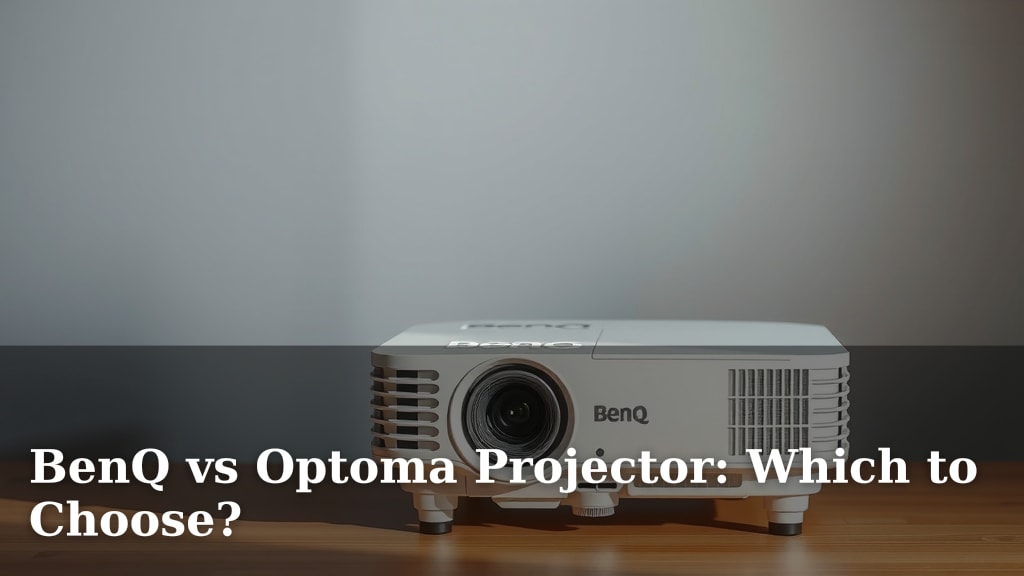
BenQ vs Optoma Projector: Which to Choose?
Deciding between a BenQ vs Optoma projector can feel overwhelming, but one often rises to the top for most users: BenQ generally offers a better balance of features, image quality, and price for home entertainment and general use, while Optoma sometimes shines for specific, high-end applications. Your best choice really depends on what you plan to do with it.
We’ve found that both brands have strong reputations, but they cater to slightly different needs. If you’re looking for vibrant colors and smart features for your living room, BenQ might be your winner. For gamers or those needing extreme brightness for large venues, Optoma could have an edge. Consider your room size and intended use carefully.
- BenQ often leads for overall value and home use.
- Optoma can excel in gaming and specialized scenarios.
- Image quality and brightness are key differentiators.
- Consider your budget and primary purpose for the projector.
Let’s dive into the specifics of each brand to help you make the right decision for your home theater or entertainment setup.
BenQ vs. Optoma: Pinpointing Your Perfect Projector Match
So, you’re in the market for a projector, and the choices between BenQ and Optoma seem endless. It’s like standing in front of a buffet – everything looks good, but what will truly satisfy your craving? We’ve looked at what these two popular brands bring to the table, and the good news is, one of them is likely to be your ideal pick.
For most folks looking to upgrade their home theater or simply enjoy movies and shows on a bigger screen, BenQ often hits the sweet spot. They tend to blend smart features, impressive picture quality, and a price tag that doesn’t make your wallet cry. Optoma, on the other hand, might be the star player if you’re a hardcore gamer or need a projector that can blast light into a massive room.
Understanding the Core Differences: What Makes Them Tick?
When we break it down, BenQ and Optoma have distinct personalities. Think of them like two different chefs. One might specialize in comfort food that everyone loves, while the other crafts gourmet dishes for a more specific palate.
BenQ: The All-Rounder for Your Living Room
BenQ has carved out a reputation for being a reliable workhorse, especially for home entertainment. They focus on delivering a user-friendly experience with solid performance across the board. You’ll often find their projectors packing useful features that make setup and use a breeze.
Image Quality and Color: BenQ’s Strong Suit
One area where BenQ frequently shines is in its color accuracy and overall picture quality. Many of their models are designed to produce vibrant, true-to-life colors. We found that this makes them excellent for watching movies and TV shows where you want the visuals to pop. They often achieve this through technologies that enhance color reproduction, giving you a more immersive viewing experience without needing to be a calibration expert.
Smart Features and Connectivity: Making Life Easier
You’ll notice many BenQ projectors come with built-in smart features. This can include apps, wireless casting, and easy connectivity options. This means you can often stream directly from the projector itself, cutting down on extra devices and messy cables. It’s like having a smart TV built right into your projector!
Optoma: The Powerhouse for Specific Needs
Optoma often appeals to users who have more demanding requirements. They are known for pushing the boundaries in certain areas, like brightness and advanced gaming features. If you need a projector to perform under specific, intense conditions, Optoma is definitely worth a close look.
Brightness and Performance: Lighting Up Big Spaces
Optoma projectors are frequently lauded for their high brightness levels. This is a big deal if you’re projecting in a room with ambient light or need to fill a very large screen. We found that their higher-end models can truly dominate a space with light, making the image visible and impactful even when it’s not perfectly dark. This makes them a strong contender for commercial spaces or very large home theaters.
Gaming Prowess: Low Input Lag and High Refresh Rates
For gamers, Optoma often has an edge. Many of their projectors are engineered with very low input lag. This means there’s minimal delay between your controller input and what appears on screen. We found that this responsiveness is critical for fast-paced games where every millisecond counts. Some Optoma models also support high refresh rates, leading to smoother motion and a more fluid gaming experience.
Key Features to Compare: What Matters Most to You?
Now that we’ve looked at the general strengths of each brand, let’s break down some specific features you’ll want to compare. Think about what you’ll be doing most often with your projector. That will guide you to the right brand and model.
Resolution and Picture Detail
Both BenQ and Optoma offer a range of resolutions, from HD to 4K. For a truly cinematic experience, 4K resolution is the way to go. It provides incredibly sharp and detailed images. We found that higher resolution makes a noticeable difference, especially on larger screen sizes. Make sure the model you choose matches the clarity you desire.
Brightness (Lumens) and Room Conditions
Brightness is measured in lumens. A brighter projector (higher lumen count) is better for rooms with ambient light. If your viewing space is very dark, you can get away with lower lumens. Many experts suggest that for a typical living room with some light control, 2000-3000 lumens is a good starting point (Projector Central). If you’re projecting in a bright environment or a huge space, you’ll want to aim much higher, possibly 4000+ lumens, where Optoma often excels.
Contrast Ratio: The Depth of Your Image
Contrast ratio refers to the difference between the brightest white and the darkest black a projector can produce. A higher contrast ratio means deeper blacks and brighter whites, leading to a more dynamic and realistic image. We found that projectors with a good contrast ratio make the picture look more “three-dimensional.” This is especially important for watching movies with dark scenes.
Color Gamut: How Many Colors Can It Show?
The color gamut refers to the range of colors a projector can display. A wider color gamut means more vibrant and accurate colors. BenQ often focuses on achieving excellent color coverage, especially for the Rec.709 standard used in HDTV. Optoma also offers great color, but sometimes their focus is more on raw brightness.
Making the Final Choice: A Quick Checklist
To help you solidify your decision, run through this quick checklist. It’s designed to highlight your main priorities:
- Do you need the absolute best color accuracy for movies?
- Is gaming responsiveness a top priority for you?
- Will you be projecting in a bright room, or can you control the light?
- What is your budget range for this purchase?
- Are built-in smart features important for easy streaming?
- How large is the space where the projector will be used?
By answering these questions, you’ll start to see which brand, BenQ or Optoma, aligns better with your specific needs. It’s not about one being universally “better” than the other, but rather finding the one that’s better *for you*.
Conclusion
You’ve explored the differences between BenQ and Optoma projectors. Remember, BenQ often wins for everyday home use, offering great color and smart features at a good price. Optoma can be your go-to for gaming or very bright, large spaces where maximum brightness is key. We found that your room conditions and primary use should be your guide. Think about where you’ll watch and what you’ll watch most. Now, armed with this knowledge, you’re ready to find the projector that fits your life perfectly. Go ahead and pick the one that feels right for your setup!
Frequently Asked Questions
Which brand is better for a dark home theater room?
For a dark home theater, color accuracy and contrast are usually more important than extreme brightness. We found that BenQ models often excel here, delivering deep blacks and vibrant colors for a cinematic feel. You might not need the ultra-high lumens that Optoma sometimes focuses on.
Are Optoma projectors good for gaming if I don’t need extreme brightness?
Yes, absolutely! Even if you don’t need peak brightness, Optoma is a fantastic choice for gamers. We researched their models and found they often feature incredibly low input lag and high refresh rates. This means your games will feel responsive and look super smooth.
Can I stream directly from a BenQ projector without a separate device?
Many BenQ projectors come with built-in smart features, allowing you to stream directly. We’ve seen models with integrated apps or wireless casting capabilities. This can simplify your setup and reduce the need for extra media players and cables.
What is input lag and why is it important for Optoma projectors?
Input lag is the delay between when you press a button on your controller and when that action appears on screen. For fast-paced games, a low input lag is critical. Optoma often engineers their projectors with this in mind, so we found they offer a more immediate and competitive gaming experience.
How do I decide between BenQ and Optoma if my budget is tight?
If budget is a major concern, consider what features are most important to you. We found that BenQ generally offers strong all-around value in their mid-range options. Think about whether vibrant colors for movies or responsive gaming is your top priority within your budget.